


Attenuation of NADPH oxidase activation and glomerular filtration barrier remodeling with statin treatment
- PMID: 18172055
- PMCID: PMC2683987
- DOI: 10.1161/HYPERTENSIONAHA.107.102467
Attenuation of NADPH oxidase activation and glomerular filtration barrier remodeling with statin treatment
Abstract
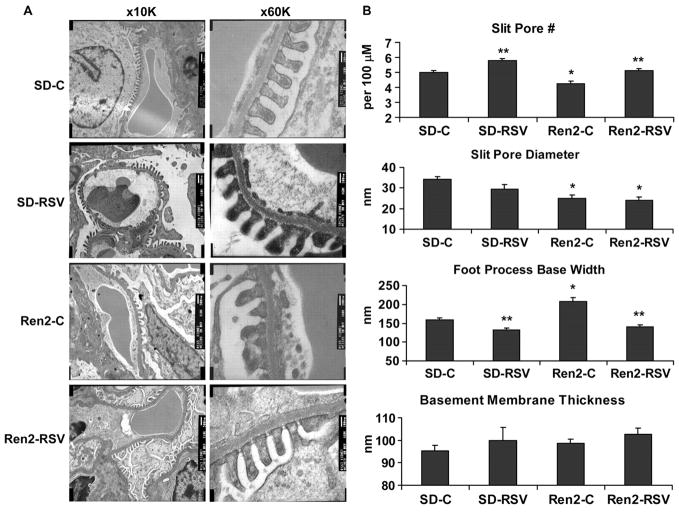
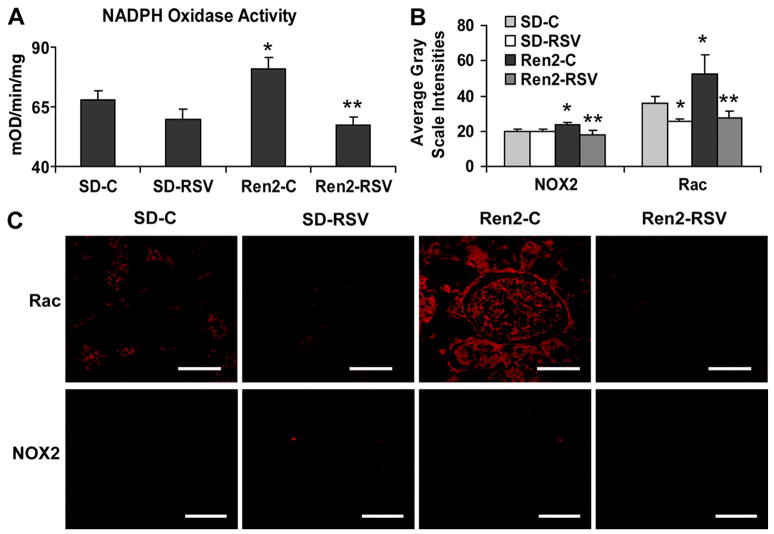
Activation of reduced nicotinamide-adenine dinucleotide phosphate (NADPH) oxidase by angiotensin II is integral to the formation of oxidative stress in the vasculature and the kidney. 3-Hydroxy-3-methylglutaryl-coenzyme A reductase inhibition is associated with reductions of oxidative stress in the vasculature and kidney and associated decreases in albuminuria. Effects of 3-hydroxy-3-methylglutaryl-coenzyme A reductase inhibition on oxidative stress in the kidney and filtration barrier integrity are poorly understood. To investigate, we used transgenic TG(mRen2)27 (Ren2) rats, which harbor the mouse renin transgene and renin-angiotensin system activation, and an immortalized murine podocyte cell line. We treated young, male Ren2 and Sprague-Dawley rats with rosuvastatin (20 mg/kg IP) or placebo for 21 days. Compared with controls, we observed increases in systolic blood pressure, albuminuria, renal NADPH oxidase activity, and 3-nitrotryosine staining, with reductions in the rosuvastatin-treated Ren2. Structural changes on light and transmission electron microscopy, consistent with periarteriolar fibrosis and podocyte foot-process effacement, were attenuated with statin treatment. Nephrin expression was diminished in the Ren2 kidney and trended to normalize with statin treatment. Angiotensin II-dependent increases in podocyte NADPH oxidase activity and subunit expression (NOX2, NOX4, Rac, and p22(phox)) and reactive oxygen species generation were decreased after in vitro statin treatment. These data support a role for increased NADPH oxidase activity and subunit expression with resultant reactive oxygen species formation in the kidney and podocyte. Furthermore, statin attenuation of NADPH oxidase activation and reactive oxygen species formation in the kidney/podocyte seems to play roles in the abrogation of oxidative stress-induced filtration barrier injury and consequent albuminuria.
Figures


References
-
- Sowers JR. Hypertension, angiotensin II, and oxidative stress. N Engl J Med. 2002;346:1999–2001. - PubMed
-
- Griendling KK, Ushio-Fukai M. Reactive oxygen species as mediators of angiotensin II signaling. Regul Pept. 2000;91:21–27. - PubMed
-
- Wolf G. Role of reactive oxygen species in angiotensin II-mediated renal growth, differentiation, and apoptosis. Antioxid Redox Signal. 2005;7:1337–1345. - PubMed
-
- Hayden MR, Whaley-Connell A, Chowdhury N, Sowers JR. Role of angiotensin II in diabetic cardiovascular and renal disease. Curr Opin Endocrinol Diabetes Obes. 2006;13:135–140.
-
- Sadoshima J, Izumo S. Molecular characterization of angiotensin II-induced hypertrophy of cardiac myocytes and hyperplasia of cardiac fibroblasts. Critical role of the AT1 receptor subtype. Circ Res. 1993;73:413–423. - PubMed
Publication types
MeSH terms
Substances
Grants and funding
LinkOut - more resources
Full Text Sources
Medical
Miscellaneous
