


Slow-wave sleep and the risk of type 2 diabetes in humans
- PMID: 18172212
- PMCID: PMC2242689
- DOI: 10.1073/pnas.0706446105
Slow-wave sleep and the risk of type 2 diabetes in humans
Abstract
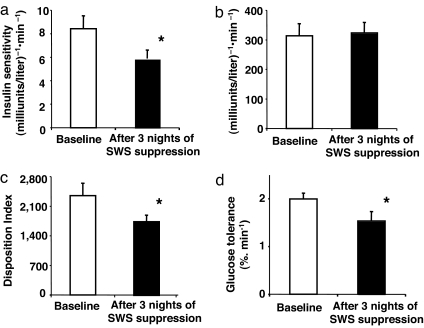
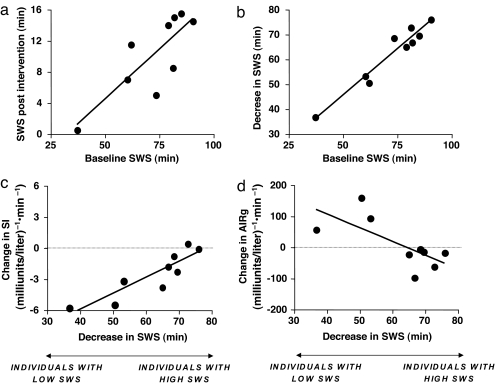
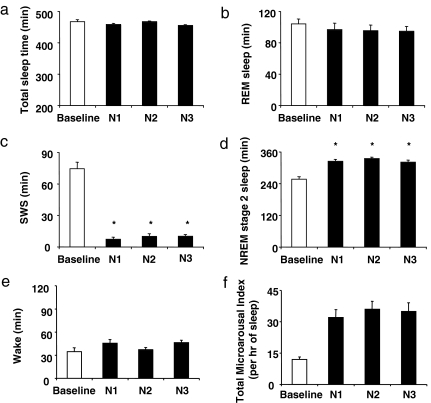
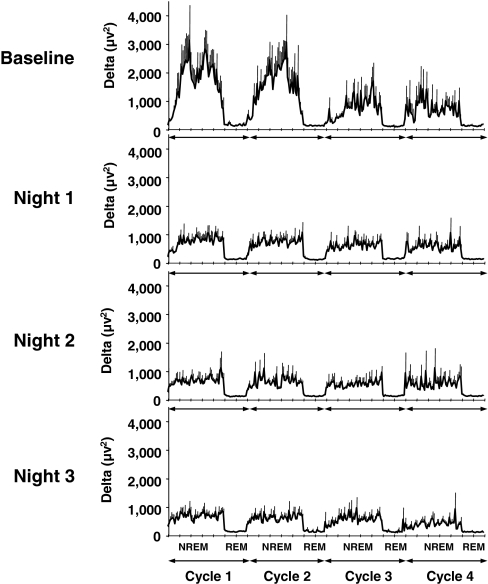
There is convincing evidence that, in humans, discrete sleep stages are important for daytime brain function, but whether any particular sleep stage has functional significance for the rest of the body is not known. Deep non-rapid eye movement (NREM) sleep, also known as slow-wave sleep (SWS), is thought to be the most "restorative" sleep stage, but beneficial effects of SWS for physical well being have not been demonstrated. The initiation of SWS coincides with hormonal changes that affect glucose regulation, suggesting that SWS may be important for normal glucose tolerance. If this were so, selective suppression of SWS should adversely affect glucose homeostasis and increase the risk of type 2 diabetes. Here we show that, in young healthy adults, all-night selective suppression of SWS, without any change in total sleep time, results in marked decreases in insulin sensitivity without adequate compensatory increase in insulin release, leading to reduced glucose tolerance and increased diabetes risk. SWS suppression reduced delta spectral power, the dominant EEG frequency range in SWS, and left other EEG frequency bands unchanged. Importantly, the magnitude of the decrease in insulin sensitivity was strongly correlated with the magnitude of the reduction in SWS. These findings demonstrate a clear role for SWS in the maintenance of normal glucose homeostasis. Furthermore, our data suggest that reduced sleep quality with low levels of SWS, as occurs in aging and in many obese individuals, may contribute to increase the risk of type 2 diabetes.
Conflict of interest statement
The authors declare no conflict of interest.
Figures
Comment in
-
Slow-wave sleep, diabetes, and the sympathetic nervous system.Proc Natl Acad Sci U S A. 2008 Jan 29;105(4):1107-8. doi: 10.1073/pnas.0711635105. Epub 2008 Jan 22. Proc Natl Acad Sci U S A. 2008. PMID: 18212114 Free PMC article. Review. No abstract available.
References
Publication types
MeSH terms
Grants and funding
LinkOut - more resources
Full Text Sources
Other Literature Sources
Medical
