


Down syndrome and aberrant right subclavian artery
- PMID: 18172685
- PMCID: PMC2491432
- DOI: 10.1007/s00431-007-0637-2
Down syndrome and aberrant right subclavian artery
Abstract
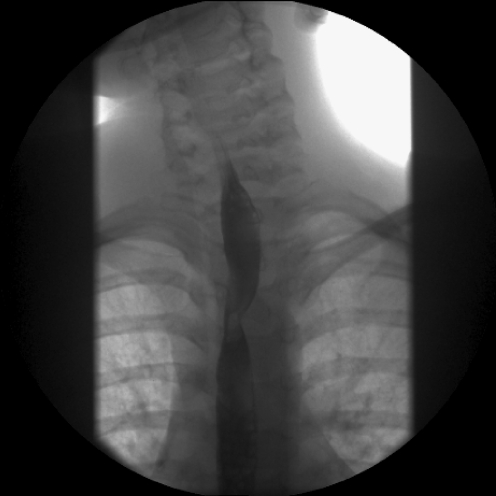
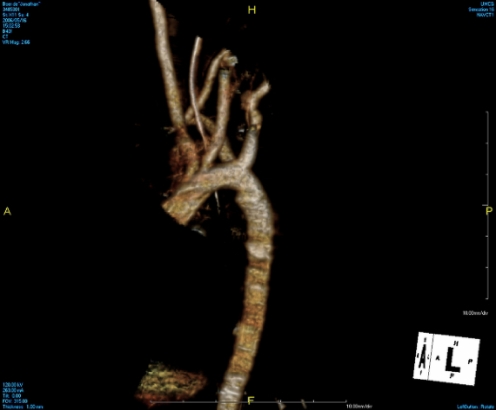
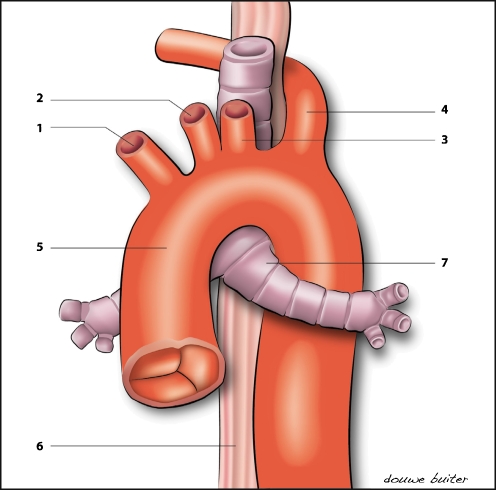
Down syndrome (DS) may be associated with various organ system disorders. Feeding problems are frequent in children with DS and may be caused by associated defects, including congenital heart defects, gastrointestinal defects, or endocrine disorders. In the absence of these associated conditions, feeding problems are often attributed to general hypotonia. However, an aberrant right subclavian artery (ARSA), a rare vascular anomaly and an unusual cause of problems with the passage of solid food through the esophagus, has recently been suggested to occur more frequently in patients with DS. This knowledge is of importance when evaluating feeding difficulties in patients with DS. Additional investigation for identifying an ARSA may be indicated in selected patients. Diagnostic techniques, such as transthoracic echocardiography, barium contrast esophagram, angiography, or computed tomography-angiography (CT) can be used in a diagnostic flow chart. The presence of ARSA is not synonymous to the cause of feeding problems in patients with DS and corrective surgery of this vascular anomaly should be restricted to selected cases.
Figures
References
-
- Bayford D. An account of a singular case of obstructed deglutition. Mem Med Soc London. 1794;2:275–280.
-
- Berdon W. Rings, slings, and other things: vascular compression of the infant trachea updated from the mid century to the millenium—the legacy of Robert E. Gross, MD, and Edward B.D. Neuhauser, MD. Radiology. 2000;216:624–632. - PubMed
Publication types
MeSH terms
LinkOut - more resources
Full Text Sources
Medical
