


Predictors of blood pressure response to angiotensin receptor blocker/diuretic combination therapy: a secondary analysis of the irbesartan/hydrochlorothiazide blood pressure reductions in diverse patient populations (INCLUSIVE) study
- PMID: 18174768
- PMCID: PMC8109972
- DOI: 10.1111/j.1524-6175.2007.07195.x
Predictors of blood pressure response to angiotensin receptor blocker/diuretic combination therapy: a secondary analysis of the irbesartan/hydrochlorothiazide blood pressure reductions in diverse patient populations (INCLUSIVE) study
Abstract
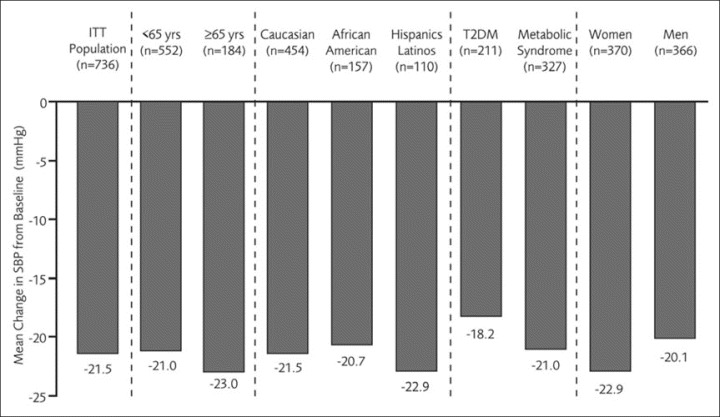
The secondary analysis of the Irbesartan/Hydrochlorothiazide Blood Pressure Reductions in Diverse Patient Populations (INCLUSIVE) clinical trial investigated whether baseline demographic and clinical variables are predictive of different degrees of blood pressure reduction following an angiotensin II receptor blocker/diuretic treatment regimen. Irbesartan/hydrochlorothiazide and other angiotensin receptor blocker combinations with a diuretic have been shown to be effective in reducing systolic blood pressure in a diverse patient population previously uncontrolled on monotherapy. Ordinary least squares regression analysis was performed on the intent-to-treat population of the INCLUSIVE study to identify variables predictive of variations in blood pressure changes in response to irbesartan/hydrochlorothiazide combination therapy. Higher baseline systolic blood pressure, female sex, type 2 diabetes, and statin therapy were found to be predictive of additional blood pressure lowering with this combination. The impact of higher baseline systolic blood pressure and diabetic state on changes in systolic blood pressure were diminished in female patients compared with male patients. In conclusion, a significant correlation may exist between certain clinical/demographic characteristics and the extent of the therapeutic response with irbesartan/hydrochlorothiazide treatment.
Figures
References
-
- Thom T, Haase N, Rosamond W, et al. Heart disease and stroke statistics—2006 update: a report from the American Heart Association Statistics Committee and Stroke Statistics Subcommittee. Circulation. 2006;113(6):e85–e151. - PubMed
-
- The Seventh Report of the Joint National Committee on Prevention, Detection, Evaluation, and Treatment of High Blood Pressure: the JNC 7 report. JAMA. 2003;289(19):2560–2572. - PubMed
-
- He J, Whelton PK. Elevated systolic blood pressure as a risk factor for cardiovascular and renal disease. J Hypertens Suppl. 1999;17(2):S7–S13. - PubMed
-
- MacMahon S, Peto R, Cutler J, et al. Blood pressure, stroke, and coronary heart disease. Part 1, Prolonged differences in blood pressure: prospective observational studies corrected for the regression dilution bias. Lancet. 1990;335(8692):765–774. - PubMed
-
- Lewington S, Clarke R, Qizilbash N, et al. Age‐specific relevance of usual blood pressure to vascular mortality: a meta‐analysis of individual data for one million adults in 61 prospective studies. Lancet. 2002;360(9349):1903–1913. - PubMed
Publication types
MeSH terms
Substances
LinkOut - more resources
Full Text Sources
Medical
