


Incidence of visits for health care worker blood or body fluid exposures and HIV postexposure prophylaxis provision at Rhode Island emergency departments
- PMID: 18176321
- PMCID: PMC3180865
- DOI: 10.1097/QAI.0b013e318160d599
Incidence of visits for health care worker blood or body fluid exposures and HIV postexposure prophylaxis provision at Rhode Island emergency departments
Abstract
Objectives: To compare the incidence and types of emergency department (ED) visits for blood or body fluid exposures sustained by health care workers (HCWs) in Rhode Island and to identify factors predictive of HIV postexposure prophylaxis (PEP) utilization for these exposures.
Methods: A retrospective study of ED visits for blood or body fluid exposures to all Rhode Island EDs from January 1995 to June 2001 was conducted. Average incidence rates (IRs) of visits by HCW occupation and type of exposure were estimated and compared. Logistic regression models were created to determine which HCWs were more likely to be offered and to accept HIV PEP.
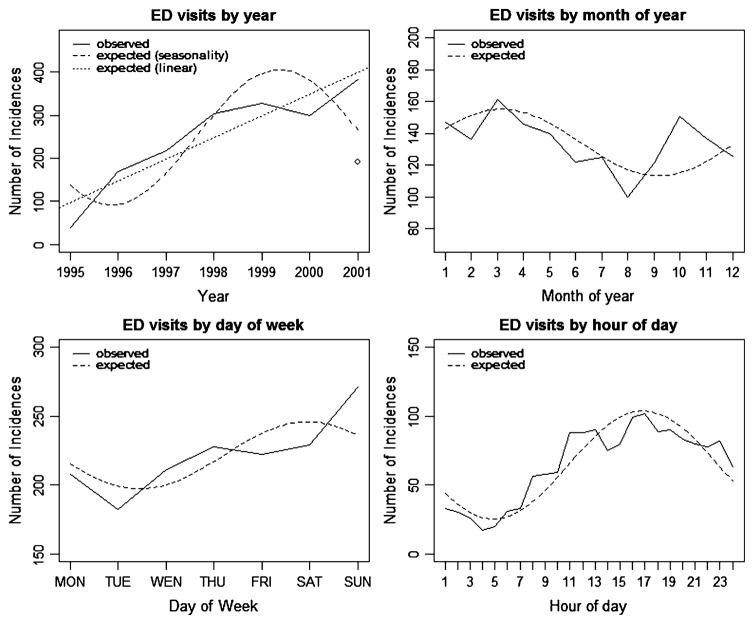
Results: Of 1551 HCW ED visits for occupational exposures, 72.5% sustained a percutaneous injury and only 2.5% were exposed to a source known to be HIV-infected. Hospital custodians had the highest IR of ED visits for percutaneous injuries (81 ED visits per year per 10,000 workers). Visits for all exposures increased over the study years and were most common during March, on weekends, and at 5:00 PM. Of all HCWs, 91.2% presented within 24 hours of their exposure and 98.2% presented within 72 hours. HIV PEP was offered to 469 HCWs and accepted 229 times. HCWs more likely to be offered HIV PEP were exposed to a known HIV-infected source (odds ratio [OR] = 6.38), sustained a significant exposure (OR = 4.98), presented to an academic hospital ED (OR = 2.60), were a member of the medical staff (OR = 2.02), and were exposed during the latter years of the study (OR = 1.23). HCWs were more likely to accept HIV PEP when it was offered if they were male (OR = 1.64) and presented to an academic hospital ED (OR = 2.72).
Conclusions: The IRs of ED visits for exposures varied by occupation, and there were clear temporal trends for these visits. Despite the existence of federal guidelines for HIV PEP for occupational blood or body fluid exposures, factors other than characteristics of the exposure, such as type of hospital, occupation, and gender, may be influencing HIV PEP utilization.
Figures
References
-
- Panlilio AL, Orelien JG, Srivastava PU, et al. Estimate of the annual number of percutaneous injuries among hospital-based healthcare workers in the United States, 1997–1998. Infect Control Hosp Epidemiol. 2004;25:556–562. - PubMed
-
- Gillen M, McNary J, Lewis J, et al. Sharps-related injuries in California healthcare facilities: pilot study results from the Sharps Injury Surveillance Registry. Infect Control Hosp Epidemiol. 2003;24:113–121. - PubMed
-
- Laramie AK, Davis LK, Alfred DeMaria J, et al. Sharps Injuries among Hospital Workers in Massachusetts, 2002. Boston, MA: Massachusetts Department of Public Health; 2004.
-
- Dement JM, Epling C, Ostbye T, et al. Blood and body fluid exposure risks among health care workers: results from the Duke Health and Safety Surveillance System. Am J Ind Med. 2004;46:637–648. - PubMed
-
- Chen GX, Jenkins EL. Potential work-related bloodborne pathogen exposures by industry and occupation in the United States part I: an emergency department-based surveillance study. Am J Ind Med. 2007;50:183–190. - PubMed
Publication types
MeSH terms
Grants and funding
LinkOut - more resources
Full Text Sources
Medical
Miscellaneous
