


Increased lactate levels and reduced pH in postmortem brains of schizophrenics: medication confounds
- PMID: 18177946
- PMCID: PMC2288700
- DOI: 10.1016/j.jneumeth.2007.11.017
Increased lactate levels and reduced pH in postmortem brains of schizophrenics: medication confounds
Abstract
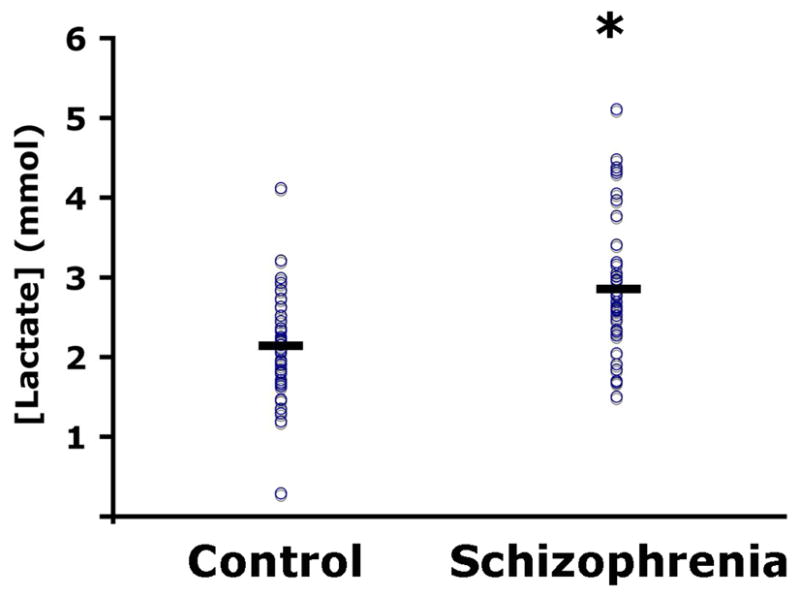
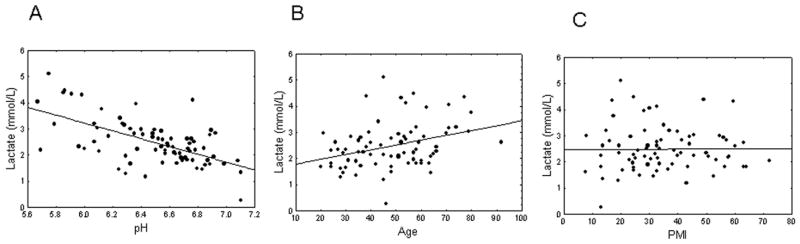
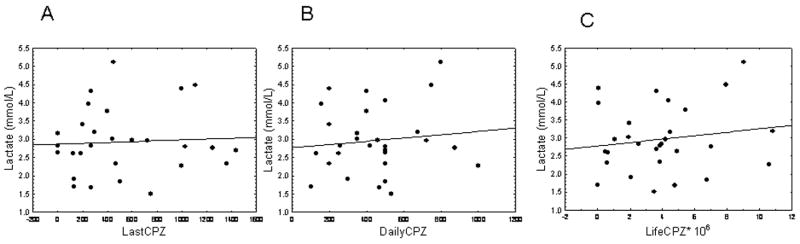
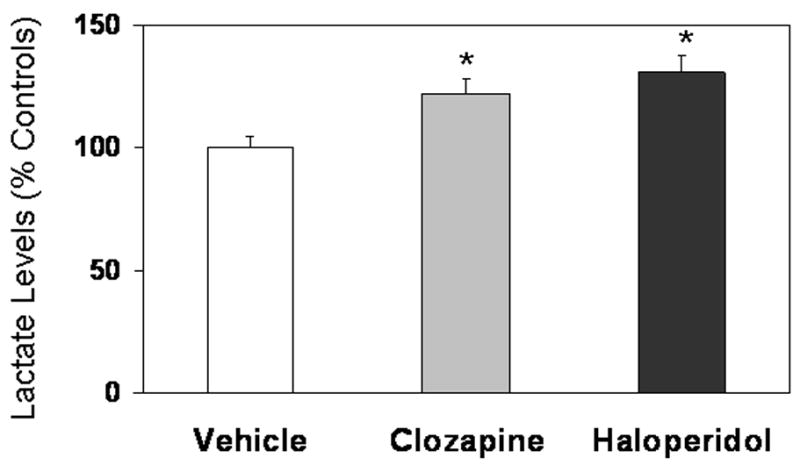
A number of postmortem studies have found decreased pH in brains of patients with schizophrenia. Insofar as lower pH has been associated with decreased mRNA expression in postmortem human brain, decreased pH in schizophrenia may represent an important potential confound in comparisons between patients and controls. We hypothesized that decreased pH may be related to increased concentration of lactic acid. However, in contrast to the previous notion that an increase in lactic acid represents evidence for primary metabolic abnormalities in schizophrenia, we hypothesized that this increase is secondary to prior antipsychotic treatment. We have tested this by first demonstrating that lactate levels in the cerebellum of patients with schizophrenia (n=35) are increased relative to control subjects (n=42) by 28%, p=0.001. Second, we have shown that there is an excellent correlation between lactate levels in the cerebellum and pH, and that this correlation is particularly strong in patients (r=-0.78, p=3E-6). Third, we have shown in rats that chronic haloperidol (0.8mg/kg/day) and clozapine (5mg/kg/day) increase lactic acid concentration in the frontal cortex relative to vehicle (by 31% and 22% respectively, p<0.01). These data suggest that lactate increases in postmortem human brain of patients with schizophrenia are associated with decreased pH and that these changes are possibly related to antipsychotic treatment rather than a primary metabolic abnormality in the prefrontal cortex of patients with schizophrenia.
Figures
References
-
- Atz M, Walsh D, Cartagena P, Li J, Evans S, Choudary P, Overman K, Stein R, Tomita H, Potkin S, Myers R, Watson SJ, Jones EG, Akil H, Bunney WE, Vawter MP Members of National Institute of Mental Health Conte Center and Pritzker Neuropsychiatric Disorders Research Consortium. Methodological considerations for gene expression profiling of human brain. J Neurosci Methods. 2007;163:295–309. - PMC - PubMed
-
- Altar CA, Jurata LW, Charles V, Lemire A, Liu P, Bukhman Y, Young TA, Bullard J, Yokoe H, Webster MJ, Knable MB, Brockman JA. Deficient hippocampal neuron expression of proteasome, ubiquitin, and mitochondrial genes in multiple schizophrenia cohorts. Biol Psychiatry. 2005;58:85–96. - PubMed
-
- Bahn S, Augood SJ, Ryan M, Standaert DG, Starkey M, Emson PC. Gene expression profiling in the post-mortem human brain--no cause for dismay. J Chem Neuroanat. 2001;22:79–94. - PubMed
-
- Bettinger TL, Mendelson SC, Dorson PG, Crismon ML. Olanzapine-induced glucose dysregulation. Ann Pharmacother. 2000;34:865–867. - PubMed
-
- Dwyer DS, Bradley RJ, Kablinger AS, Freeman AM., 3rd Glucose metabolism in relation to schizophrenia and antipsychotic drug treatment. Ann Clin Psychiatry. 2001;13:103–113. - PubMed
MeSH terms
Substances
Grants and funding
LinkOut - more resources
Full Text Sources
Medical
