


Structural and regulatory roles of nonmotor spindle proteins
- PMID: 18178073
- PMCID: PMC2289991
- DOI: 10.1016/j.ceb.2007.11.004
Structural and regulatory roles of nonmotor spindle proteins
Abstract
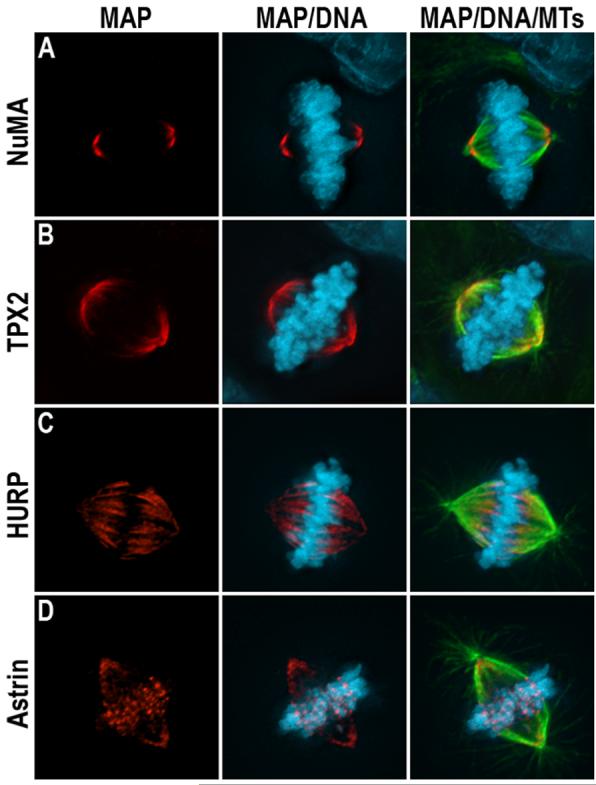
Chromosome alignment and segregation during cell division rely on a highly ordered bipolar microtubule array called the mitotic spindle. The organization of microtubules into bipolar spindles with focused poles during mitosis requires numerous microtubule-associated proteins including both motor and nonmotor proteins. Nonmotor microtubule-associated proteins display extraordinary diversity in how they contribute to mitotic spindle organization. These mechanisms include regulation of microtubule nucleation and organization, direct and indirect influences on motor function, and control of cell cycle progression. Furthermore, many nonmotor spindle proteins display altered expression in cancer cells emphasizing their important roles in cell proliferation.
Figures
References
-
- Sharp DJ, Rogers GC, Scholey JM. Microtubule motors in mitosis. Nature. 2000;407(6800):41–7. - PubMed
-
-
The authors using mass spectrometry to map phosphorylation sites on all major spindle-associated proteins.
-
-
- Kisurina-Evgenieva O, Mack G, Du Q, Macara I, Khodjakov A, Compton DA. Multiple mechanisms regulate NuMA dynamics at spindle poles. J Cell Sci. 2004;117(26):6391–400. - PubMed
Publication types
MeSH terms
Substances
Grants and funding
LinkOut - more resources
Full Text Sources
