


Centrifugal enhancement of hepatitis C virus infection of human hepatocytes
- PMID: 18178263
- PMCID: PMC2696338
- DOI: 10.1016/j.jviromet.2007.11.002
Centrifugal enhancement of hepatitis C virus infection of human hepatocytes
Abstract
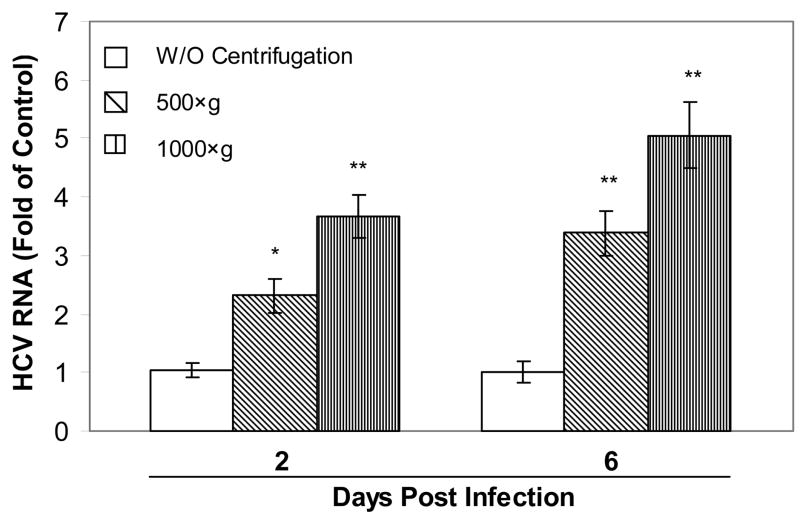
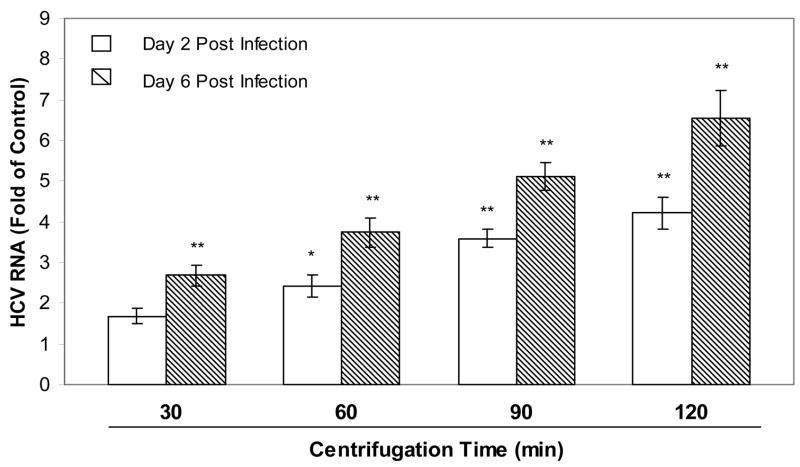
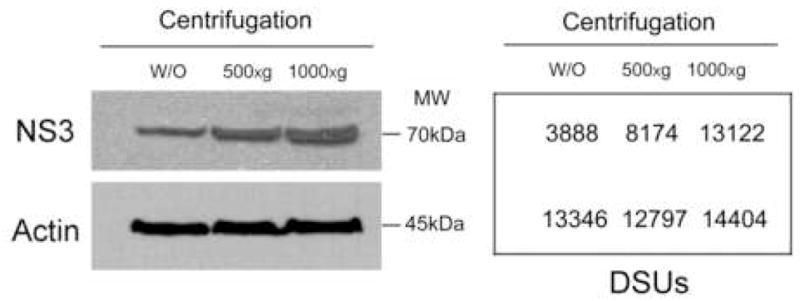
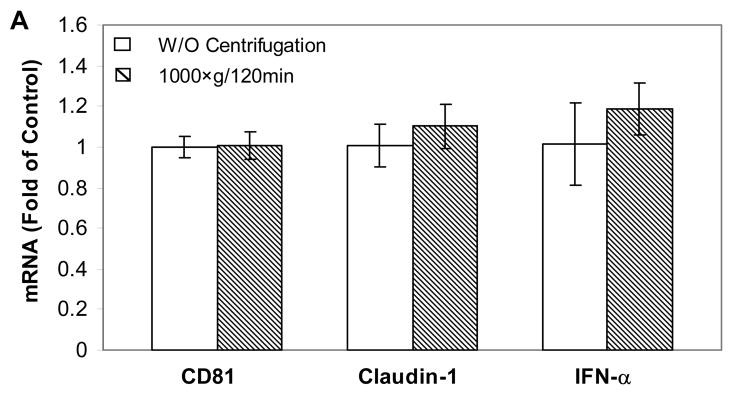
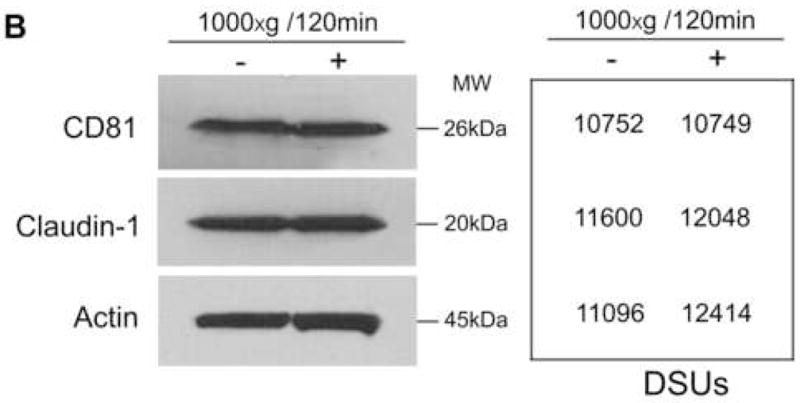
Hepatitis C virus (HCV) is a human pathogen associated with chronic liver disease. Recently, the cell culture systems supporting complete replication and production of HCV genotype 2a (JFH1) have been established. This study investigated the effect of low-speed centrifugation on HCV JFH1 infection of human hepatocytes (Huh7.5.1). Higher levels of HCV RNA expression were observed in Huh7.5.1 cells infected with centrifugal inoculation of HCV JFH1 than those in the control cells. This increased HCV RNA expression was associated with the elevated expression of HCV NS3 protein in the hepatocytes. The centrifugal enhancement of HCV infection was time and speed dependent. However, the enhancement was not observed when centrifugation was performed before or after HCV infection. In addition, there was no association between centrifugal enhancement and the expression of HCV entry receptors (CD81 and claudin-1) and intracellular IFN-alpha in the hepatocytes. These data indicate that centrifugal inoculation is a useful tool for increasing the efficiency of HCV infection and replication in the target cells in vitro.
Figures
References
-
- Bahnson AB, Dunigan JT, Baysal BE, Mohney T, Atchison RW, Nimgaonkar MT, Ball ED, Barranger JA. Centrifugal enhancement of retroviral mediated gene transfer. J Virol Methods. 1995;54:131–43. - PubMed
-
- Choo QL, Kuo G, Weiner AJ, Overby LR, Bradley DW, Houghton M. Isolation of a cDNA clone derived from a blood-borne non-A, non-B viral hepatitis genome. Science. 1989;244:359–62. - PubMed
-
- Chuck AS, Clarke MF, Palsson BO. Retroviral infection is limited by Brownian motion. Hum Gene Ther. 1996;7:1527–34. - PubMed
Publication types
MeSH terms
Substances
Grants and funding
LinkOut - more resources
Full Text Sources
Other Literature Sources
