


Demonstration of inflammation-induced cancer and cancer immunoediting during primary tumorigenesis
- PMID: 18178624
- PMCID: PMC2206591
- DOI: 10.1073/pnas.0708594105
Demonstration of inflammation-induced cancer and cancer immunoediting during primary tumorigenesis
Abstract
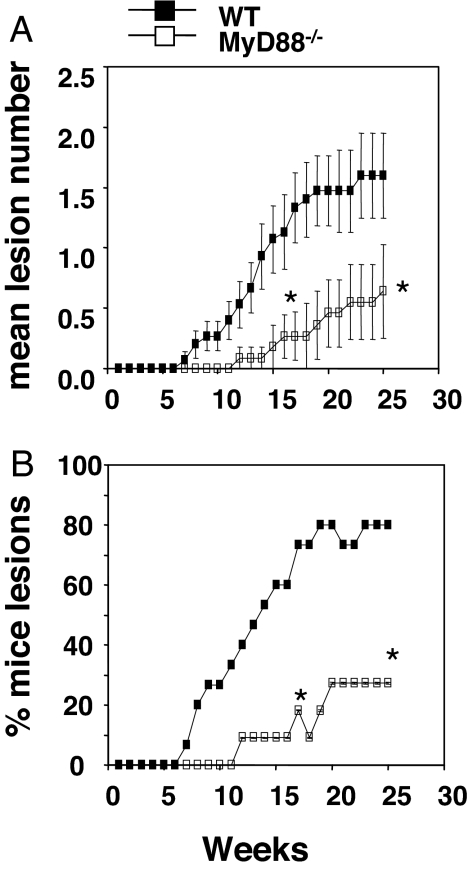
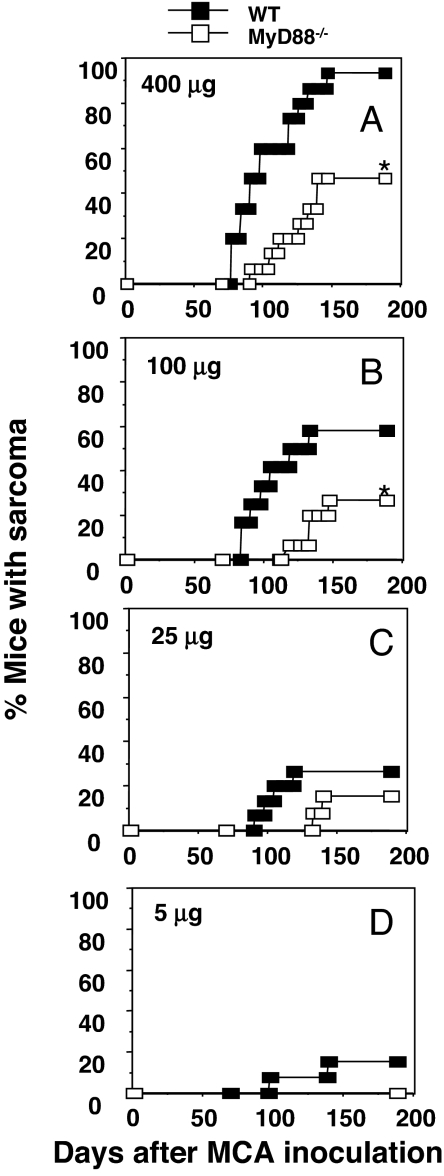
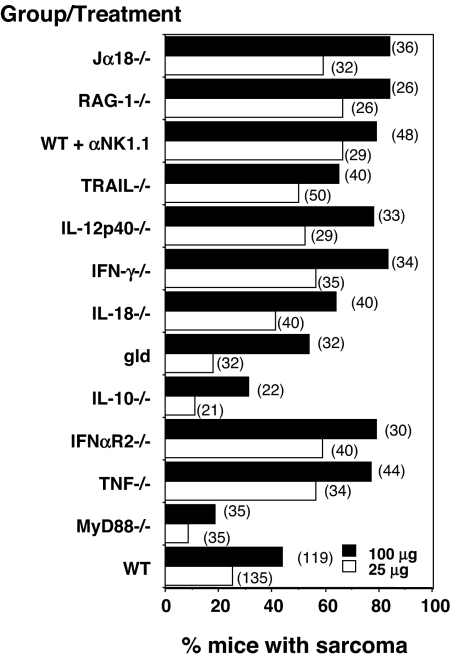
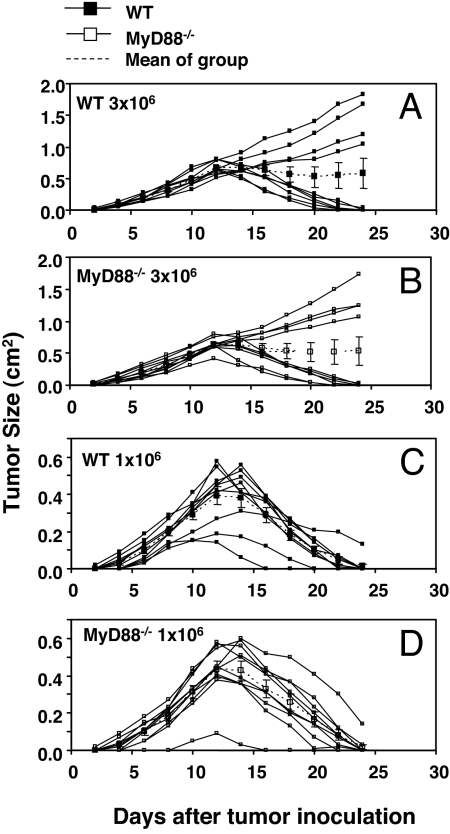
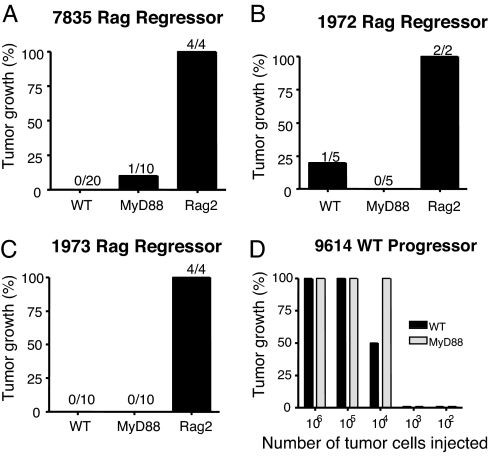
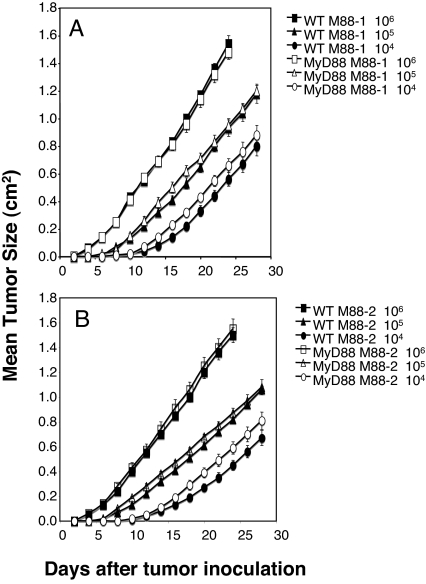
Here we report the effects of loss of the Toll-like receptor-associated signaling adaptor myeloid-differentiation factor 88 (MyD88) on tumor induction in two distinct mouse models of carcinogenesis. The 7,12-dimethylbenz[a]anthracene (DMBA)/12-O-tetradecanoylphorbol 13-acetate (TPA)-induced skin papilloma model depends on proinflammatory processes, whereas the 3'-methylcholanthrene (MCA) induction of fibrosarcoma has been used by tumor immunologists to illustrate innate and adaptive immune surveillance of cancer. When exposed to a combination of DMBA/TPA, mice lacking MyD88 formed fewer skin papillomas than genetically matched WT controls treated in a similar manner. Unexpectedly, however, fewer MyD88-/- mice formed sarcomas than WT controls when exposed to MCA. In contrast, MyD88-deficient mice did not show a defective ability to reject highly immunogenic transplanted tumors, including MCA sarcomas. Despite the reported role of TNF in chronic inflammation, TNF-deficient mice were significantly more susceptible to MCA-induced sarcoma than WT mice. Overall, these data not only confirm the key role that MyD88 plays in promoting tumor development but also demonstrate that inflammation-induced carcinogenesis and cancer immunoediting can indeed occur in the same mouse tumor model.
Conflict of interest statement
The authors declare no conflict of interest.
Figures
References
Publication types
MeSH terms
Substances
LinkOut - more resources
Full Text Sources
Other Literature Sources
Molecular Biology Databases
