Genes and (common) pathways underlying drug addiction
- PMID: 18179280
- PMCID: PMC2174978
- DOI: 10.1371/journal.pcbi.0040002
Genes and (common) pathways underlying drug addiction
Abstract
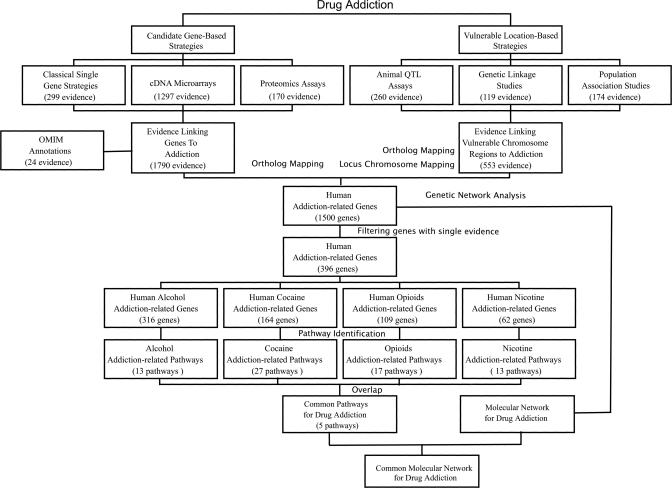
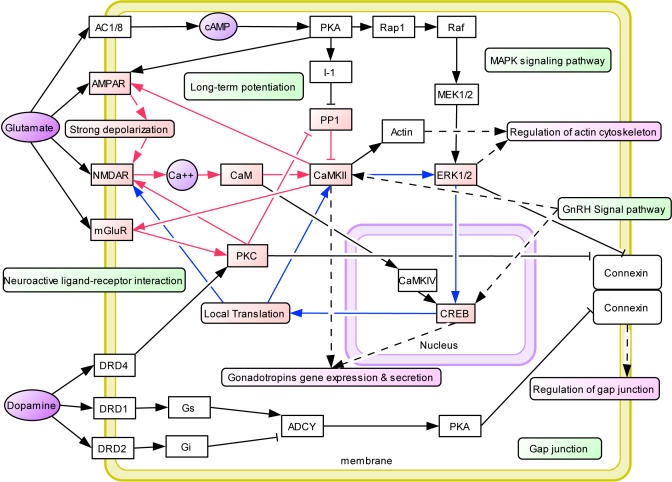
Drug addiction is a serious worldwide problem with strong genetic and environmental influences. Different technologies have revealed a variety of genes and pathways underlying addiction; however, each individual technology can be biased and incomplete. We integrated 2,343 items of evidence from peer-reviewed publications between 1976 and 2006 linking genes and chromosome regions to addiction by single-gene strategies, microrray, proteomics, or genetic studies. We identified 1,500 human addiction-related genes and developed KARG (http://karg.cbi.pku.edu.cn), the first molecular database for addiction-related genes with extensive annotations and a friendly Web interface. We then performed a meta-analysis of 396 genes that were supported by two or more independent items of evidence to identify 18 molecular pathways that were statistically significantly enriched, covering both upstream signaling events and downstream effects. Five molecular pathways significantly enriched for all four different types of addictive drugs were identified as common pathways which may underlie shared rewarding and addictive actions, including two new ones, GnRH signaling pathway and gap junction. We connected the common pathways into a hypothetical common molecular network for addiction. We observed that fast and slow positive feedback loops were interlinked through CAMKII, which may provide clues to explain some of the irreversible features of addiction.
Conflict of interest statement
Figures
References
-
- Nestler EJ. Molecular basis of long-term plasticity underlying addiction. Nat Rev Neurosci. 2001;2:119–128. - PubMed
-
- Uhl GR. Molecular genetic underpinnings of human substance abuse vulnerability: likely contributions to understanding addiction as a mnemonic process. Neuropharmacology. 2004;47(Supplement 1):140–147. - PubMed
-
- Goldman D, Oroszi G, Ducci F. The genetics of addictions: uncovering the genes. Nat Rev Genet. 2005;6:521–532. - PubMed
-
- Williams K, Wu T, Colangelo C, Nairn AC. Recent advances in neuroproteomics and potential application to studies of drug addiction. Neuropharmacology. 2004;47(Supplement 1):148–166. - PubMed
Publication types
MeSH terms
Substances
LinkOut - more resources
Full Text Sources
Medical
Miscellaneous