


Canine behavioral genetics: pointing out the phenotypes and herding up the genes
- PMID: 18179880
- PMCID: PMC2253978
- DOI: 10.1016/j.ajhg.2007.12.001
Canine behavioral genetics: pointing out the phenotypes and herding up the genes
Abstract
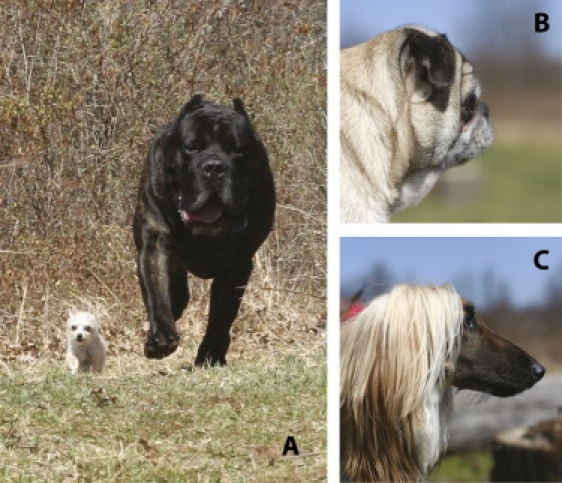
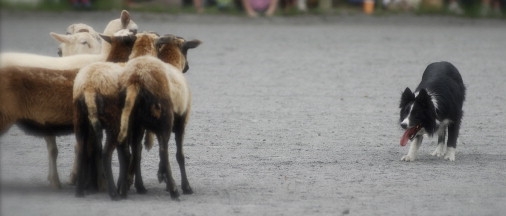
An astonishing amount of behavioral variation is captured within the more than 350 breeds of dog recognized worldwide. Inherent in observations of dog behavior is the notion that much of what is observed is breed specific and will persist, even in the absence of training or motivation. Thus, herding, pointing, tracking, hunting, and so forth are likely to be controlled, at least in part, at the genetic level. Recent studies in canine genetics suggest that small numbers of genes control major morphologic phenotypes. By extension, we hypothesize that at least some canine behaviors will also be controlled by small numbers of genes that can be readily mapped. In this review, we describe our current understanding of a representative subset of canine behaviors, as well as approaches for phenotyping, genome-wide scans, and data analysis. Finally, we discuss the applicability of studies of canine behavior to human genetics.
Figures
References
-
- Clutton-Brock J. Origins of the dog: Domestication and early history. In: Serpell J., editor. The Domestic Dog, Its Evolution, Behavior and Interactions with People. CUP; Cambridge: 1995. pp. 7–20.
-
- Ostrander E.A., Kruglyak L. Unleashing the canine genome. Genome Res. 2000;10:1271–1274. - PubMed
-
- Wilcox B., Walkowicz C. T.F.H. Publications; Neptune City, NJ: 1995. Atlas of Dog Breeds of the World.
-
- American Kennel Club . Howell Book House; New York: 1998. The Complete Dog Book.
-
- Coppinger R., Scheider R. Evolution of working dogs. In: Serpell J., editor. The Domestic Dog, Its Evolution, Behavior and Interactions with people. CUP; Cambridge: 1995. pp. 21–50.
Publication types
MeSH terms
Grants and funding
LinkOut - more resources
Full Text Sources
