


Concurrent infections by all four dengue virus serotypes during an outbreak of dengue in 2006 in Delhi, India
- PMID: 18182120
- PMCID: PMC2253528
- DOI: 10.1186/1743-422X-5-1
Concurrent infections by all four dengue virus serotypes during an outbreak of dengue in 2006 in Delhi, India
Abstract
Background: Co-circulation of multiple dengue virus serotypes has been reported from many parts of the world including India, however concurrent infection with more than one serotype of dengue viruses in the same individual is rarely documented. An outbreak of dengue hemorrhagic fever/dengue shock syndrome (DHF/DSS) occurred in and around Delhi in 2006. This is the first report from India with high percentage of concurrent infections with different dengue virus serotypes circulating during one outbreak.
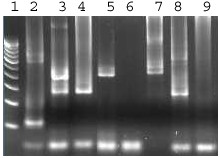
Results: Acute phase sera from patients were tested for the presence of dengue virus RNA by RT-PCR assay. Of the 69 samples tested for dengue virus RNA, 48 (69.5%) were found to be positive. All the four dengue virus serotypes were found to be co-circulating in this outbreak with DENV-3 being the predominant serotype. In addition in 9 of 48 (19%) dengue virus positive samples, concurrent infection with more than one dengue virus serotype were identified.
Conclusion: This is the first report in which concurrent infections with different dengue virus serotypes is being reported during an outbreak from India. Delhi is now truly hyperendemic for dengue.
Figures
References
-
- Gubler DJ. Epidemic dengue/dengue haemorrhagic fever: a global public health problem in the 21st century. Dengue Bulletin. 1997;21:1–15.
-
- World Health Organization Dengue and dengue hemorrhagic fever http://www.who.int/mediacentre/factsheets/fs117/en/ Accessed 1 July 2007. - PubMed
-
- Gubler DJ. Dengue and dengue hemorrhagic fever: its history and resurgence as a global public health problem. In: Gubler DJ, Kuno G, editor. Dengue and dengue hemorrhagic fever. London: CAB International; 1997. pp. 1–22.
-
- Gubler DJ. The arboviruses: epidemiology and ecology. In: Monath TP, editor. Dengue. II. CRC Press, Boca Raton, FL; 1988. pp. 223–260.
Publication types
MeSH terms
Substances
LinkOut - more resources
Full Text Sources
