


Dengue virus type 3 vaccine candidates generated by introduction of deletions in the 3' untranslated region (3'-UTR) or by exchange of the DENV-3 3'-UTR with that of DENV-4
- PMID: 18191005
- PMCID: PMC2246307
- DOI: 10.1016/j.vaccine.2007.11.082
Dengue virus type 3 vaccine candidates generated by introduction of deletions in the 3' untranslated region (3'-UTR) or by exchange of the DENV-3 3'-UTR with that of DENV-4
Abstract
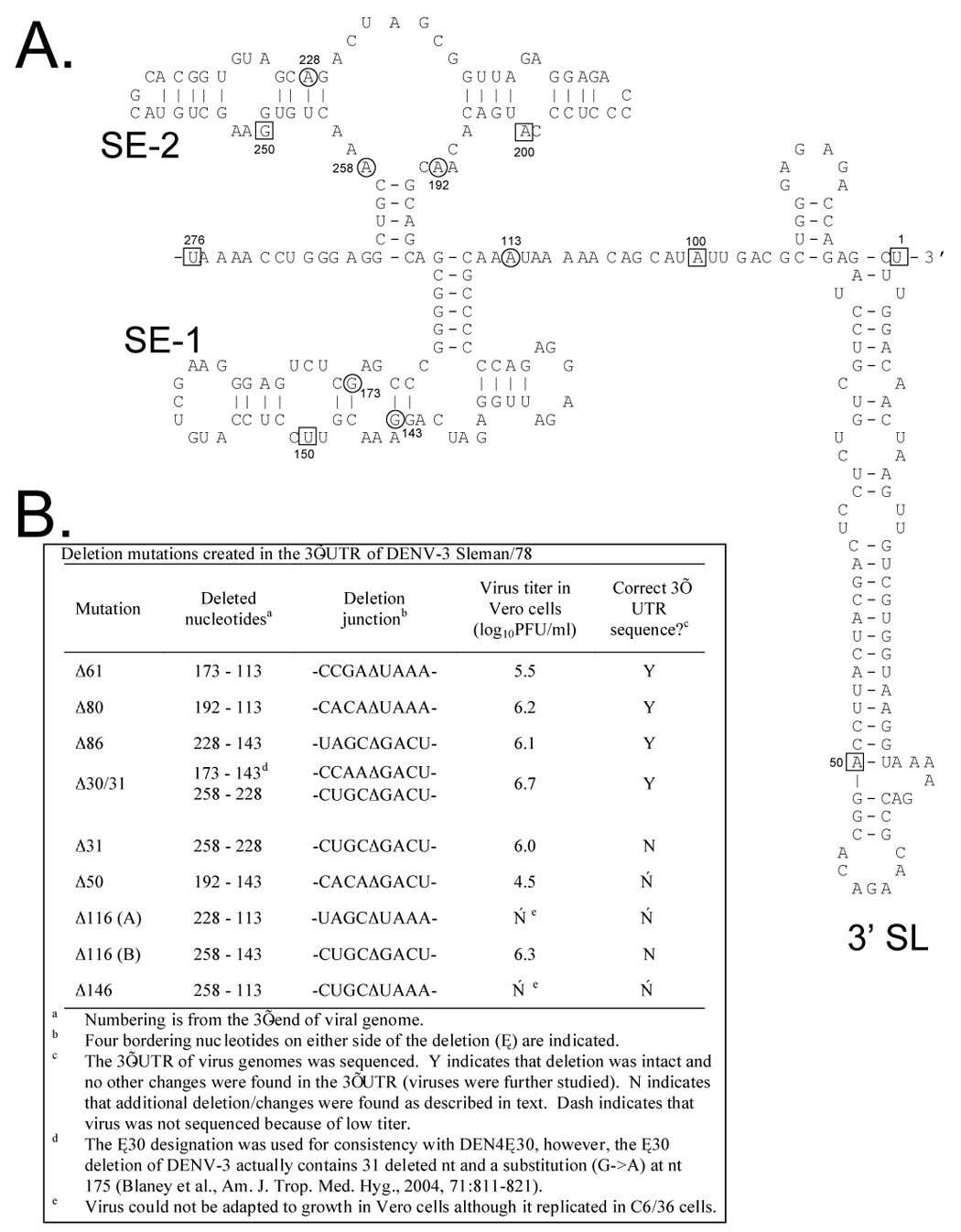
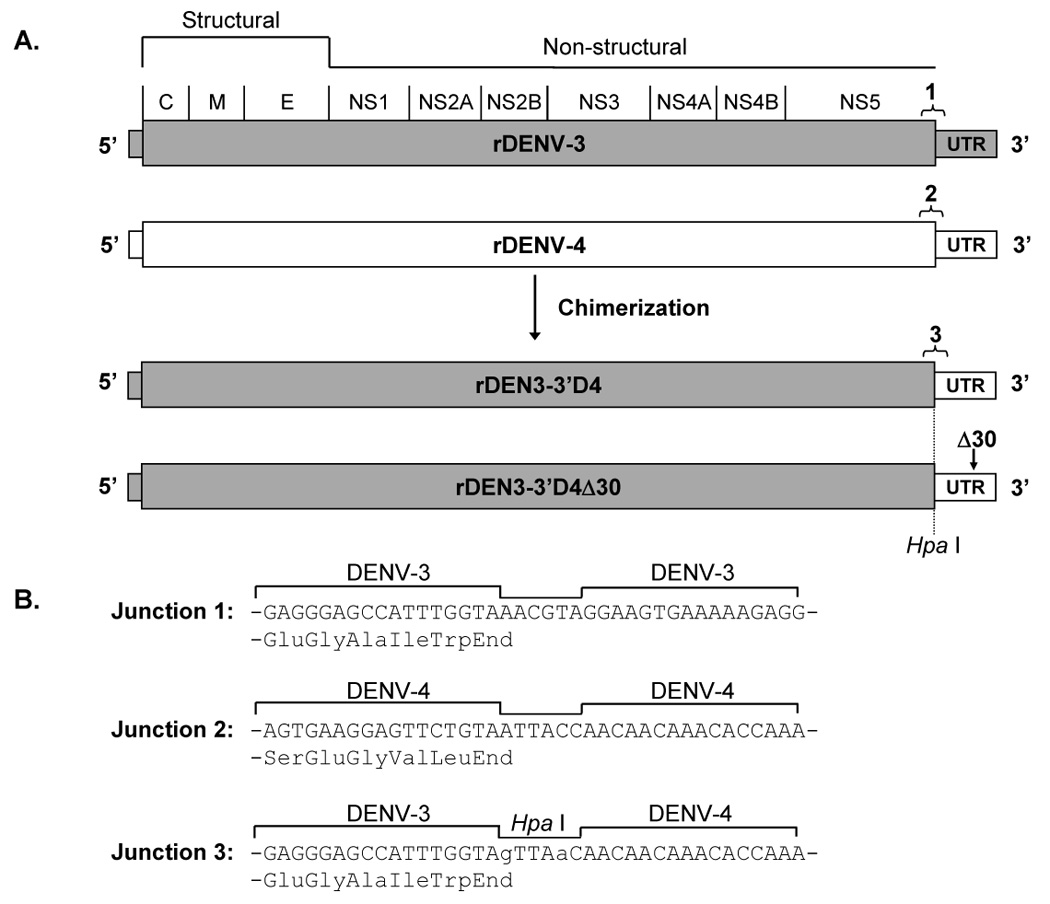
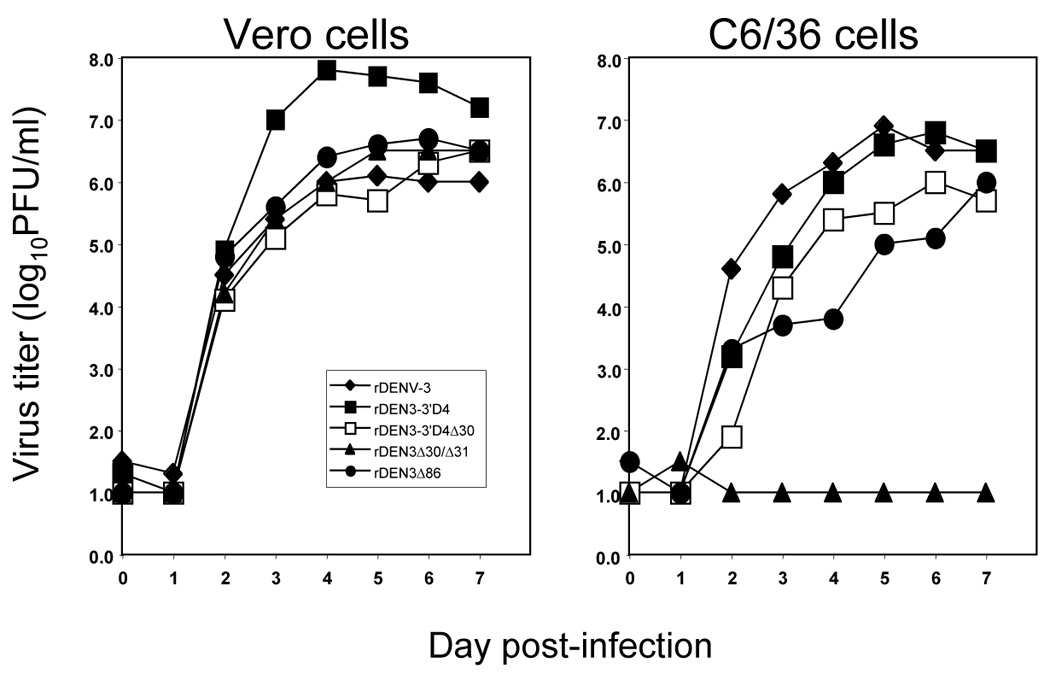
The dengue virus type 3 (DENV-3) vaccine candidate, rDEN3Delta30, was previously found to be under-attenuated in both SCID-HuH-7 mice and rhesus monkeys. Herein, two strategies have been employed to generate attenuated rDEN3 vaccine candidates which retain the full complement of structural and nonstructural proteins of DENV-3 and thus are able to induce humoral or cellular immunity to each of the DENV-3 proteins. First, using the predicted secondary structure of the 3' untranslated region (3'-UTR) of DENV-3 to design novel deletions, nine deletion mutant viruses were engineered and found to be viable. Four of nine deletion mutants replicated efficiently in Vero cells and were genetically stable. Second, chimeric rDENV-3 viruses were generated by replacement of the 3'-UTR of the rDENV-3 cDNA clone with that of rDENV-4 or rDEN4Delta30 yielding the rDEN3-3'D4 and rDEN3-3'D4Delta30 viruses, respectively. Immunization of rhesus monkeys with either of two deletion mutant viruses, rDEN3Delta30/31 and rDEN3Delta86, or with rDEN3-3'D4Delta30 resulted in infection without detectable viremia, with each virus inducing a strong neutralizing antibody response capable of conferring protection from DENV-3 challenge. The rDEN3Delta30/31 virus showed a strong host range restriction phenotype with complete loss of replication in C6/36 mosquito cells despite robust replication in Vero cells. In addition, rDEN3Delta30/31 had reduced replication in Toxorynchites mosquitoes following intrathoracic inoculation. The results are discussed in the context of vaccine development and the physical structure of the DENV 3'-UTR.
Figures
References
-
- WHO. Dengue haemorrhagic fever: diagnosis, treatment prevention and control. 2nd ed. Geneva: WHO; 1997.
-
- Gubler DJ, Meltzer M. Impact of dengue/dengue hemorrhagic fever on the developing world. Adv Virus Res. 1999;53:35–70. - PubMed
-
- Gubler DJ. The global pandemic of dengue/dengue haemorrhagic fever: current status and prospects for the future. Ann Acad Med Singapore. 1998;27(2):227–234. - PubMed
-
- Burke DS, Monath TP. Flaviviruses. In: Knipe DM, Howley PM, editors. Fields Virology. Fourth ed. Philadelphia: Lippincott Williams and Wilkins; 2001. pp. 1043–1125.
Publication types
MeSH terms
Substances
Grants and funding
LinkOut - more resources
Full Text Sources
Other Literature Sources
Medical
