


Gamma-tocopherol supplementation alone and in combination with alpha-tocopherol alters biomarkers of oxidative stress and inflammation in subjects with metabolic syndrome
- PMID: 18191645
- PMCID: PMC2676174
- DOI: 10.1016/j.freeradbiomed.2007.12.018
Gamma-tocopherol supplementation alone and in combination with alpha-tocopherol alters biomarkers of oxidative stress and inflammation in subjects with metabolic syndrome
Abstract
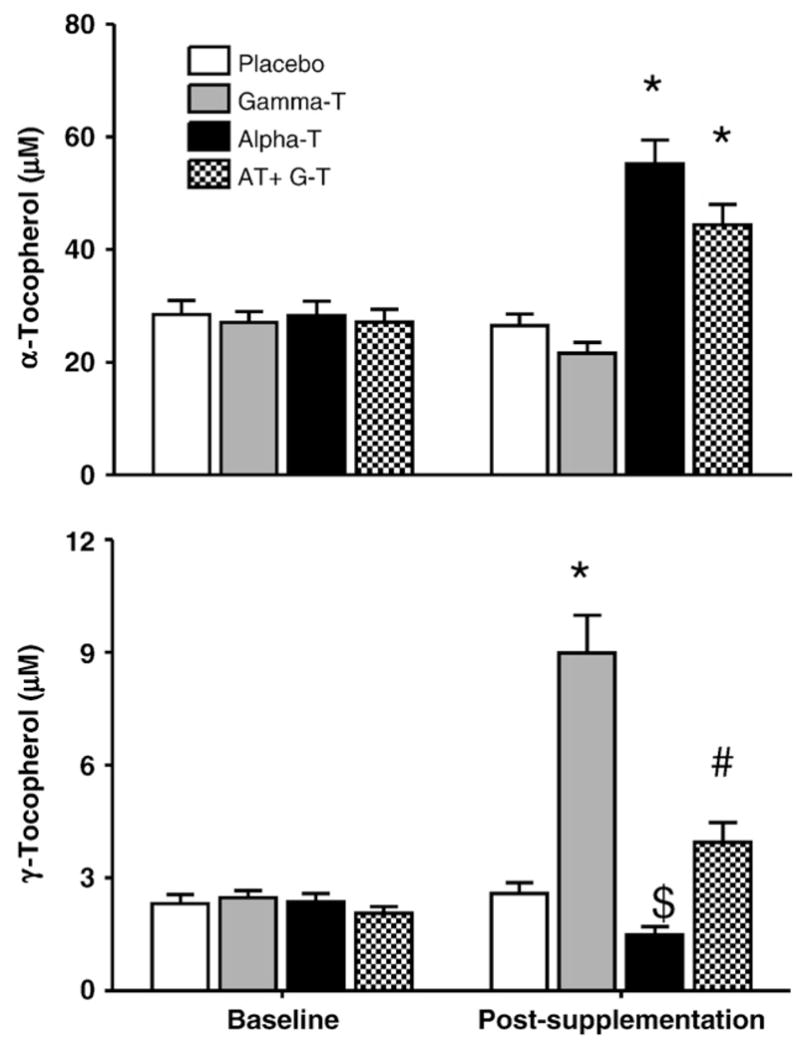
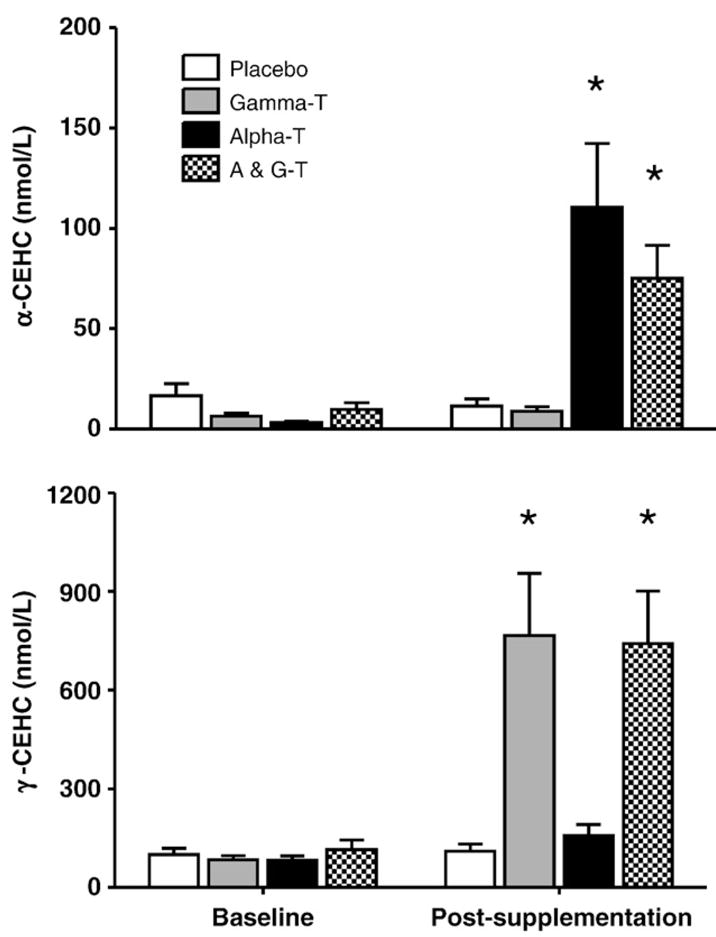
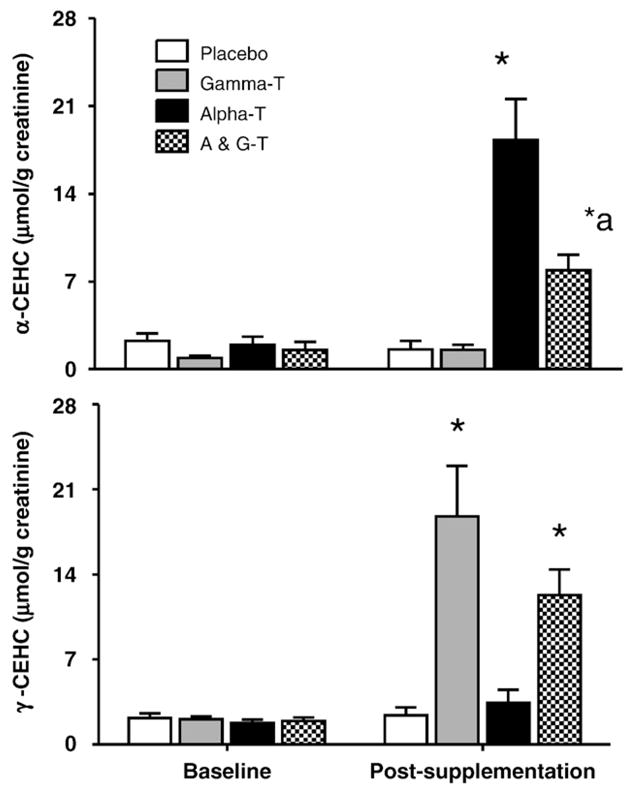
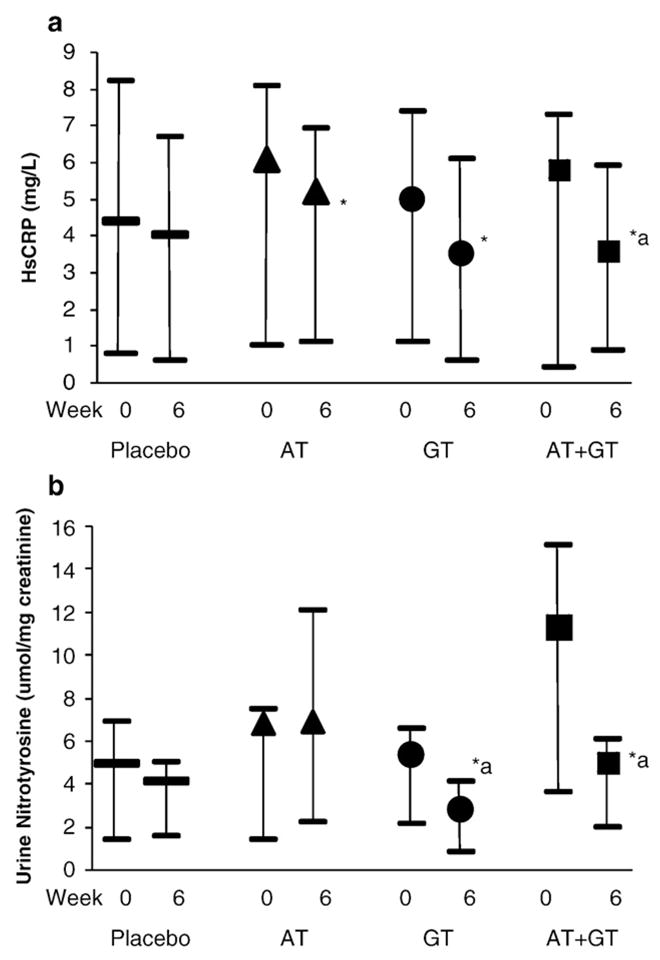
Metabolic syndrome (MetS) is associated with increased incidence of diabetes and cardiovascular disease (CVD). Prospective clinical trials with alpha-tocopherol (AT) have not yielded positive results. Because AT supplementation decreases circulating gamma-tocopherol (GT), we evaluated supplementation with GT (800 mg/day), AT (800 mg/day), the combination or placebo for 6 weeks alone AT and GT concentrations, biomarkers of oxidative stress, and inflammation in subjects with MetS (n=20/group). Plasma AT and GT levels increased following supplementation with AT alone or GT alone or in combination. AT supplementation significantly decreased GT levels. Urinary alpha- and gamma-CEHC, metabolites of the respective Ts, also increased correspondingly, i.e., alpha-CEHC with AT and gamma-CEHC with GT supplementation, compared to placebo. HsCRP levels significantly decreased in the combined AT+GT group. LPS-activated whole blood release of IL-1 and IL-6 did not change. There was a significant decrease in TNF with AT alone or in combination with GT. Plasma MDA/HNE and lipid peroxides were significantly decreased with AT, GT, or in combination. Nitrotyrosine levels were significantly decreased only with GT or GT+AT but not with AT compared to placebo. Thus, the combination of AT and GT supplementation appears to be superior to either supplementation alone on biomarkers of oxidative stress and inflammation and needs to be tested in prospective clinical trials to elucidate its utility in CVD prevention.
Figures
References
-
- Isomaa B, Almgren P, Tuomi T, Forsen B, Lahti K, Nissen M, Taskinen MR, Groop L. Cardiovascular morbidity and mortality associated with the metabolic syndrome. Diabetes Care. 2001;24:683–689. - PubMed
-
- Lorenzo C, Williams K, Hunt KJ, Haffner SM. The National Cholesterol Education Program–Adult Treatment Panel III, International Diabetes Federation, and World Health Organization definitions of the metabolic syndrome as predictors of incident cardiovascular disease and diabetes. Diabetes Care. 2007;30:8–13. - PubMed
-
- Jialal I, Devaraj S. Scientific evidence to support a vitamin E and heart disease health claim: research needs. J Nutr. 2005;135:348–353. - PubMed
-
- Hathcock JN, Azzi A, Blumberg J, Bray T, Dickinson A, Frei B, Jialal I, Johnston CS, Kelly FJ, Kraemer K, Packer L, Parthasarathy S, Sies H, Traber MG. Vitamins E and C are safe across a broad range of intakes. Am J Clin Nutr. 2005;81:736–745. - PubMed
-
- Devaraj S, Jialal I. Failure of vitamin E in clinical trials: is gamma-tocopherol the answer? Nutr Rev. 2005;63:290–293. - PubMed
Publication types
MeSH terms
Substances
Grants and funding
LinkOut - more resources
Full Text Sources
Medical
Miscellaneous
