


Mouse Models of Lipodystrophy Key reagents for the understanding of the metabolic syndrome
- PMID: 18193096
- PMCID: PMC2194626
- DOI: 10.1016/j.ddmod.2007.10.003
Mouse Models of Lipodystrophy Key reagents for the understanding of the metabolic syndrome
Abstract
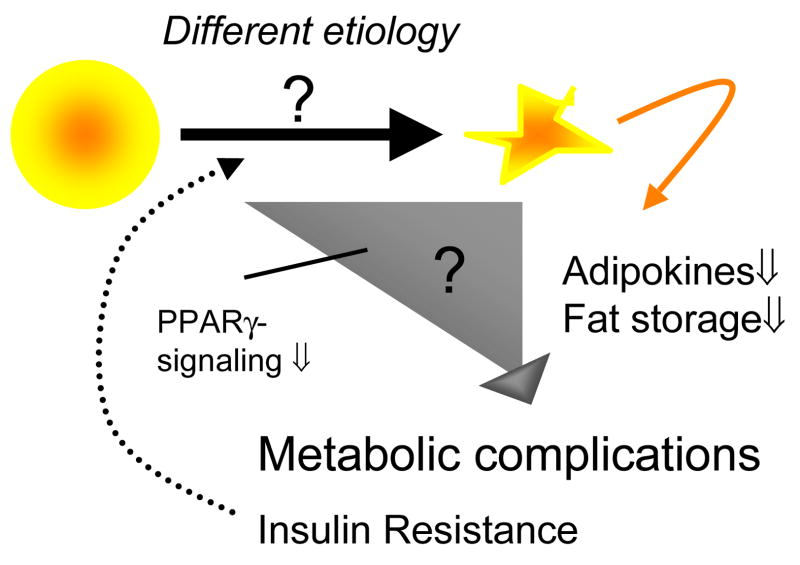
Both the disproportionate loss of adipose tissue in the case of lipodystrophies and the disproportionate gain of adipose tissue in obesity are frequently associated with an increase in insulin resistance and its complications. Leptin replacement is a very promising therapeutic approach for the management of the complications of lipodystrophy. In contrast, leptin treatment for the reversal of obesity-related metabolic disorders has not proven to be successful. There is a need to better understand both of these phenomena. Mouse models of lipodystrophy may provide us with new pharmaceutical targets for the treatment and prevention of metabolic disturbances related to dysfunctional adipose tissue both in the context of lipodystrophy and obesity.
Figures
References
-
- Hegele RA, et al. Thematic review series: Adipocyte Biology. Lipodystrophies: windows on adipose biology and metabolism. J Lipid Res. 2007;48 (7):1433–1444. - PubMed
-
- Garg A. Adipose tissue dysfunction in obesity and lipodystrophy. Clin Cornerstone. 2006;8(Suppl 4):S7–S13. - PubMed
-
- Ebihara K, et al. Efficacy and safety of leptin-replacement therapy and possible mechanisms of leptin actions in patients with generalized lipodystrophy. J Clin Endocrinol Metab. 2007;92 (2):532–541. - PubMed
-
- Javor ED, et al. Long-term efficacy of leptin replacement in patients with generalized lipodystrophy. Diabetes. 2005;54 (7):1994–2002. - PubMed
Grants and funding
LinkOut - more resources
Full Text Sources
Other Literature Sources