


Modified posterior approach to total hip arthroplasty to enhance joint stability
- PMID: 18196409
- PMCID: PMC2505149
- DOI: 10.1007/s11999-007-0056-8
Modified posterior approach to total hip arthroplasty to enhance joint stability
Abstract
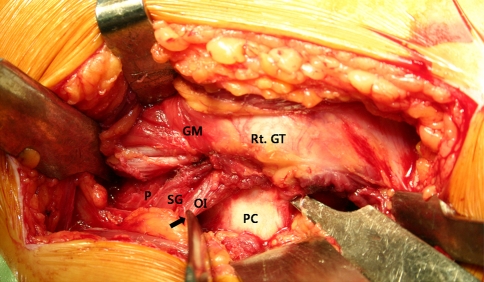
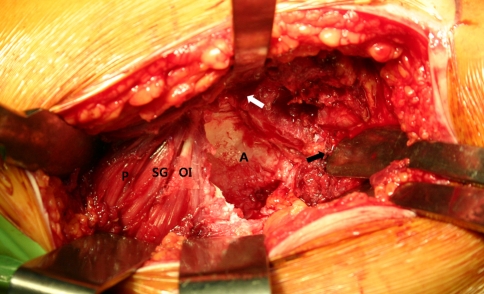
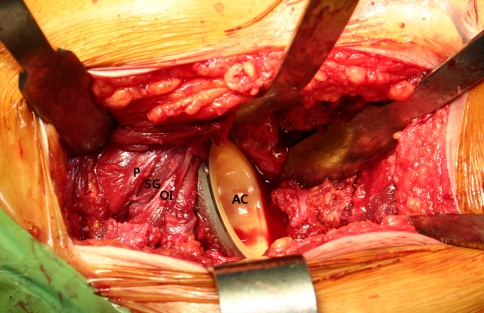
We modified the posterior approach by preserving the external rotator muscles to enhance joint stability after primary THA. We asked whether this modified posterior approach would have a lower dislocation rate than the conventional posterior approach, with and without a repair of external rotator muscles. We retrospectively divided 557 patients (670 hips) who had undergone primary THA into three groups based on how the external rotator muscles had been treated during surgery: (1) not repaired after sectioning, (2) repaired after sectioning, or (3) not sectioned and preserved. The minimum followup was 1 year. In the group with preserved external rotator muscles, we observed no dislocations; in comparison, the dislocation rates for the repaired rotator group and the no-repair group were 3.9% and 5.3%, respectively. This modified posterior approach, which preserves the short external rotator muscles, seemed effective in preventing early dislocation after primary THA.
Level of evidence: Level III, therapeutic study. See the Guidelines for Authors for a complete description of levels of evidence.
Figures
References
-
- Harris WH. Traumatic arthritis of the hip after dislocation and acetabular fractures: treatment by mold arthroplasty: an end-result study using a new method of result evaluation. J Bone Joint Surg Am. 1969;51:737–755. - PubMed
-
- Hedley AK, Hendren DH, Mead LP. A posterior approach to the hip joint with complete posterior capsular and muscular repair. J Arthroplasty. 1990;5(Suppl):S57–S66. - PubMed
-
- Hovelius L, Hussenius A, Thorling J. Posterior versus lateral approach for hip arthroplasty. Acta Orthop Scand. 1977;48:47–51. - PubMed
MeSH terms
LinkOut - more resources
Full Text Sources
Medical
Research Materials
