Predictive value of brain natriuretic peptides in patients on peritoneal dialysis: results from the ADEMEX trial
- PMID: 18199844
- PMCID: PMC2390944
- DOI: 10.2215/CJN.03820907
Predictive value of brain natriuretic peptides in patients on peritoneal dialysis: results from the ADEMEX trial
Abstract
Background and objectives: Natriuretic peptides have been suggested to be of value in risk stratification in dialysis patients. Data in patients on peritoneal dialysis remain limited.
Design, setting, participants, & measurements: Patients of the ADEMEX trial (ADEquacy of peritoneal dialysis in MEXico) were randomized to a control group [standard 4 x 2L continuous ambulatory peritoneal dialysis (CAPD); n = 484] and an intervention group (CAPD with a target creatinine clearance > or =60 L/wk/1.73 m(2); n = 481). Natriuretic peptides were measured at baseline and correlated with other parameters as well as evaluated for effects on patient outcomes.
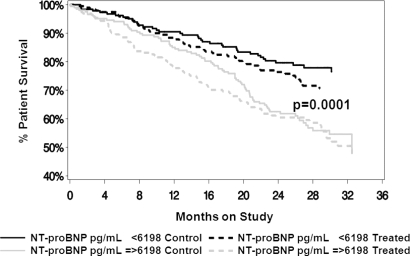
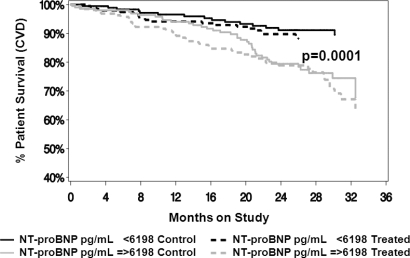
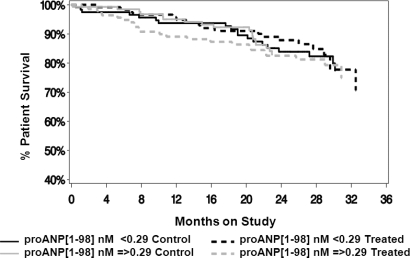
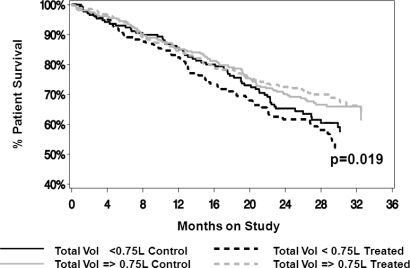
Results: Control group and intervention group were comparable at baseline with respect to all measured parameters. Baseline values of natriuretic peptides were elevated and correlated significantly with levels of residual renal function but not with body size or diabetes. Baseline values of N-terminal fragment of B-type natriuretic peptide (NT-proBNP) but not proANP(1-30), proANP(31-67), or proANP(1-98) were independently highly predictive of overall survival and cardiovascular mortality. Volume removal was also significantly correlated with patient survival.
Conclusions: NT-proBNP have a significant predictive value for survival of CAPD patients and may be of value in guiding risk stratification and potentially targeted therapeutic interventions.
Figures
References
-
- Horl WH: Natriuretic peptides in acute and chronic kidney disease and during renal replacement therapy. J Investig Med 53: 366–370, 2005 - PubMed
-
- Suresh M, Farrington K: Natriuretic peptides and the dialysis patient. Semin Dial 18: 409–419, 2005 - PubMed
-
- Zoccali C, Mallamaci F, Benedetto FA, Tripepi G, Parlongo S, Cataliotti A, Cutrupi S, Giacone G, Bellanuova I, Cottini E, Malatino LS: Cardiac natriuretic peptides are related to left ventricular mass and function and predict mortality in dialysis patients. J Am Soc Nephrol 12: 1508–1515, 2001 - PubMed
-
- Ishizaka Y, Yamamoto Y, Fukunaga T, Yokota N, Kida O, Kitamura K, Kangawa K, Minamino N, Matsuo H, Eto T: Plasma concentration of human brain natriuretic peptide in patients on hemodialysis. Am J Kidney Dis 24: 461–472, 1994 - PubMed
-
- Fagugli RM, Palumbo B, Ricciardi D, Pasini P, Santirosi P, Vecchi L, Pasticci F, Palumbo R: Association between brain natriuretic peptide and extracellular water in hemodialysis patients. Nephron Clin Pract 95: c60–c66, 2003 - PubMed
Publication types
MeSH terms
Substances
LinkOut - more resources
Full Text Sources
Other Literature Sources
Medical
Research Materials