


Structure, function and physiological consequences of virally encoded chemokine seven transmembrane receptors
- PMID: 18204488
- PMCID: PMC2268052
- DOI: 10.1038/sj.bjp.0707660
Structure, function and physiological consequences of virally encoded chemokine seven transmembrane receptors
Abstract
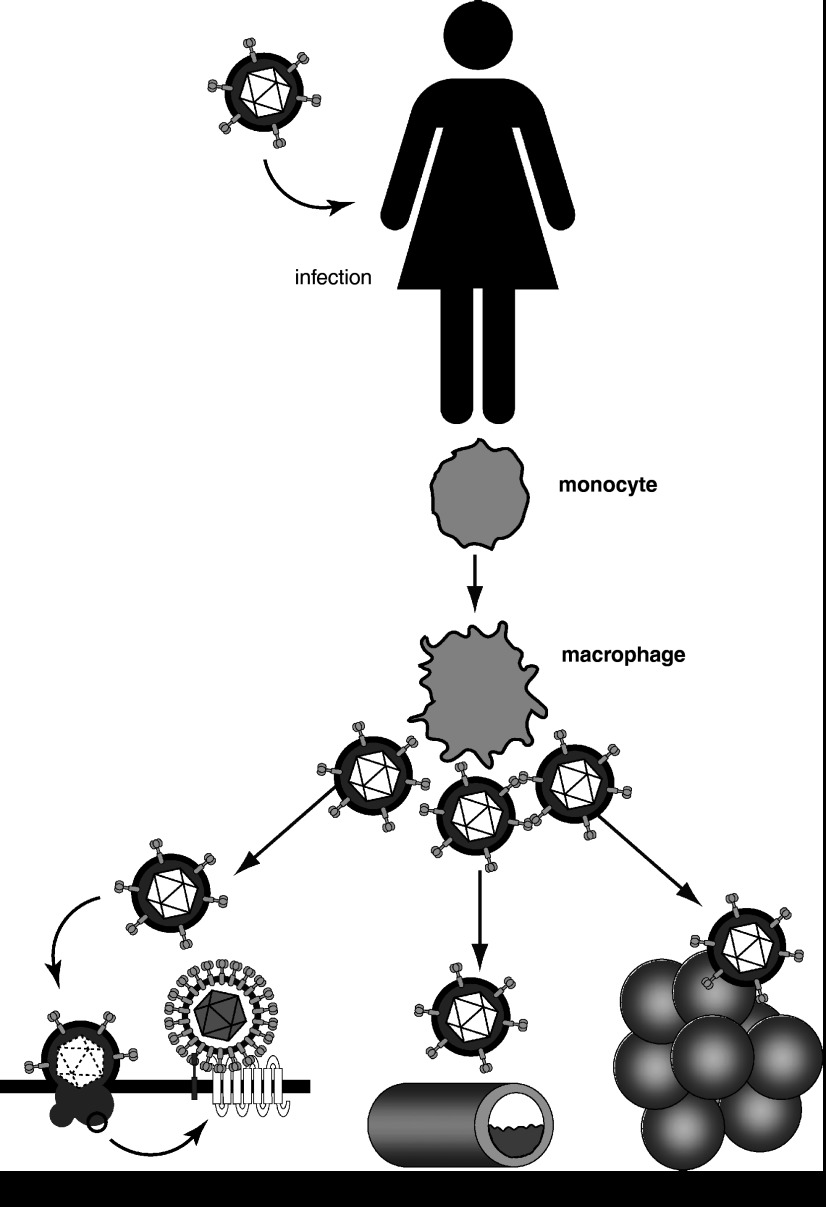
A number of human and animal herpes viruses encode G-protein coupled receptors with seven transmembrane (7TM) segments-most of which are clearly related to human chemokine receptors. It appears, that these receptors are used by the virus for immune evasion, cellular transformation, tissue targeting, and possibly for cell entry. In addition, many virally-encoded chemokine 7TM receptors have been suggested to be causally involved in pathogenic phenotypes like Kaposi sarcoma, atherosclerosis, HIV-infection and tumour development. The role of these receptors during the viral life cycle and in viral pathogenesis is still poorly understood. Here we focus on the current knowledge of structure, function and trafficking patterns of virally encoded chemokine receptors and further address the putative roles of these receptors in virus survival and host -cell and/or -immune system modulation. Finally, we highlight the emerging impact of these receptor on virus-mediated diseases.
Figures

References
-
- Ahuja SK, Murphy PM.1999Viral mimicry of chemokines and chemokine receptorsIn: Herbert CA (ed).Chemokines in Disease Humana Press Inc.: Totowa, NJ; 235–251.
-
- Arvanitakis L, Geras-Raaka E, Varma A, Gershengorn MC, Cesarman E. Human herpesvirus KSHV encodes a constitutively active G-protein-coupled receptor linked to cell proliferation. Nature. 1997;385:347–350. - PubMed
-
- Bais C, Santomasso B, Coso O, Arvanitakis L, Raaka EG, Gutkind JS, et al. G-protein-coupled receptor of Kaposi's sarcoma-associated herpesvirus is a viral oncogene and angiogenesis activator. Nature. 1998;391:86–89. - PubMed
-
- Bais C, Van GA, Eroles P, Mutlu A, Chiozzini C, Dias S, et al. Kaposi's sarcoma associated herpesvirus G protein-coupled receptor immortalizes human endothelial cells by activation of the VEGF receptor-2/KDR. Cancer Cell. 2003;3:131–143. - PubMed
Publication types
MeSH terms
Substances
LinkOut - more resources
Full Text Sources
Medical
