


Histone deacetylases 1, 2 and 3 are highly expressed in prostate cancer and HDAC2 expression is associated with shorter PSA relapse time after radical prostatectomy
- PMID: 18212746
- PMCID: PMC2243142
- DOI: 10.1038/sj.bjc.6604199
Histone deacetylases 1, 2 and 3 are highly expressed in prostate cancer and HDAC2 expression is associated with shorter PSA relapse time after radical prostatectomy
Abstract
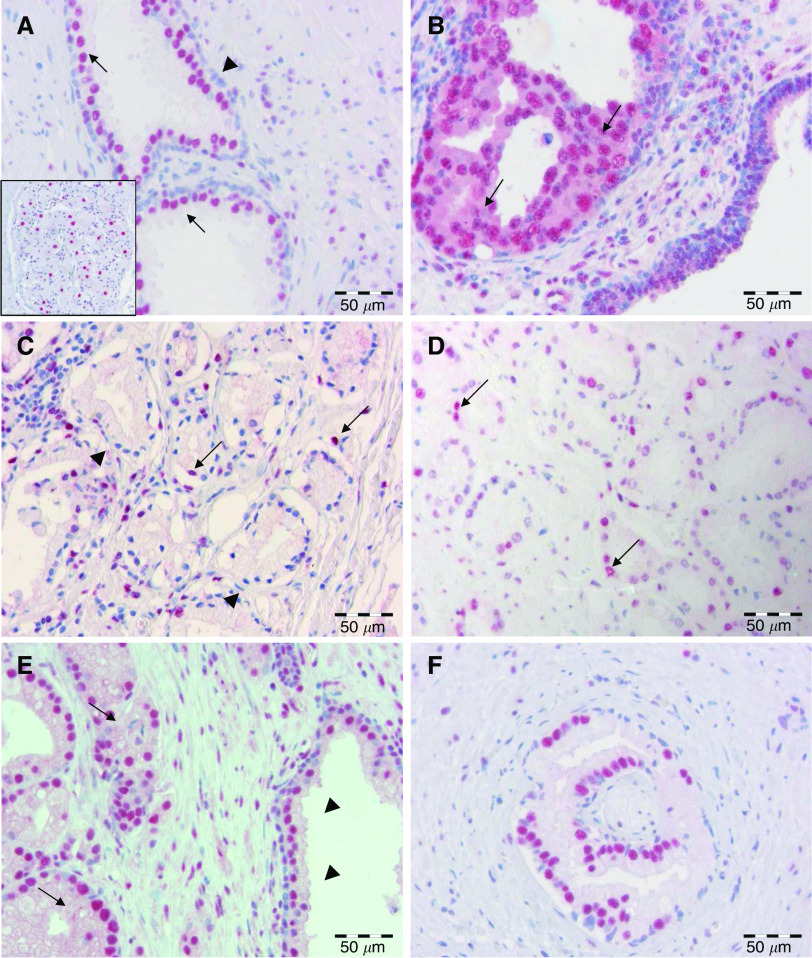
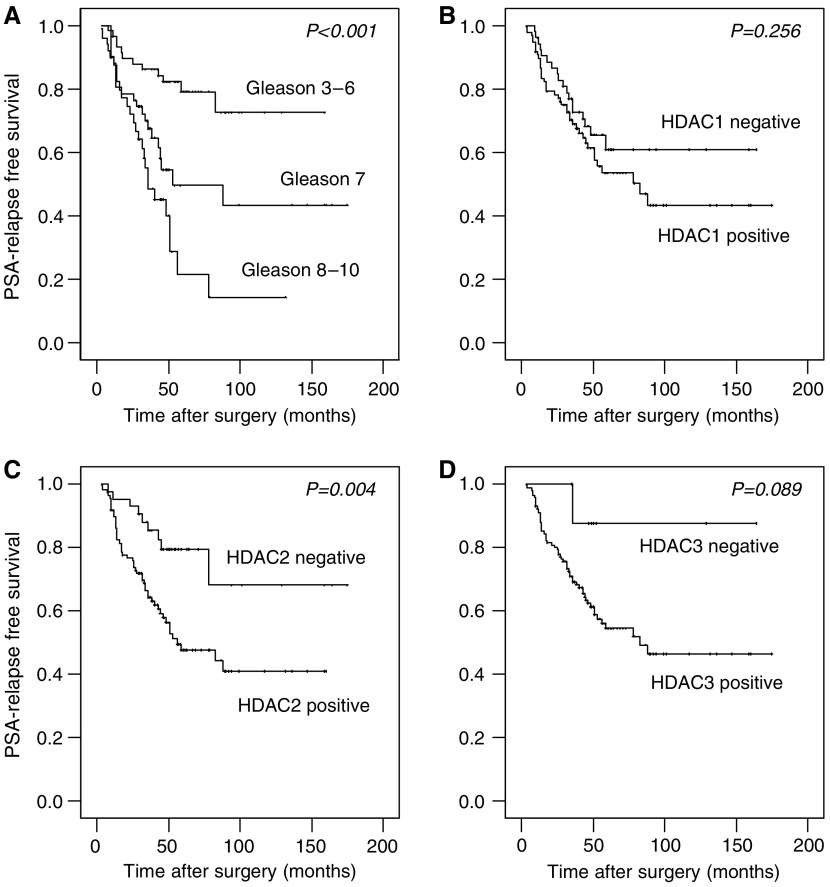
High activity of histone deacetylases (HDACs) causes epigenetic alterations associated with malignant cell behaviour. Consequently, HDAC inhibitors have entered late-phase clinical trials as new antineoplastic drugs. However, little is known about expression and function of specific HDAC isoforms in human tumours including prostate cancer. We investigated the expression of class I HDACs in 192 prostate carcinomas by immunohistochemistry and correlated our findings to clinicopathological parameters including follow-up data. Class I HDAC isoforms were strongly expressed in the majority of the cases (HDAC1: 69.8%, HDAC2: 74%, HDAC3: 94.8%). High rates of HDAC1 and HDAC2 expression were significantly associated with tumour dedifferentiation. Strong expression of all HDACs was accompanied by enhanced tumour cell proliferation. In addition, HDAC2 was an independent prognostic marker in our prostate cancer cohort. In conclusion, we showed that the known effects of HDACs on differentiation and proliferation of cancer cells observed in vitro can also be confirmed in vivo. The class I HDAC isoforms 1, 2 and 3 are differentially expressed in prostate cancer, which might be important for upcoming studies on HDAC inhibitors in this tumour entity. Also, the highly significant prognostic value of HDAC2 clearly deserves further study.
Figures
References
-
- Andren O, Fall K, Franzen L, Andersson SO, Johansson JE, Rubin MA (2006) How well does the Gleason score predict prostate cancer death? A 20-year followup of a population based cohort in Sweden. J Urol 175: 1337–1340 - PubMed
-
- Blaheta RA, Michaelis M, Driever PH, Cinatl Jr J (2005) Evolving anticancer drug valproic acid: insights into the mechanism and clinical studies. Med Res Rev 25: 383–397 - PubMed
-
- Butler LM, Agus DB, Scher HI, Higgins B, Rose A, Cordon-Cardo C, Thaler HT, Rifkind RA, Marks PA, Richon VM (2000) Suberoylanilide hydroxamic acid, an inhibitor of histone deacetylase, suppresses the growth of prostate cancer cells in vitro and in vivo. Cancer Res 60: 5165–5170 - PubMed
-
- Carroll PR (2005) Early stage prostate cancer – do we have a problem with over-detection, overtreatment or both? J Urol 173: 1061–1062 - PubMed
-
- Chinnaiyan P, Vallabhaneni G, Armstrong E, Huang SM, Harari PM (2005) Modulation of radiation response by histone deacetylase inhibition. Int J Radiat Oncol Biol Phys 62: 223–229 - PubMed
Publication types
MeSH terms
Substances
LinkOut - more resources
Full Text Sources
Other Literature Sources
Medical
Research Materials
Miscellaneous
