


The genetic architecture of fasting plasma triglyceride response to fenofibrate treatment
- PMID: 18212815
- PMCID: PMC2546577
- DOI: 10.1038/sj.ejhg.5202003
The genetic architecture of fasting plasma triglyceride response to fenofibrate treatment
Abstract
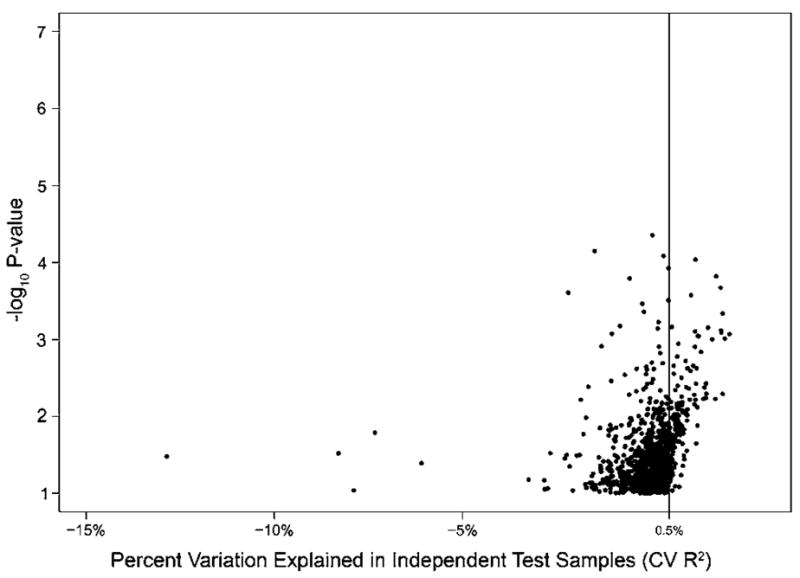
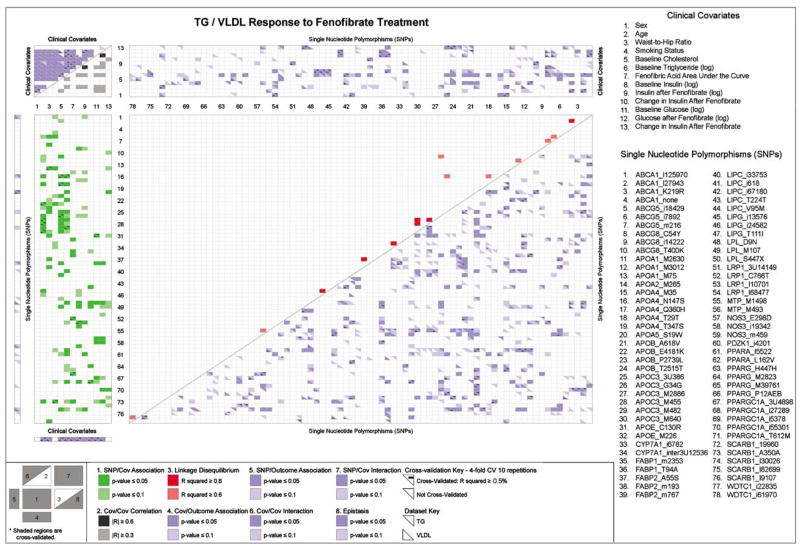
Metabolic response to the triglyceride (TG)-lowering drug, fenofibrate, is shaped by interactions between genetic and environmental factors, yet knowledge regarding the genetic determinants of this response is primarily limited to single-gene effects. Since very low-density lipoprotein (VLDL) is the central carrier of fasting TG, identifying factors that affect both total TG and VLDL-TG response to fenofibrate is critical for predicting individual fenofibrate response. As part of the Genetics of Lipid Lowering Drugs and Diet Network (GOLDN) study, 688 individuals from 161 families were genotyped for 91 single-nucleotide polymorphisms (SNPs) in 25 genes known to be involved in lipoprotein metabolism. Using generalized estimating equations to control for family structure, we performed linear modeling to investigate whether single SNPs, single covariates, SNP-SNP interactions, and/or SNP-covariate interactions had a significant association with the change in total fasting TG and fasting VLDL-TG after 3 weeks of fenofibrate treatment. A 10-iteration fourfold cross-validation procedure was used to validate significant associations and quantify their predictive abilities. More than one-third of the significant, cross-validated SNP-SNP interactions predicting each outcome involved just five SNPs, showing that these SNPs are of key importance to fenofibrate response. Multiple variable models constructed using the top-ranked SNP--covariate interactions explained 11.9% more variation in the change in TG and 7.8% more variation in the change in VLDL than baseline TG alone. These results yield insight into the complex biology of fenofibrate response, which can be used to target fenofibrate therapy to individuals who are most likely to benefit from the drug.
Figures
References
-
- Haymore BR, Parks JR, Oliver TG, Glister BC. Hypertriglyceridemia. Hosp Physician. 2005;41:17–24.
-
- Cullen P. Evidence that triglycerides are an independent coronary heart disease risk factor. Am J Cardiol. 2000;86:943–949. - PubMed
-
- Hopkins PN, Wu LL, Hunt SC, Brinton EA. Plasma triglycerides and type III hyperlipidemia are independently associated with premature familial coronary artery disease. J Am Coll Cardiol. 2005;45:1003–1012. - PubMed
-
- Ooi TC, Ooi DS. The atherogenic significance of an elevated plasma triglyceride level. Crit Rev Clin Lab Sci. 1998;35:489–516. - PubMed
-
- Yoshino G, Hirano T, Kazumi T. Dyslipidemia in diabetes mellitus. Diabetes Res Clin Pract. 1996;33:1–14. - PubMed
Publication types
MeSH terms
Substances
Grants and funding
LinkOut - more resources
Full Text Sources
Medical
Molecular Biology Databases
Research Materials
Miscellaneous
