


Starter unit specificity directs genome mining of polyketide synthase pathways in fungi
- PMID: 18215412
- PMCID: PMC3200548
- DOI: 10.1016/j.bioorg.2007.11.002
Starter unit specificity directs genome mining of polyketide synthase pathways in fungi
Abstract
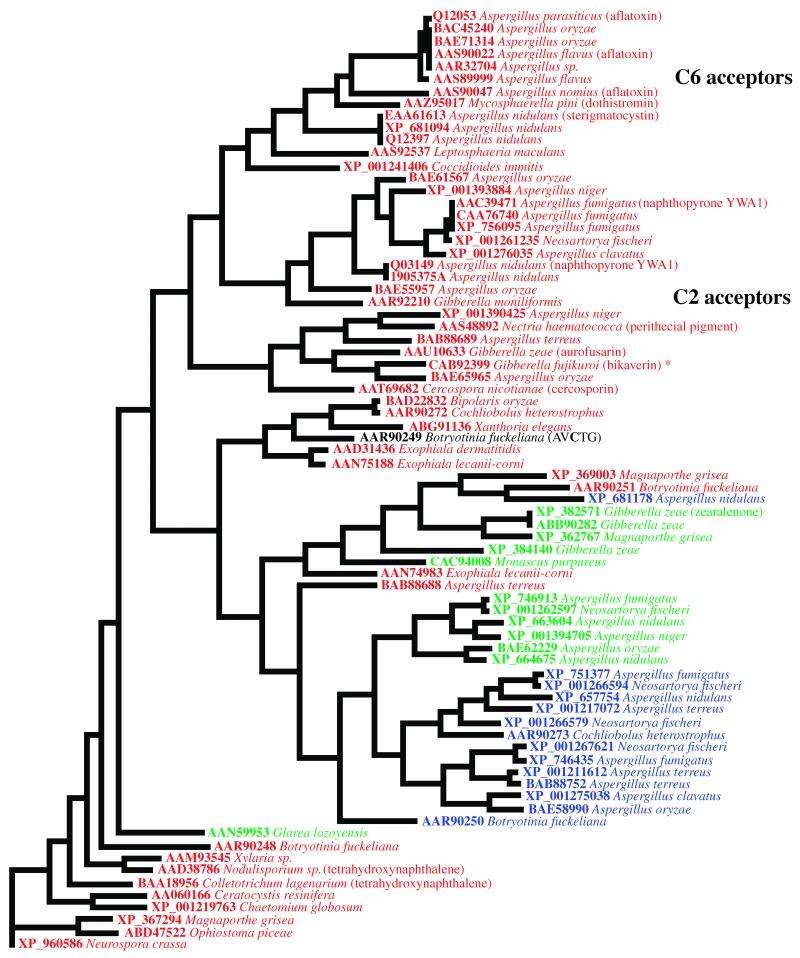
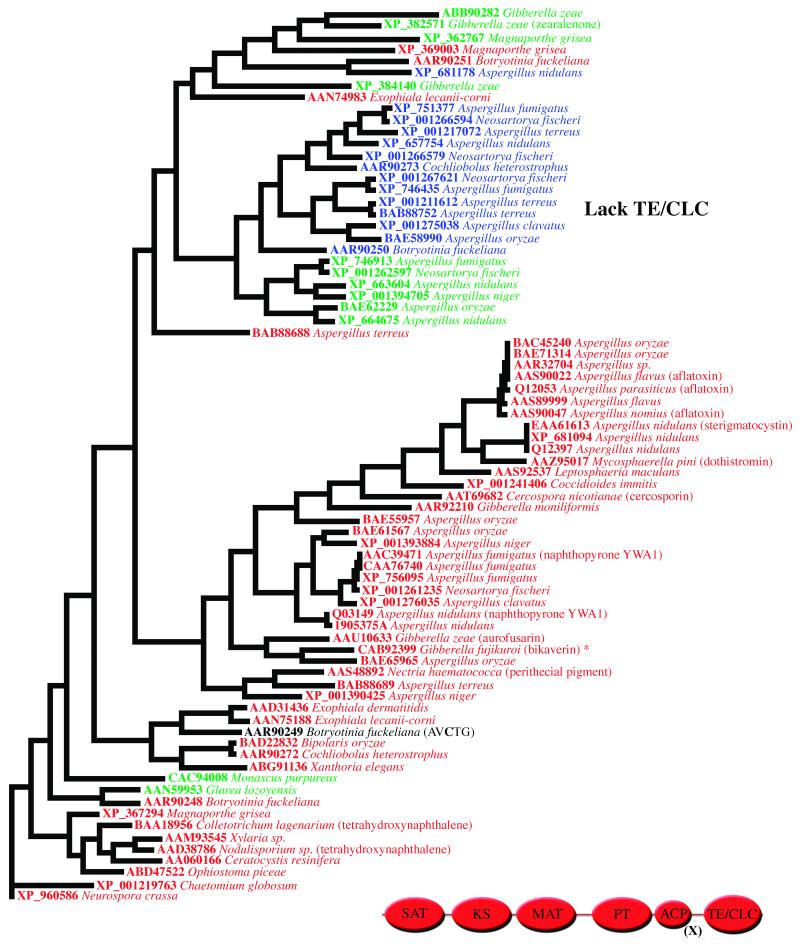
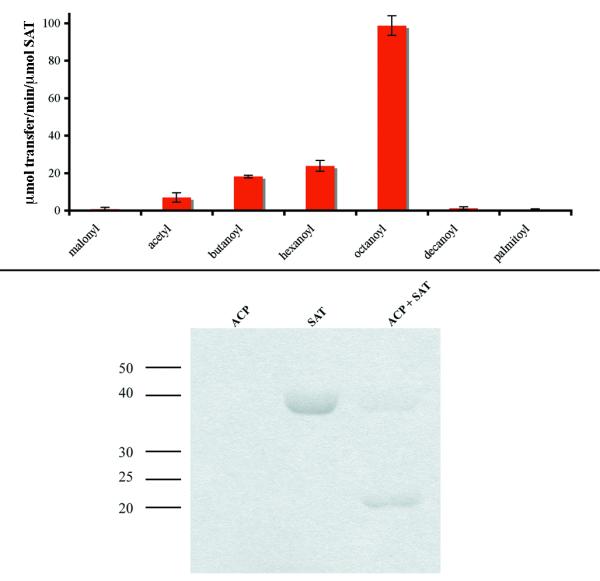
Search of the protein database with the aflatoxin pathway polyketide synthase (PKS) revealed putative PKSs in the pathogenic fungi Coccidioides immitis and Coccidioides posadasii that could require partnerships with a pair of fatty acid synthase (FAS) subunits for the biosynthesis of fatty acid-polyketide hybrid metabolites. A starter unit:acyl-carrier protein transacylase (SAT) domain was discovered in the nonreducing PKS. This domain is thought to accept the fatty acid product from the FAS to initiate polyketide synthesis. We expressed the C. immitis SAT domain in Escherichia coli and showed that this domain, unlike that from the aflatoxin pathway PKS, transferred octanoyl-CoA four times faster than hexanoyl-CoA. The SAT domain also formed a covalent octanoyl intermediate and transferred this group to a free-standing ACP domain. Our results suggest that C. immitis/posadasii, both human fungal pathogens, contain a FAS/PKS cluster with functional similarity to the aflatoxin cluster found in Aspergillus species. Dissection of the PKS and determination of in vitro SAT domain specificity provides a tool to uncover the growing number of similar sequenced pathways in fungi, and to guide elucidation of the fatty acid-polyketide hybrid metabolites that they produce.
Figures
References
-
- Machida M, Asai K, Sano M, Tanaka T, Kumagai T, Terai G, Kusumoto K, Arima T, Akita O, Kashiwagi Y, et al. Nature. 2005;438:1157–1161. - PubMed
-
- Staunton J, Weissman KJ. Nat. Prod. Rep. 2001;18:380–416. - PubMed
-
- Hitchman T, Schmidt E, Trail F, Rarick M, Linz J, Townsend CA. Bioorg. Chem. 2001;29:293–307. - PubMed
-
- Bradshaw RE, Jin H, Morgan BS, Schwelm A, Teddy OR, Young CA, Zhang S. Mycopathologia. 2006;161:283–294. - PubMed
Publication types
MeSH terms
Substances
Grants and funding
LinkOut - more resources
Full Text Sources
Research Materials
Miscellaneous
