


Low circulating levels of dehydroepiandrosterone in histologically advanced nonalcoholic fatty liver disease
- PMID: 18220286
- PMCID: PMC2906146
- DOI: 10.1002/hep.22063
Low circulating levels of dehydroepiandrosterone in histologically advanced nonalcoholic fatty liver disease
Abstract
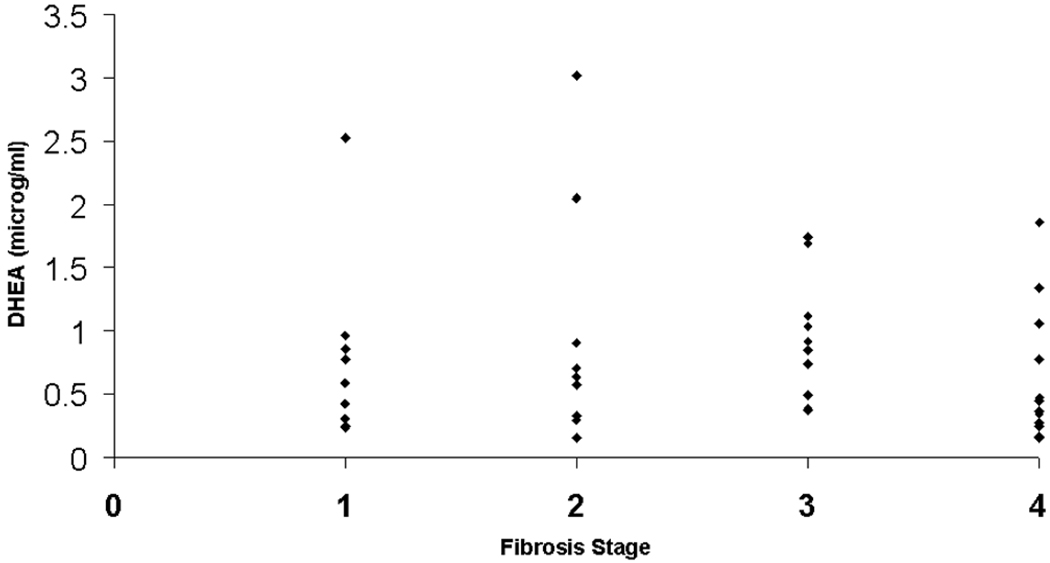
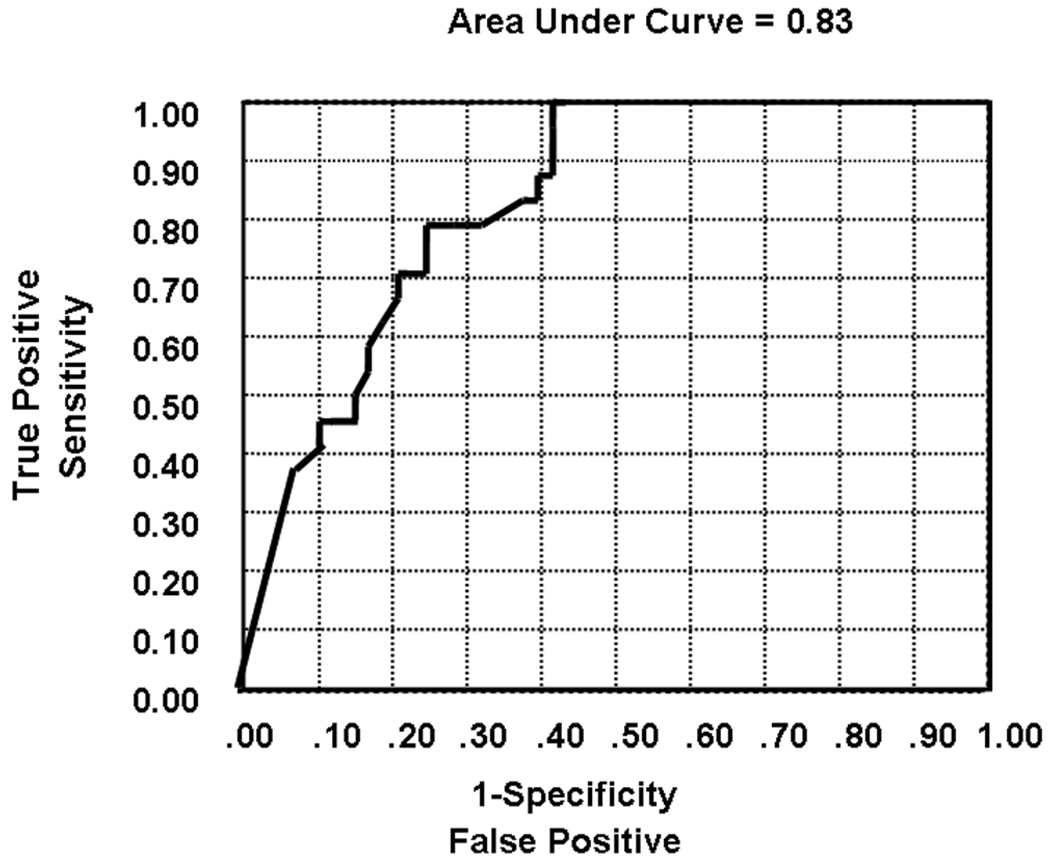
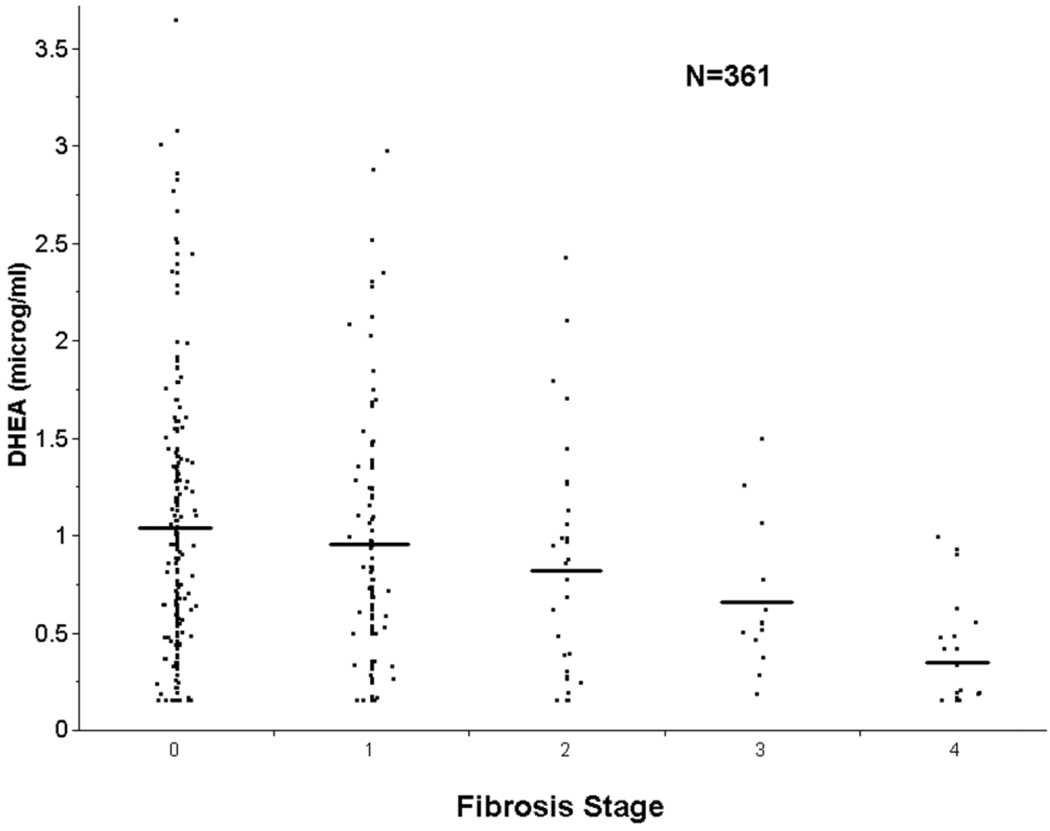
The biological basis of variability in histological progression of nonalcoholic fatty liver disease (NAFLD) is unknown. Dehydroepiandrosterone (DHEA) is the most abundant steroid hormone and has been shown to influence sensitivity to oxidative stress, insulin sensitivity, and expression of peroxisome proliferator-activated receptor alpha and procollagen messenger RNA. Our aim was to determine whether more histologically advanced NAFLD is associated with low circulating levels of DHEA. Serum samples were obtained prospectively at the time of liver biopsy in 439 patients with NAFLD (78 in an initial and 361 in validation cohorts) and in controls with cholestatic liver disease (n = 44). NAFLD was characterized as mild [simple steatosis or nonalcoholic steatohepatitis (NASH) with fibrosis stage 0-2] or advanced (NASH with fibrosis stage 3-4). Serum levels of sulfated DHEA (DHEA-S) were measured by enzyme-linked immunosorbent assay. Patients with advanced NAFLD had lower plasma levels of DHEA-S than patients with mild NAFLD in both the initial (0.25 +/- 0.07 versus 1.1 +/- 0.09 microg/mL, P < 0.001) and validation cohorts (0.47 +/- 0.06 versus 0.99 +/- 0.04 microg/mL, P < 0.001). A "dose effect" of decreasing DHEA-S and incremental fibrosis stage was observed with a mean DHEA-S of 1.03 +/- 0.05, 0.96 +/- 0.07, 0.83 +/- 0.11, 0.66 +/- 0.11, and 0.35 +/- 0.06 microg/mL for fibrosis stages 0, 1, 2, 3, and 4, respectively. All patients in both cohorts in the advanced NAFLD group had low DHEA-S levels, with the majority in the hypoadrenal range. The association between DHEA-S and severity of NAFLD persisted after adjusting for age. A relationship between disease/fibrosis severity and DHEA-S levels was not seen in patients with cholestatic liver diseases.
Conclusion: More advanced NAFLD, as indicated by the presence of NASH with advanced fibrosis stage, is strongly associated with low circulating DHEA-S. These data provide novel evidence for relative DHEA-S deficiency in patients with histologically advanced NASH.
Conflict of interest statement
Potential conflict of interest: Nothing to report.
Figures
Comment in
-
Does the hormone of eternal youth protect against nonalcoholic steatohepatitis?Hepatology. 2008 Oct;48(4):1351. doi: 10.1002/hep.22372. Hepatology. 2008. PMID: 18792129 No abstract available.
References
-
- Wanless IR, Lentz JS. Fatty liver hepatitis (steatohepatitis) and obesity: an autopsy study with analysis of risk factors. HEPATOLOGY. 1990;12:1106–1110. - PubMed
-
- Charlton M. Nonalcoholic fatty liver disease: a review of current understanding and future impact. Clin Gastroenterol Hepatol. 2004;2:1048–1058. - PubMed
-
- Kim WR, Poterucha JJ, Porayko MK, Dickson ER, Steers JL, Wiesner RH. Recurrence of nonalcoholic steatohepatitis following liver transplantation. Transplantation. 1996;62:1802–1805. - PubMed
-
- Charlton M, Kasparova P, Weston S, Lindor K, Maor-Kendler Y, Wiesner RH, et al. Frequency of nonalcoholic steatohepatitis as a cause of advanced liver disease. Liver Transpl. 2001;7:608–614. - PubMed
-
- Marchesini G, Bugianesi E, Forlani G, Cerrelli F, Lenzi M, Manini R, et al. Nonalcoholic fatty liver, steatohepatitis, and the metabolic syndrome. HEPATOLOGY. 2003;37:917–923. Erratum in: HEPATOLOGY 2003;38:536. - PubMed
Publication types
MeSH terms
Substances
Grants and funding
LinkOut - more resources
Full Text Sources
Other Literature Sources
Medical