


A non-pharmacological intervention to manage behavioral and psychological symptoms of dementia and reduce caregiver distress: design and methods of project ACT3
- PMID: 18225471
- PMCID: PMC2670989
- DOI: 10.2147/cia.s1337
A non-pharmacological intervention to manage behavioral and psychological symptoms of dementia and reduce caregiver distress: design and methods of project ACT3
Abstract
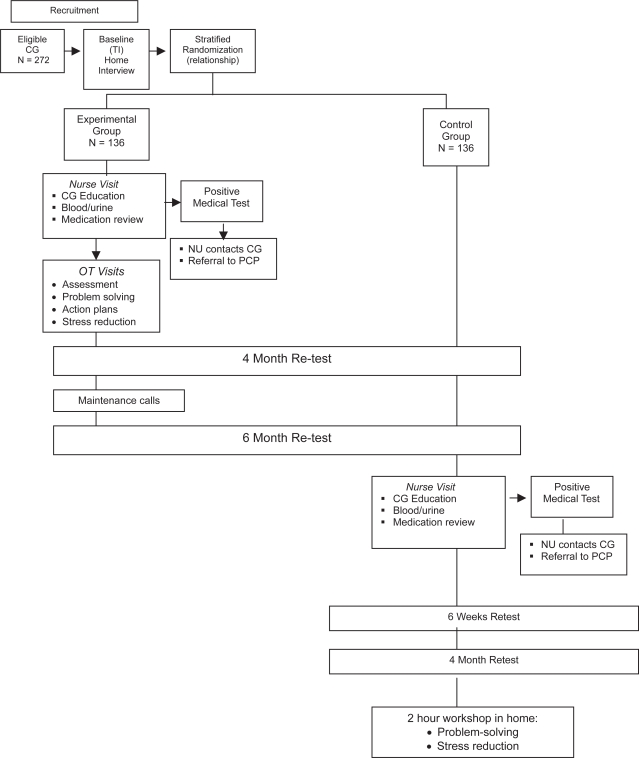
Project ACT is a randomized controlled trial designed to test the effectiveness of a non-pharmacological home-based intervention to reduce behavioral and psychological symptoms of dementia (BPSD) and caregiver distress. The study targets 272 stressed racially diverse family caregivers providing in-home care to persons with moderate stage dementia with one or more behavioral disturbances. All participants are interviewed at baseline, 4-months (main trial endpoint), and 6-months (maintenance). The four-month intervention involves up to 13 visits from an occupational therapist who works with families to problem-solve potential triggers (communication style, environmental clutter) contributing to behaviors, and instruct in strategies to reduce caregiver stress and manage targeted behaviors. To rule out infection or other potential medical contributors to behaviors, a nurse obtains blood and urine samples from the dementia patient, and conducts a medication review. Participants in the no-treatment control group are offered the nurse arm and one in-home session following trial completion at 6-months. This paper describes the research methods, theoretical and clinical aspects of this multi-component, targeted psycho-social treatment approach, and the measures used to evaluate quality of life improvements for persons with dementia and their families.
Figures
References
-
- Ballard C, Lowery K, Powell L, et al. Impact of behavioral and psychological symptoms of dementia on caregivers. Int Psychogeriatr. 2000;12:93–105.
-
- Baron RM, Kenny DA. The moderator-mediator variable distinction in social psychological research: Conceptual, strategic, and statistical considerations. J Pers Soc Psychol. 1986;51:1173–82. - PubMed
-
- Battle CC, Imber SD, Hoen-Saric R, et al. Targets complaints as criteria of improvement. Am J Psychother. 1966;20:184–92. - PubMed
-
- Baumgarten M, Becker R, Gauthier S. Validity and reliability of the Dementia Behavior Rating Scale. J Am Geriatr Soc. 1990;38:221–6. - PubMed
-
- Boucher LA. Disruptive behaviors in individuals with Alzheimer’s disease: a behavioral approach. Am J Alzheimer Dis. 1999;14:351–6.
Publication types
MeSH terms
Grants and funding
LinkOut - more resources
Full Text Sources
Medical
