


Reduction of estrogen-induced transformation of mouse mammary epithelial cells by N-acetylcysteine
- PMID: 18226522
- PMCID: PMC2722841
- DOI: 10.1016/j.jsbmb.2007.12.003
Reduction of estrogen-induced transformation of mouse mammary epithelial cells by N-acetylcysteine
Abstract
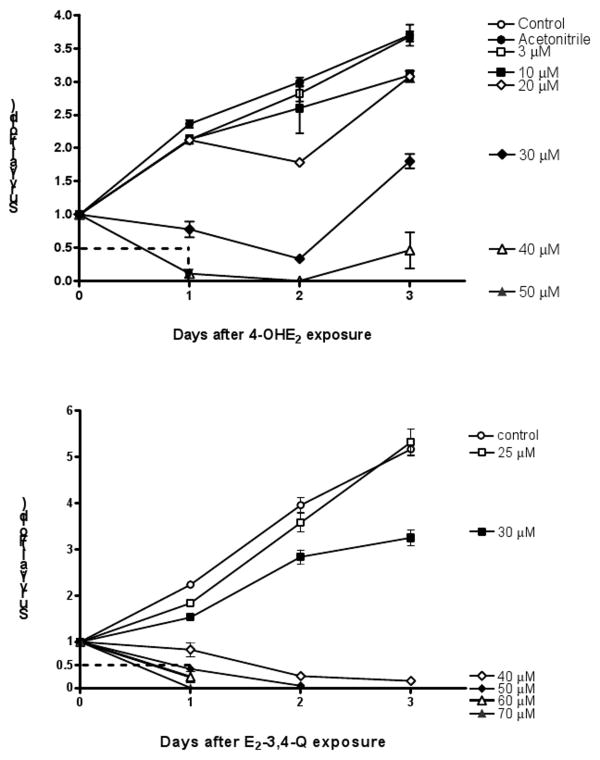
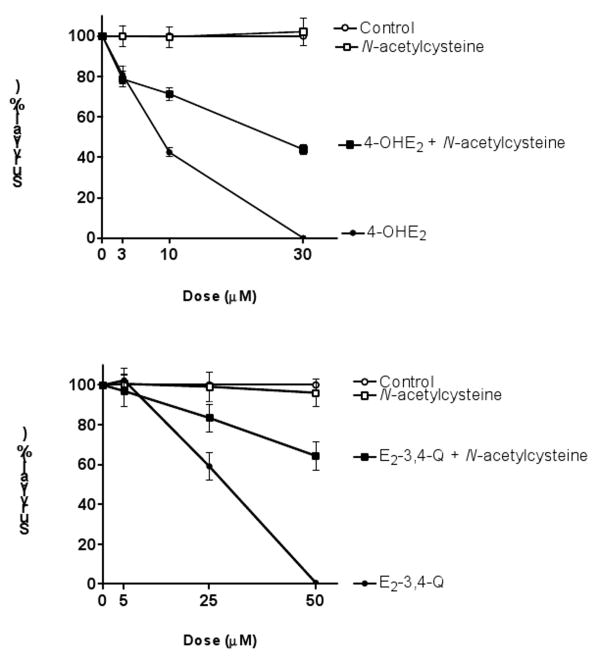
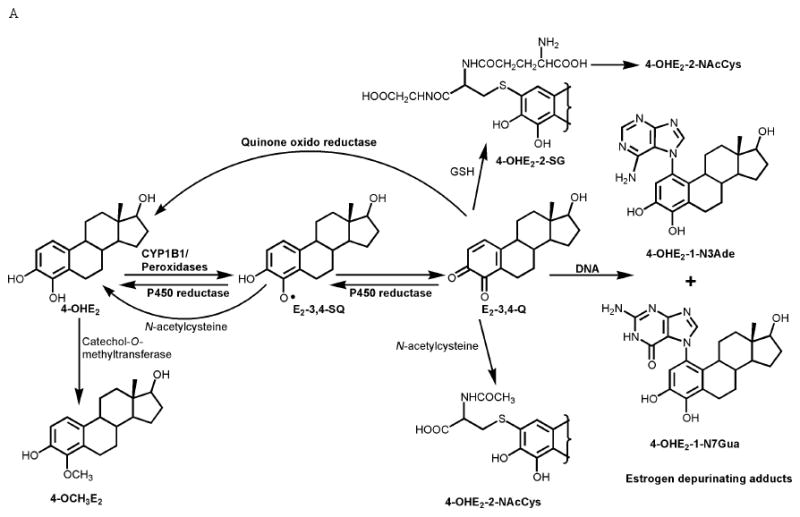
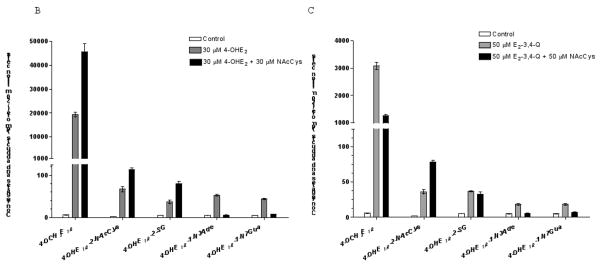
A growing number of studies indicate that breast cancer initiation is related to abnormal estrogen oxidation to form an excess of estrogen-3,4-quinones, which react with DNA to form depurinating adducts and induce mutations. This mechanism is often called estrogen genotoxicity. 4-Catechol estrogens, precursors of the estrogen-3,4-quinones, were previously shown to account for most of the transforming and tumorigenic activity. We examined whether estrogen-induced transformation can be reduced by inhibiting the oxidation of a 4-catechol estrogen to its quinone. We demonstrate that E6 cells (a normal mouse epithelial cell line) can be transformed by a single treatment with a catechol estrogen or its quinone. The transforming activities of 4-hydroxyestradiol and estradiol-3,4-quinone were comparable. N-Acetylcysteine, a common antioxidant, inhibited the oxidation of 4-hydroxyestradiol to the quinone and consequent formation of DNA adducts. It also drastically reduced estrogen-induced transformation of E6 cells. These results strongly implicate estrogen genotoxicity in mammary cell transformation. Since N-acetylcysteine is well tolerated in clinical studies, it may be a promising candidate for breast cancer prevention.
Figures
References
-
- Henderson BE, Feigelson HS. Hormonal carcinogenesis. Carcinogenesis. 2000;21:427–433. - PubMed
-
- Russo J, Hasan Lareef M, Balogh G, Guo S, Russo IH. Estrogen and its metabolites are carcinogenic agents in human breast epithelial cells. J Steroid Biochem Mol Biol. 2003;87:1–25. - PubMed
-
- Cavalieri E, Chakravarti D, Guttenplan J, Hart E, Ingle J, Jankowiak R, Muti P, Rogan E, Russo J, Santen R, Sutter T. Catechol estrogen quinones as initiators of breast and other human cancers: implications for biomarkers of susceptibility and cancer prevention. Biochim Biophys Acta. 2006;1766:63–78. - PubMed
-
- Rogan EG, Badawi AF, Devanesan PD, Meza JL, Edney JA, West WW, Higginbotham SM, Cavalieri EL. Relative imbalances in estrogen metabolism and conjugation in breast tissue of women with carcinoma: potential biomarkers of susceptibility to cancer. Carcinogenesis. 2003;24:697–702. - PubMed
MeSH terms
Substances
Grants and funding
LinkOut - more resources
Full Text Sources
