


Family burden and parental distress following mild traumatic brain injury in children and its relationship to post-concussive symptoms
- PMID: 18227110
- PMCID: PMC2839359
- DOI: 10.1093/jpepsy/jsm133
Family burden and parental distress following mild traumatic brain injury in children and its relationship to post-concussive symptoms
Abstract
Objective: To examine the relationship of mild traumatic brain injuries (TBI) and post-concussive symptoms (PCS) to post injury family burden and parental distress, using data from a prospective, longitudinal study.
Methods: Participants included 71 children with mild TBI with loss of consciousness (LOC), 110 with mild TBI without LOC, and 97 controls with orthopedic injuries not involving the head (OI), and their parents. Shortly after injury, parents and children completed a PCS interview and questionnaire, and parents rated premorbid family functioning. Parents also rated family burden and parental distress shortly after injury and at 3 months post injury.
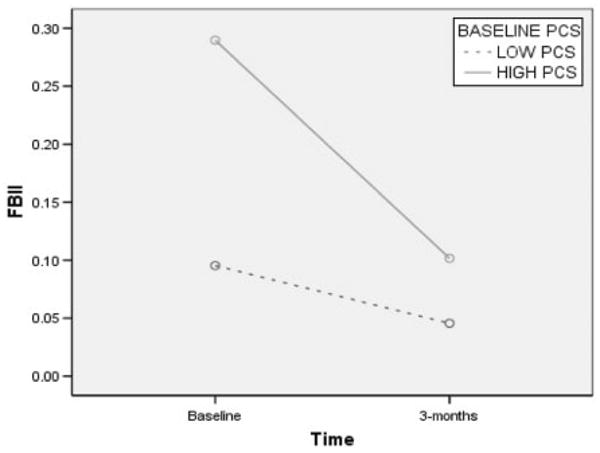
Results: Mild TBI with LOC was associated with greater family burden at 3 months than OI, independent of socioeconomic status and premorbid family functioning. Higher PCS shortly after injury was related to higher ratings of family burden and distress at 3 months.
Conclusions: Mild TBI are associated with family burden and distress more than mild injuries not involving the head, although PCS may influence post injury family burden and distress more than the injury per se. Clinical implications of the current findings are noted in the Discussion section.
Conflict of interest statement
Figures
References
-
- American Academy of Neurology. Practice parameter: The management of concussion in sports (summary statement) Neurology. 1997;48:581–585. - PubMed
-
- American Association fo Automotive Medicine. The abbreviated injury scale (AIS) – 1990 revision. Des Plaines, IL: American Association for Automotive Medicine; 1990.
-
- American Psychiatric Association. Diagnostic and Statistical Manual of Mental Disorders. 4th. Washington, DC: American Psychiatric Association; 1994.
-
- Asarnow RF, Satz P, Light R. Behavior problems and adaptive functioning in children with mild and severe closed head injury. Journal of Pediatric Psychology. 1991;16:543–555. - PubMed
-
- Axelrod B, Fox DD, Less-Haley PR, Earnest K, Dolezal-Wood S, Goldman RS. Latent structure of the Postconcussion Syndrome Questionnaire. Psychological Assessment. 1996;8:422–427.
