Review
. 2008 Jan 29;70(5):384-90.
doi: 10.1212/01.wnl.0000280469.17461.94.

Practical approaches to incidental findings in brain imaging research

Affiliations
Review

Practical approaches to incidental findings in brain imaging research

J Illes et al. Neurology. .

Abstract

A decade of empirical work in brain imaging, genomics, and other areas of research has yielded new knowledge about the frequency of incidental findings, investigator responsibility, and risks and benefits of disclosure. Straightforward guidance for handling such findings of possible clinical significance, however, has been elusive. In early work focusing on imaging studies of the brain, we suggested that investigators and institutional review boards must anticipate and articulate plans for handling incidental findings. Here we provide a detailed analysis of different approaches to the problem and evaluate their merits in the context of the goals and setting of the research and the involvement of neurologists, radiologists, and other physicians. Protecting subject welfare and privacy, as well as ensuring scientific integrity, are the highest priorities in making choices about how to handle incidental findings. Forethought and clarity will enable these goals without overburdening research conducted within or outside the medical setting.


Conflict of interest statement

Disclosure: The authors report no conflicts of interest.

Figures

Figure
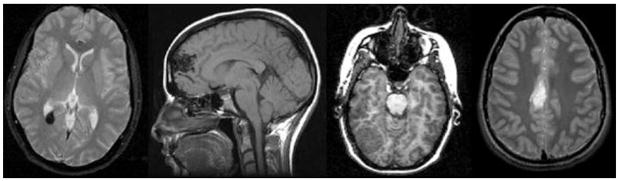
Figure. Series of brain abnormalities detected incidentally on research MRI scans acquired at 1.5 and 3 tesla
From left to right: Cavernous hemangioma—This finding was treated neurosurgically and followed by MRI every 6 months. No interval changes have been noted and no intervention has been needed in 3 years since discovery. Arteriovenous malformation—This finding was treated successfully by embolization and surgical resection. Meningioma—This finding was treated by surgical resection. Further information about outcome is unavailable. Glioma—This finding was detected in an undergraduate student, with poor prognosis suspected by the consulting neurologist. The student opted to pursue medical management in his home city. Further information about outcome is unavailable. Courtesy of the Richard M. Lucas MR Imaging Center, Stanford University.

References

    1. Katzman GL, Dagher AP, Patronas NJ. Incidental findings on brain magnetic resonance imaging from 1000 asymptomatic volunteers. JAMA. 1999;281:36–39. - PubMed
    1. Kim BS, Illes J, Kaplan RT, Reiss A, Atlas SW. Incidental findings on pediatric MR images of the brain. Am J Neuroradiol. 2002;23:1674–1677. - PMC - PubMed
    1. Illes J, Rosen AC, Huang L, et al. Ethical consideration of incidental findings on adult brain MRI in research. Neurology. 2004;62:888–890. - PMC - PubMed
    1. Mamourian A. Incidental findings on research functional MR images: Should we look? Am J Neuroradiol. 2004;25:520–522. - PMC - PubMed
    1. Weber F, Knopf H. Incidental findings in magnetic resonance imaging of the brain of healthy young men. J Neurol Sci. 2006;240:81–84. - PubMed

Publication types

MeSH terms