Review
. 2008 Mar;12 Suppl 1(Suppl 1):S27-31.
doi: 10.1007/s00784-007-0177-1. Epub 2008 Jan 29.

Pathological or physiological erosion--is there a relationship to age?

Affiliations
Review

Pathological or physiological erosion--is there a relationship to age?

David Bartlett et al. Clin Oral Investig. 2008 Mar.

Abstract

This conventional literature review discusses whether pathological tooth wear is age dependant. It briefly reviews the components of tooth wear and the prevalence of tooth wear in children, adolescents and adults. The emphasis on terminology relating to tooth wear varies. In some countries, the role of erosion is considered the most important, whereas others consider the process to be a combination of erosion, attrition and abrasion often with one being more dominant. The importance of tooth wear or erosion indices in the assessment and the evidence for progression within subject and within lesions is described. The data from the few studies reporting pathological levels of wear reported in children and adults are discussed, in particular its relationship with age. There is little evidence to support the concept that pathological levels of erosion or wear are age dependant. There is, however, some evidence to suggest that normal levels of erosion or wear are age dependant.


Figures
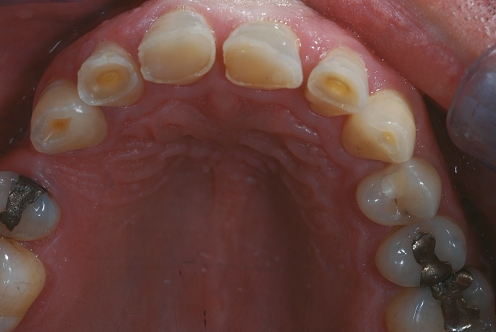
Fig. 1
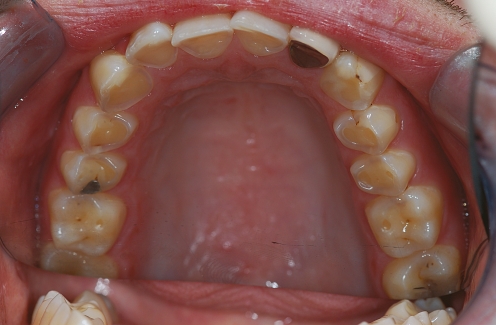
Fig. 1
The wear on the occlusal/incisal surfaces of the upper anterior teeth. The wear is caused by a combination of erosion and attrition. The “cupped out or ditched” areas result from the action of acids, whereas the flatter surfaces are caused by attrition
Fig. 2
Fig. 2
The wear on the palatal/lingual surfaces of the teeth has been caused by regurgitation erosion. It is unlikely that abrasion or attrition has contributed to the process

References

    1. Al Dlaigan YH, Shaw L, Smith A (2001) Dental erosion in a group of British 14-year-old, school children. Part I: Prevalence and influence of differing socioeconomic backgrounds. Br Dent J 190:145–149 - DOI - PubMed
    1. Azzopardi A, Bartlett DW, Watson TF, Sherriff M (2004) The surface effects of erosion and abrasion on dentine with and without a protective layer. Br Dent J 196:351–354 - DOI - PubMed
    1. Bardsley PF, Taylor S, Milosevic A (2004) Epidemiological studies of tooth wear and dental erosion in 14-year-old children in North West England. Part 1: The relationship with water fluoridation and social deprivation. Br Dent J 197:413–416 - DOI - PubMed
    1. Bartlett D (2006) Intrinsic causes of erosion. Monogr Oral Sci 20:119–139 - PubMed
    1. Bartlett DW (2002) Long term monitoring of tooth wear with study casts. Caries Res 36:174–222 - DOI