. 2008 Jan 30;3(1):e1501.
doi: 10.1371/journal.pone.0001501.

Cross-clade protective immune responses to influenza viruses with H5N1 HA and NA elicited by an influenza virus-like particle

Affiliations

Cross-clade protective immune responses to influenza viruses with H5N1 HA and NA elicited by an influenza virus-like particle

Rick A Bright et al. PLoS One. .

Abstract

Background: Vaccination is a cost-effective counter-measure to the threat of seasonal or pandemic outbreaks of influenza. To address the need for improved influenza vaccines and alternatives to egg-based manufacturing, we have engineered an influenza virus-like particle (VLP) as a new generation of non-egg or non-mammalian cell culture-based candidate vaccine.

Methodology/principal findings: We generated from a baculovirus expression system using insect cells, a non-infectious recombinant VLP vaccine from both influenza A H5N1 clade 1 and clade 2 isolates with pandemic potential. VLPs were administered to mice in either a one-dose or two-dose regimen and the immune responses were compared to those induced by recombinant hemagglutinin (rHA). Both humoral and cellular responses were analyzed. Mice vaccinated with VLPs were protected against challenge with lethal reassortant viruses expressing the H5N1 HA and NA, regardless if the H5N1 clade was homologous or heterologous to the vaccine. However, rHA-vaccinated mice showed considerable weight loss and death following challenge with the heterovariant clade virus. Protection against death induced by VLPs was independent of the pre-challenge HAI titer or cell-mediated responses to HA or M1 since vaccinated mice, with low to undetectable cross-clade HAI antibodies or cellular responses to influenza antigens, were still protected from a lethal viral challenge. However, an apparent association rate of antibody binding to HA correlated with protection and was enhanced using VLPs, particularly when delivered intranasally, compared to rHA vaccines.

Conclusion/significance: This is the first report describing the use of an H5N1 VLP vaccine created from a clade 2 isolate. The results show that a non-replicating virus-like particle is effective at eliciting a broadened, cross-clade protective immune response to proteins from emerging H5N1 influenza isolates giving rise to a potential pandemic influenza vaccine candidate for humans that can be stockpiled for use in the event of an outbreak of H5N1 influenza.


Conflict of interest statement

Competing Interests: The authors have declared that no competing interests exist.

Figures

Figure 1
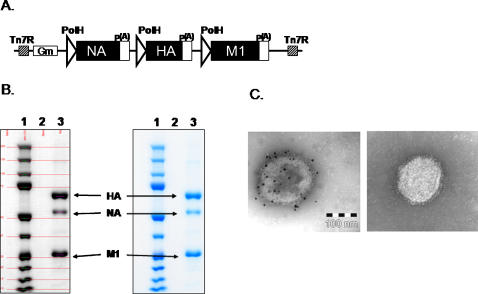
Figure 1. Expression of H5N1 virus-like particles.
A) Baculovirus construct for expression of influenza A/Indonesia/05/2005 (H5N1) VLPs. Indicated are the polyhedrin promoters (PolH), polyadenylation signals, Tn7 regions, gentamicin resistance gene (Gm), and influenza genes (HA, hemagglutinin, M1, matrix 1 protein, NA, neuraminidase); B). Scanning densitometry analysis of purified Indo/05 VLPs. A sample of purified VLPs (4 µg) was electrophoresed on 4–12% polyacrylamide gel and stained with Coomassie blue (right panel, lane 3). A scanned image (left panel, lane 3) was used to determine the relative optical density (OD) of HA, NA, and M1. Purity is = OD HA+NA+M1/OD Total in the lane. Purity of this lot of Indo/05 VLPs was 96%. The location of HA, NA, and M1 structural proteins are marked. C). Immunogold electron microsopy of purified Indo/05 VLPs. Left Panel. Primary antibody: Influenza A H5N1 Anti-HA antibody (Biodesign). Secondary antibody: Goat anti-rabbit conjugated to 10 nm gold beads. Right Panel. Control antibody and goat anti-rabbit secondary antibody conjugated to 10 nm gold beads. Bar represents 100 nm scale.
Figure 2
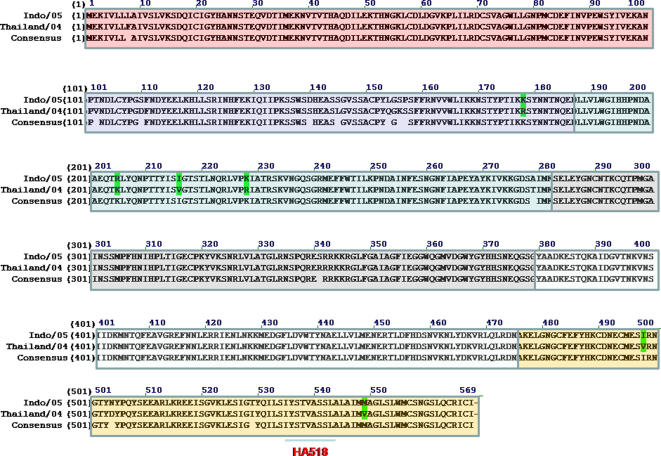
Figure 2. Amino acid sequence of hemagglutinin.
Top line represents the sequence for A/Indonesia/05/2005, which is the isolate used to generate vaccines studied. Middle line represents the sequence for A/Thailand/2004, which is the isolate used to generate the peptides used for analysis. Bottom line represents the consensus amino acid sequence between the two sequences. Boxed, colored areas represent regions included in each of the 6 peptides pools (15-16 peptides per pool, 15mers overlapping by 11) used for stimulating splenocytes and lung cells in ELISPOTs. The location of the single H2-kd peptide (HA518; (IYSTVASSL) is underlined in peptide pool 6.
Figure 3
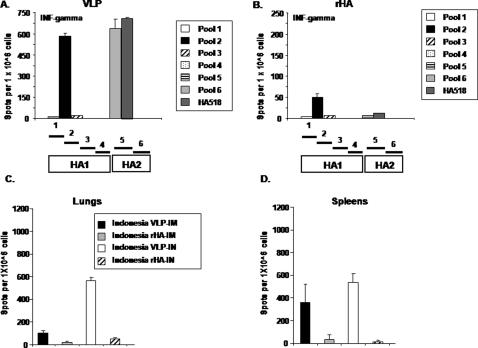
Figure 3. Elicitation of HA interferon-γ producing splenocytes and lung cells.
ELISpots were performed on isolated splenocytes or lung cells from vaccinated mice (n = 8) collected at week 8. Cells (1×10⁶) were stimulated independently with pools of peptides representing different regions of HA. Splenocytes or lung cells were also stimulated independently with pools of peptides (15mers overlapping by 11 amino acids) or a single peptide HA518 (IYSTVASSL). Following stimulation, cells were assayed for mIFN-γ. HIV-1 Env peptides were used as a non-specific negative control. Splenocytes or lung cells stimulated with PMA/ionomycin were used as a positive control. (A) VLP vaccinated intramuscularly against all peptide pools, (B) rHA vaccinated intramuscularly against all peptide pools, (C). Lung responses using HA peptide pool 2. (D). Spleen responses using HA peptide pool 2.
Figure 4
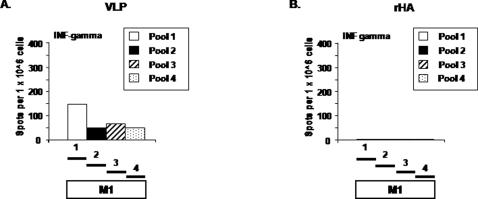
Figure 4. Elicitation of M1 interferon-γ producing splenocytes.
ELISPOTs were performed as described in the legend to Fig. 3. Four pools (15mers, overlapping by 11) representing four regions of M1 were used to stimulate cells. HIV-1 Env peptides were used as a non-specific negative control. Splenocytes stimulated with PMA/ionomycin were used as a positive control. Number of IFN-γ ELISPOTs detected using each of the four M1 peptide pools from intramuscularly vaccinated mice with (A) VLP or (B) rHA vaccines.
Figure 5
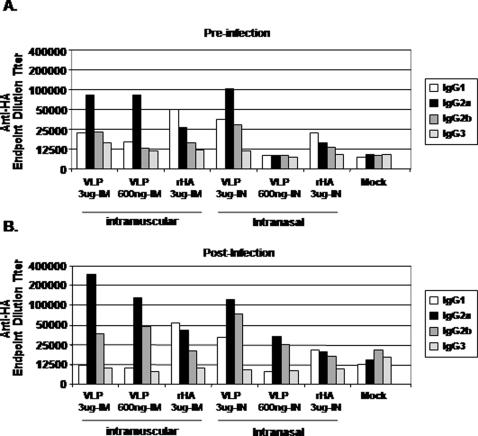
Figure 5. Anti-HA IgG Isotypes.
The specific IgG isotype was assayed from the serum of each mouse group and the endpoint dilution titer was reported. (A) Week 5, pre-challenge. (B) Week 7, post-challenge. Each bar represents the average of 8 mice.
Figure 6
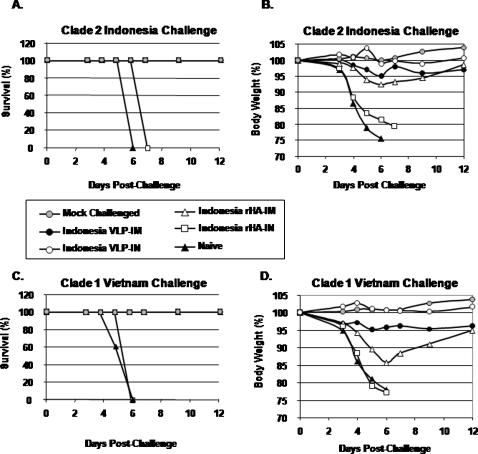
Figure 6. Protection from influenza virus challenge.
At week 5, mice vaccinated with H5N1 clade 2-dervied vaccines were challenged intranasally with a lethal dose of reassortant influenza virus (A/Viet Nam/1203/2004 (clade 1) or A/Indonesia/05/2005 (clade 2)) and monitored daily for weight loss and mortality. The data are plotted as percentage of the average initial weight. Percentage of (A) original weight or (B) survival following challenge with clade 2 AIndonesia/05/2005 reassortant virus. Percentage of (C) original weight or (D) survival following challenge with clade 1 A/Viet Nam/1203/2004 reassortant virus. Mice that lost greater than 75% body weight were euthanized. Naïve mice were unvaccinated.
Figure 7
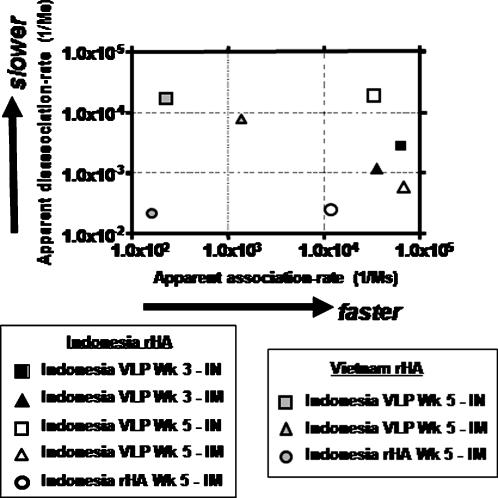
Figure 7. Kinetics of Indonesia VLP elicited antisera binding to H5N1 rHA antigens.
Kinetics of antisera binding to homologous, Indonesia clade 2 rHA (black square) and heterologous, Viet Nam clade 1 rHA (white square). Values on x-axis represent the apparent association rate of antibody binding to HA and the values on the y-axis represent the apparent disassociation rate of antibody from the HA antigen.
Figure 8
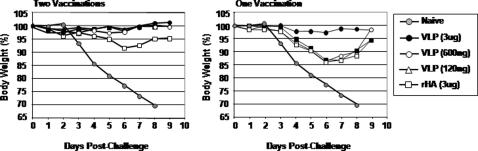
Figure 8. Protection from influenza virus challenge.
At week 5, mice vaccinated with clade 2-dervied vaccines were challenged intranasally with a lethal dose of reassortant influenza virus (A/Indonesia/05/2005 (clade 2)) and monitored daily for weight loss and mortality. The data are plotted as percentage of the average initial weight. Percentage of original weight (A) Mice vaccinated with two doses of vaccine (week 0 and 3) and (B) mice vaccinated with a single dose of vaccine (week 0). All mice challenged at week 5. Mice that lost greater than 25% body weight were euthanized.

References

    1. Gillim-Ross L, Subbarao K. Emerging respiratory viruses: challenges and vaccine strategies. Clin Microbiol Rev. 2006;19:614–636. - PMC - PubMed
    1. Luke CJ, Subbarao K. Vaccines for pandemic influenza. Emerg Infect Dis. 2006;12:66–72. - PMC - PubMed
    1. Subbarao K, Murphy BR, Fauci AS. Development of effective vaccines against pandemic influenza. Immunity. 2006;24:5–9. - PubMed
    1. Suguitan AL, Jr, McAuliffe J, Mills KL, Jin H, Duke G, et al. Live, attenuated influenza A H5N1 candidate vaccines provide broad cross-protection in mice and ferrets. PLoS Med. 2006;3:e360. - PMC - PubMed
    1. Leroux-Roels I, Borkowski A, Vanwolleghem T, Drame M, Clement F, et al. Antigen sparing and cross-reactive immunity with an adjuvanted rH5N1 prototype pandemic influenza vaccine: a randomised controlled trial. Lancet. 2007;370:580–589. - PubMed

Publication types

MeSH terms

Substances