


Physical inactivity and obesity: a vicious circle
- PMID: 18239652
- PMCID: PMC2249563
- DOI: 10.1038/oby.2007.72
Physical inactivity and obesity: a vicious circle
Abstract
Objective: Physical activity (PA) begins to decline in adolescence with a concomitant increase in weight. We hypothesized that a vicious circle may arise between decreasing PA and weight gain from adolescence to early adulthood.
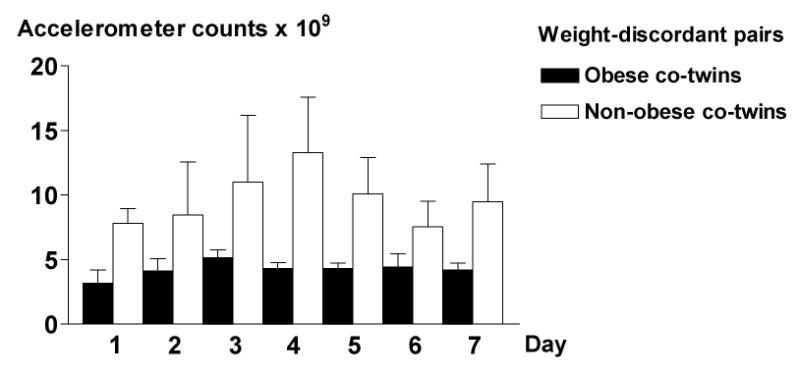
Methods and procedures: PA and self-perceived physical fitness assessed in adolescents (16-18 years of age) were used to predict the development of obesity (BMI > or =30 kg/m(2)) and abdominal obesity (waist >/=88 cm in females and > or =102 cm in males) at age 25 in 4,240 twin individuals (90% of twins born in Finland, 1975-1979). Ten 25-year-old monozygotic (MZ) twin pairs who were discordant for obesity (with a 16 kg weight difference) were then carefully evaluated for current PA (using a triaxial accelerometer), total energy expenditure (TEE, assessed by means of the doubly labeled water (DLW) method), and basal metabolic rate (BMR, assessed by indirect calorimetry).
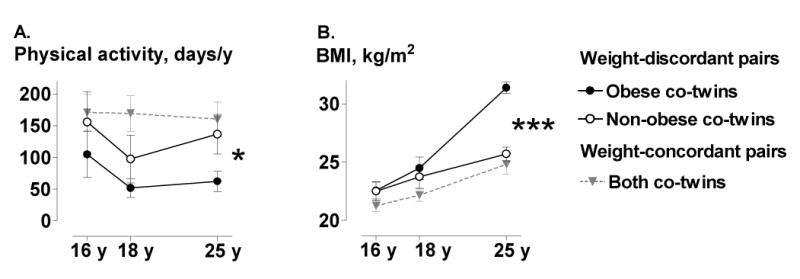
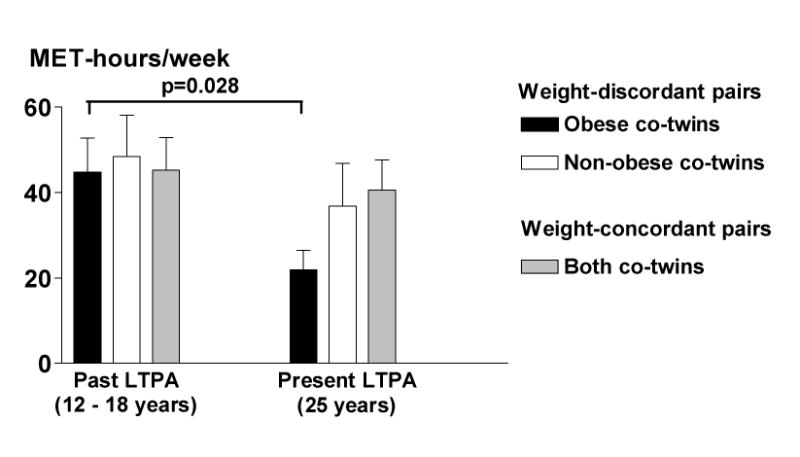
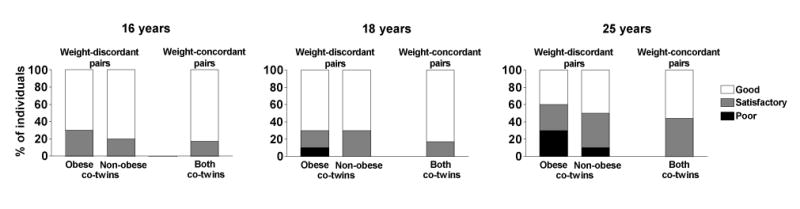
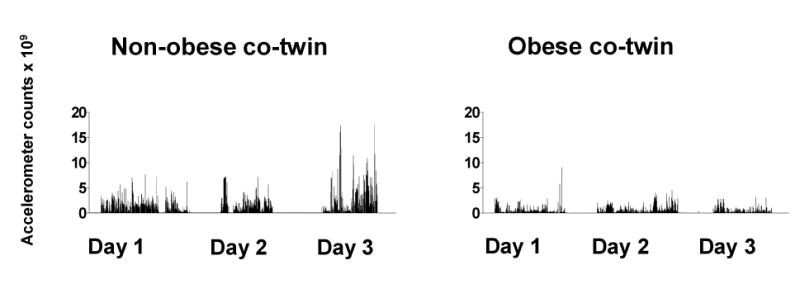
Results: Physical inactivity in adolescence strongly predicted the risk for obesity (odds ratio (OR) 3.9, 95% confidence interval (CI) 1.4-10.9) and abdominal obesity (4.8, 1.9-12.0) at age 25, even after adjusting for baseline and current BMI. Poor physical fitness in adolescence also increased the risk for overall obesity (5.1, 2.0-12.7) and abdominal obesity (3.2, 1.5-6.7) in adulthood. Physical inactivity was both causative and secondary to the development of obesity discordance in the MZ pairs. TEE did not differ between the MZ co-twins. PA was lower whereas BMR was higher in the obese co-twins.
Discussion: Physical inactivity in adolescence strongly and independently predicts total (and especially) abdominal obesity in young adulthood, favoring the development of a self-perpetuating vicious circle of obesity and physical inactivity. Physical activity should therefore be seriously recommended for obesity prevention in the young.
Conflict of interest statement
We declare that we have no conflict of interest.
Figures
References
-
- Kimm SY, Glynn NW, Kriska AM, et al. Decline in physical activity in black girls and white girls during adolescence. N Engl J Med. 2002;347:709–15. - PubMed
-
- Kimm SY, Glynn NW, Obarzanek E, et al. Relation between the changes in physical activity and body-mass index during adolescence: a multicentre longitudinal study. Lancet. 2005;366:301–7. - PubMed
-
- Gordon-Larsen P, Adair LS, Nelson MC, Popkin BM. Five-year obesity incidence in the transition period between adolescence and adulthood: the National Longitudinal Study of Adolescent Health. Am J Clin Nutr. 2004;80:569–75. - PubMed
-
- Parsons TJ, Manor O, Power C. Physical activity and change in body mass index from adolescence to mid-adulthood in the 1958 British cohort. Int J Epidemiol. 2006;35:197–204. - PubMed
-
- Yang X, Telama R, Viikari J, Raitakari OT. Risk of obesity in relation to physical activity tracking from youth to adulthood. Med Sci Sports Exerc. 2006;38:919–25. - PubMed
Publication types
MeSH terms
Grants and funding
LinkOut - more resources
Full Text Sources
Medical
