


Fetal alcohol syndrome (FAS) in C57BL/6 mice detected through proteomics screening of the amniotic fluid
- PMID: 18240165
- PMCID: PMC2803677
- DOI: 10.1002/bdra.20440
Fetal alcohol syndrome (FAS) in C57BL/6 mice detected through proteomics screening of the amniotic fluid
Abstract
Background: Fetal Alcohol Syndrome (FAS), a severe consequence of the Fetal Alcohol Spectrum Disorders, is associated with craniofacial defects, mental retardation, and stunted growth. Previous studies in C57BL/6J and C57BL/6N mice provide evidence that alcohol-induced pathogenesis follows early changes in gene expression within specific molecular pathways in the embryonic headfold. Whereas the former (B6J) pregnancies carry a high-risk for dysmorphogenesis following maternal exposure to 2.9 g/kg alcohol (two injections spaced 4.0 h apart on gestation day 8), the latter (B6N) pregnancies carry a low-risk for malformations. The present study used this murine model to screen amniotic fluid for biomarkers that could potentially discriminate between FAS-positive and FAS-negative pregnancies.
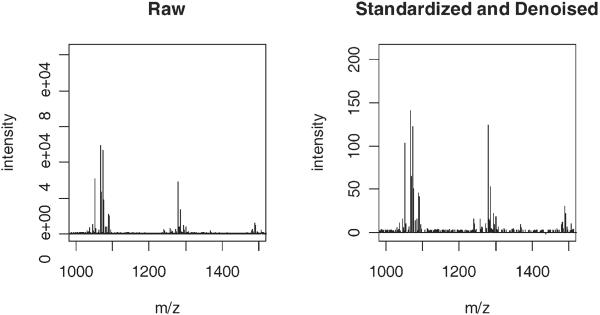
Methods: B6J and B6N litters were treated with alcohol (exposed) or saline (control) on day 8 of gestation. Amniotic fluid aspirated on day 17 (n = 6 replicate litters per group) was subjected to trypsin digestion for analysis by matrix-assisted laser desorption-time of flight mass spectrometry with the aid of denoising algorithms, statistical testing, and classification methods.
Results: We identified several peaks in the proteomics screen that were reduced consistently and specifically in exposed B6J litters. Preliminary characterization by liquid chromatography tandem mass spectrometry and multidimensional protein identification mapped the reduced peaks to alpha fetoprotein (AFP). The predictive strength of AFP deficiency as a biomarker for FAS-positive litters was confirmed by area under the receiver operating characteristic curve.
Conclusions: : These findings in genetically susceptible mice support clinical observations in maternal serum that implicate a decrease in AFP levels following prenatal alcohol damage.
(c) 2008 Wiley-Liss, Inc.
Figures


References
-
- Alexander-Kaufman K, James G, Sheedy D, et al. Differential protein expression in the prefrontal white matter of human alcoholics: a proteomics study. Mol Psychiatry. 2006;11:56–65. - PubMed
-
- Attardi B, Ruoslahti E. Foetoneonatal oestradiol-binding protein in mouse brain cytosol is alpha-fetoprotein. Nature. 1976;263:685–687. - PubMed
-
- Bearer CF, Stoler JM, Cook JD, et al. Biomarkers of Alcohol Use in Pregnancy. Alcohol Research and Health, NIAAA publications. 2005;28:38–43. (pubs.niaaa.nih.gov/publications/arh28-1/38-43.pdf) - PMC - PubMed
-
- Benjamini Y, Hochberg Y. Controlling the false discovery rate: a practical and powerful approach to multiple testing. J Royal Statist Soc Series B Methodol. 1995;57:289–300.
-
- Bertrand J, Floyd RL, Weber MK, et al. Fetal alcohol syndrome: guidelines for referral and diagnosis. Centers for Disease Control and Prevention; Atlanta, GA: 2004. National Task Force on FAS/FAE. ( http://www.cdc.gov/ncbddd/fas/documents/FAS_guidelines_accessible.pdf)
Publication types
MeSH terms
Substances
Grants and funding
LinkOut - more resources
Full Text Sources
Other Literature Sources
Medical
Research Materials
Miscellaneous
