


Racial and ethnic changes in heroin injection in the United States: implications for the HIV/AIDS epidemic
- PMID: 18242879
- PMCID: PMC2268905
- DOI: 10.1016/j.drugalcdep.2007.11.020
Racial and ethnic changes in heroin injection in the United States: implications for the HIV/AIDS epidemic
Abstract
Background: Racial/ethnic differences in drug injection prevalence contribute to disparities in HIV infection rates in the US between Whites, Blacks and Hispanics. We examine trends in the demographic characteristics of heroin injection drug users (IDUs) that may impact future HIV rates.
Methods: Descriptive analyses were conducted of (1) the national Treatment Episode Data Set for 1992-2004 and of the 2002-2004 baseline data from (2) CIDUS-III, a 5-city study that recruited 3285 young IDUs, and (3) NIHU-HIT, a Chicago study of 647 young noninjecting heroin users.
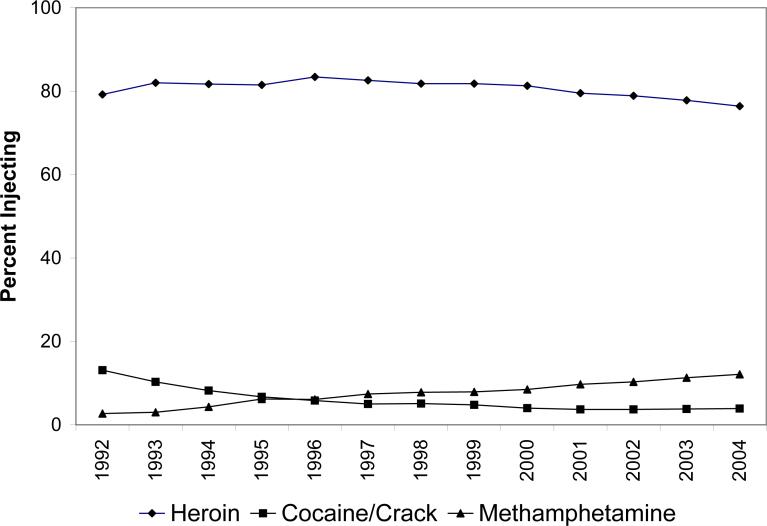
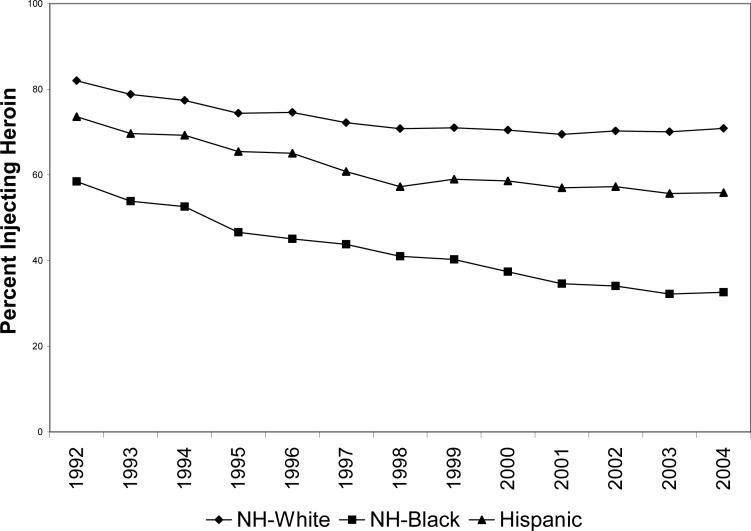
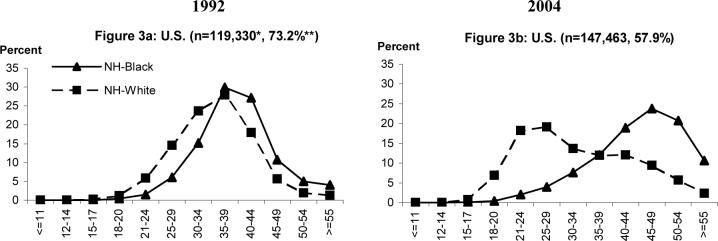
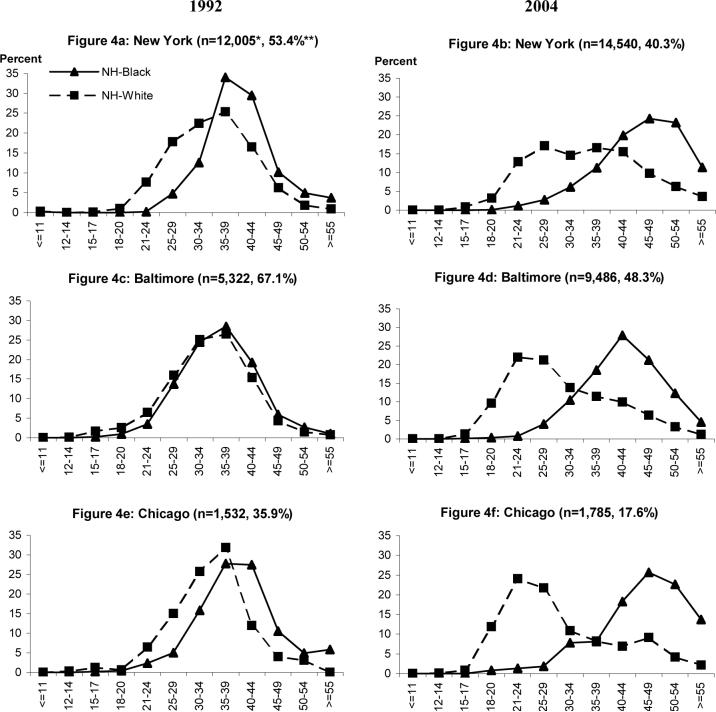
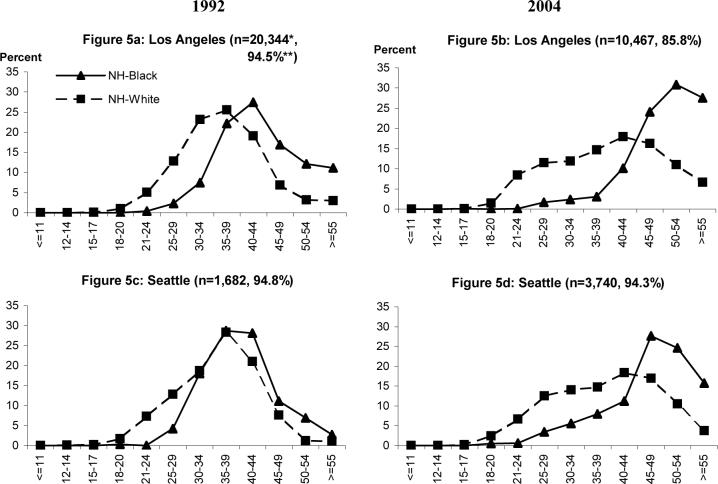
Results: Between 1992 and 2004, heroin was the injected drug most often reported at admission to drug treatment. During this period, the proportion of admissions reporting injection declined 44% among Blacks but only 14% for Whites. The peak age for heroin IDUs in treatment increased 10 years for Blacks while declining over 10 years for Whites. CIDUS-III enrolled about 8 times more White (64%) than Black (8%) young IDUs despite recruiting two-thirds of the sample in cities where Blacks constituted 27-64% of the population. Blacks comprised 53% of noninjecting heroin users in the Chicago NIHU-HIT, but only 2% of Chicago's CIDUS-III sample of heroin IDUs. Among current noninjecting heroin users, Whites were more likely than Blacks to have ever injected (X(d.f.=1)(2)=17.1, p<0.001). Qualitative data supported greater resistance to injection among young Blacks than Whites.
Conclusions: Among heroin users, young Blacks are resisting injection while young Whites exhibit the opposite tendency. New research should investigate reasons for this trend and its impact on the HIV epidemic and future service needs.
Figures
References
-
- Adair EB, Craddock SG, Miller HG, Turner CF. Assessing consistency of responses to questions on cocaine use. Addiction. 1995;90:1497–502. - PubMed
-
- Adair EB, Craddock SG, Miller HG, Turner CF. Quality of treatment data. Reliability over time of self-reports given by clients in treatment for substance abuse. J Subst Abuse Treat. 1996;13:145–9. - PubMed
-
- Agar M, Reisinger HS. A heroin epidemic at the intersection of histories: the 1960s epidemic among African Americans in Baltimore. Med Anthropol. 2002;21:115–56. - PubMed
-
- Agar MH, Reisinger HS. Explaining drug use trends: Suburban heroin use in Baltimore County. In: Springer A, Uhl A, editors. Illicit Drugs: Patterns of Use-Patterns of Response. STUDIENVerlag; Innsbruck: 2000. pp. 143–165.
-
- Agar MH, Reisinger HS. Open marginality: heroin epidemics in different groups. J Drug Issues. 2001;31:729–46.
Publication types
MeSH terms
Grants and funding
LinkOut - more resources
Full Text Sources
Medical
