


Developmental lead exposure alters methamphetamine self-administration in the male rat: acquisition and reinstatement
- PMID: 18242880
- PMCID: PMC2891033
- DOI: 10.1016/j.drugalcdep.2007.12.003
Developmental lead exposure alters methamphetamine self-administration in the male rat: acquisition and reinstatement
Abstract
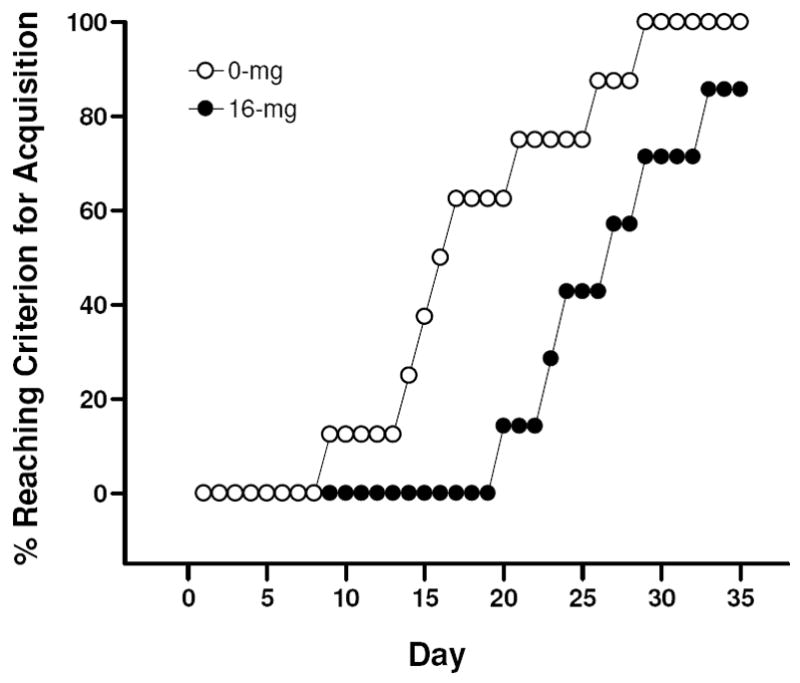
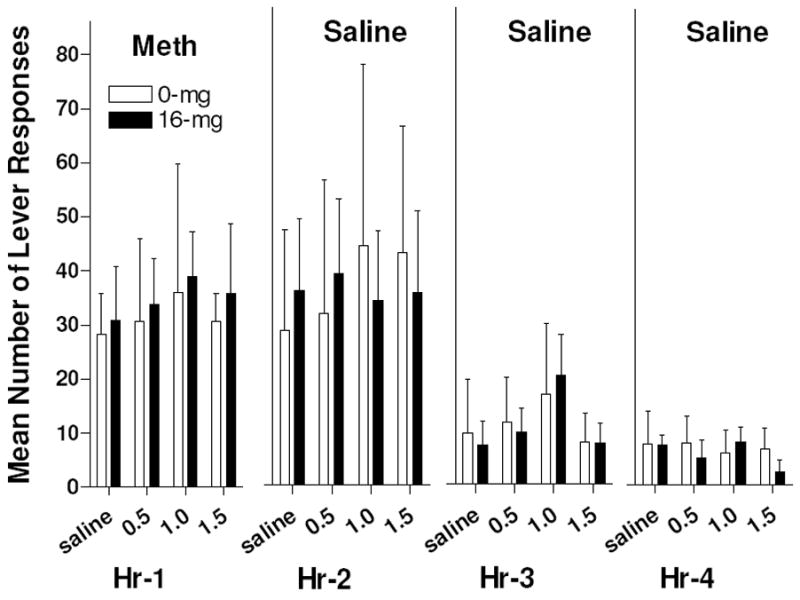
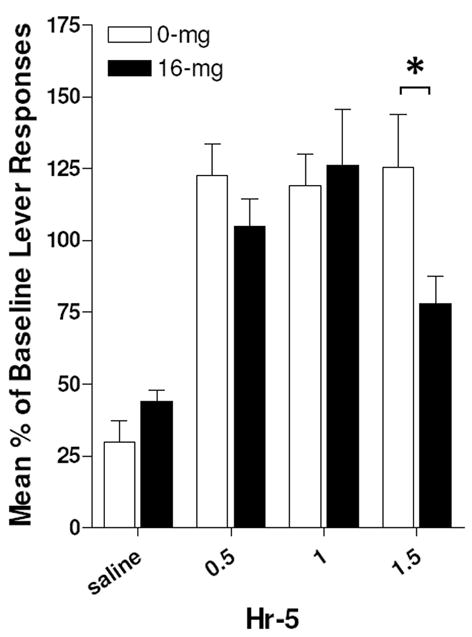
The rate of acquisition of drug self-administration and the return to drug seeking are important elements of the overall drug profile, and are essential factors in understanding risks associated with drug abuse. Experiment 1 examined the effects of perinatal (gestation/lactation) lead exposure on adult rates of acquisition of intravenous (i.v.) methamphetamine self-administration. Experiment 2 investigated the effects of perinatal lead exposure on drug-maintained responding in a reinstatement (relapse) paradigm. In Experiment 1, female rats were gavaged daily with 0 or 16 mg lead for 30 days prior to breeding with nonexposed males. Lead exposure continued through gestation and lactation and was discontinued at weaning (postnatal day [PND] 21). Male rats born to control or lead-exposed dams were tested daily as adults in an acquisition paradigm that incorporated both Pavlovian and operant components. An initial 3-h autoshaping period preceded a 3-h self-administration period. For 35 daily training sessions i.v. methamphetamine infusions [inf] (0.02 mg/kg) were paired with the extension and retraction of a lever (autoshaping), while inf occurred during self-administration only when a lever press was executed (FR-1). In Experiment 2 animals developmentally exposed to lead were trained on an FR-2 to self-administer methamphetamine (0.04 mg/kg/inf) and then placed on an extinction schedule prior to receiving intraperitoneal (i.p.) priming injections of saline, 0.50, 1.00, or 1.50 mg/kg methamphetamine. The findings from Experiment 1 showed that acquisition was delayed in rats born to lead-exposed dams gavaged daily with 16 mg lead throughout gestation and lactation when a 0.02-mg/kg/inf of methamphetamine served as the reinforcement outcome. Additional data from Experiment 2 indicated priming cues (injections of methamphetamine [i.p.]) administered after extinction were less likely to occasion a return to drug seeking (relapse) in the 16-mg group relative to the 0-mg control group. These results suggest perinatal lead exposure alters patterns of methamphetamine self-administration during the adult cycle.
Figures
References
-
- Anglin MD, Burke C, Perrochet B, Stamper E, Dawud-Noursi S. History of the methamphetamine problem. J Psychoactive Drugs. 2000;32:137–141. - PubMed
-
- Bellinger DC. Neurobehavioral assessment in studies of exposure to neurotoxicants. Neurotoxicity and developmental disabilities. Int Rev Res Ment Ret. 2006;30:263–300.
-
- Brody DJ, Pirkle JL, Kramer RA, Flegal KM, Mattee TD, Gunter EW, Paschal DC. Blood lead levels in the US population. Phase 1 of the third national health and nutrition examination survey (NHANES III, 1988 to 1991. JAMA. 1994;272:277–283. - PubMed
-
- Broom SL, Yamamoto BK. Effects of subchronic methamphetamine exposure on basal dopamine and stress-induced dopamine release in the nucleus accumbens shell of rats. Psychopharmacology. 2005;181:467–476. - PubMed
-
- Brown JM, Yamamoto BK. Effects of amphetamines on mitochondrial function: role of free radicals and oxidative stress. Pharmacol Ther. 2003;99:45–53. - PubMed
Publication types
MeSH terms
Substances
Grants and funding
LinkOut - more resources
Full Text Sources
Medical
