


OsTDL1A binds to the LRR domain of rice receptor kinase MSP1, and is required to limit sporocyte numbers
- PMID: 18248596
- PMCID: PMC2408674
- DOI: 10.1111/j.1365-313X.2008.03426.x
OsTDL1A binds to the LRR domain of rice receptor kinase MSP1, and is required to limit sporocyte numbers
Abstract
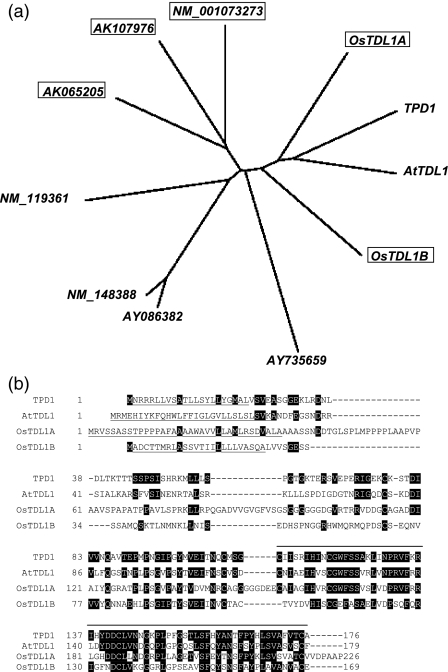
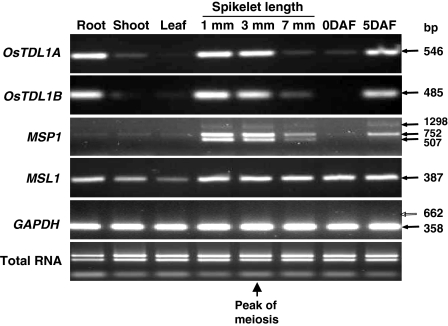
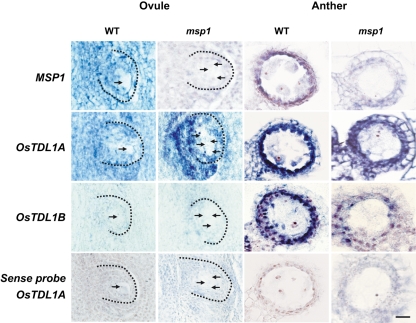
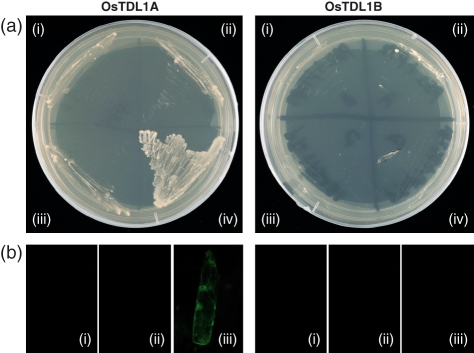
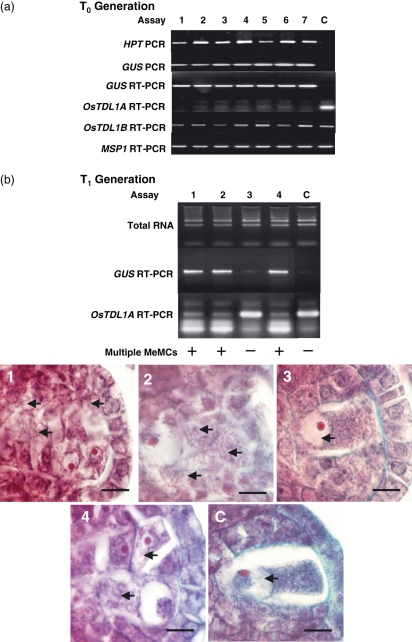
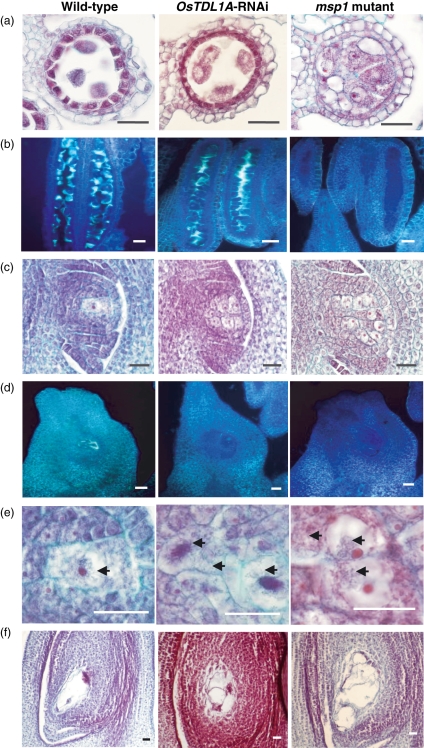
Hybrids lose heterotic yield advantage when multiplied sexually via meiosis. A potential alternative breeding system for hybrids is apospory, where female gametes develop without meiosis. Common among grasses, apospory begins in the nucellus, where aposporous initials (AIs) appear near the sexual megaspore mother cell (MeMC). The cellular origin of AIs is obscure, but one possibility, suggested by the mac1 and msp1 mutants of maize and rice, is that AIs are apomeiotic derivatives of the additional MeMCs that appear when genetic control over sporocyte numbers is relaxed. MULTIPLE SPOROCYTES1 (MSP1) encodes a leucine-rich-repeat receptor kinase, which is orthologous to EXS/EMS1 in Arabidopsis. Like mac1 and msp1, exs/ems1 mutants produce extra sporocytes in the anther instead of a tapetum, causing male sterility. This phenotype is copied in mutants of TAPETUM DETERMINANT1 (TPD1), which encodes a small protein hypothesized to be an extracellular ligand of EXS/EMS1. Here we show that rice contains two TPD1-like genes, OsTDL1A and OsTDL1B. Both are co-expressed with MSP1 in anthers during meiosis, but only OsTDL1A and MSP1 are co-expressed in the ovule. OsTDL1A binds to the leucine-rich-repeat domain of MSP1 in yeast two-hybrid assays and bimolecular fluorescence complementation in onion cells; OsTDL1B lacks this capacity. When driven by the maize Ubiquitin1 promoter, RNA interference against OsTDL1A phenocopies msp1 in the ovule but not in the anther. Thus, RNAi produces multiple MeMCs without causing male sterility. We conclude that OsTDL1A binds MSP1 in order to limit sporocyte numbers. OsTDL1A-RNAi lines may be suitable starting points for achieving synthetic apospory in rice.
Figures
References
-
- Bi XZ, de Palma J, Oane R, Khush GS, Bennett J. Molecular approaches to fixing the heterozygosity of hybrid rice. In: Virmani SS, Mau CX, Hardy B, editors. Hybrid Rice for Food Security, Poverty Alleviations, and Environmental Protection. Proceedings of the 4th International Symposium on Hybrid Rice. Los Baños, Philippines: International Rice Research Institute; 2003. pp. 135–150. Hanoi, Vietnam, 14–17 May 2002.
-
- Bracha-Drori K, Shichrur K, Katz A, Oliva M, Angelovici R, Yalovsky S, Ohad N. Detection of protein–protein interactions in plants using bimolecular fluorescence complementation. Plant J. 2004;40:419–427. - PubMed
-
- Brar DS, Elloran RM, Lanuang MC, Tolentino VS, Khush GS. Screening wild species of rice for apomixis. Philipp. J. Crop Sci. 1995;20:6.
-
- Canales C, Bhatt AM, Scott R, Dickinson H. EXS, a putative LRR receptor kinase, regulates male germline cell number and tapetal identity and promotes seed development in Arabidopsis. Curr. Biol. 2002;12:1718–1727. - PubMed
Publication types
MeSH terms
Substances
LinkOut - more resources
Full Text Sources
Molecular Biology Databases
Miscellaneous
