Long term efficacy of DOTS regimens for tuberculosis: systematic review
- PMID: 18250104
- PMCID: PMC2258398
- DOI: 10.1136/bmj.39463.640787.BE
Long term efficacy of DOTS regimens for tuberculosis: systematic review
Abstract
Objective: To identify published studies assessing tuberculosis recurrence after successful treatment with standard short course regimens for six months to determine the strength and sufficiency of evidence to support current guidelines.
Design: Systematic review.
Data sources: Medline, Embase, Cochrane clinical trials register, specialist tuberculosis journals, and reference lists. Only English language publications were eligible.
Review methods: Studies were included irrespective of methodology or quality. Abstracted information included inclusion and exclusion criteria for participants, duration of follow-up, and definitions of treatment success and disease recurrence. The primary outcome was the proportion of successfully treated patients recorded with recurrent tuberculosis during the follow-up period.
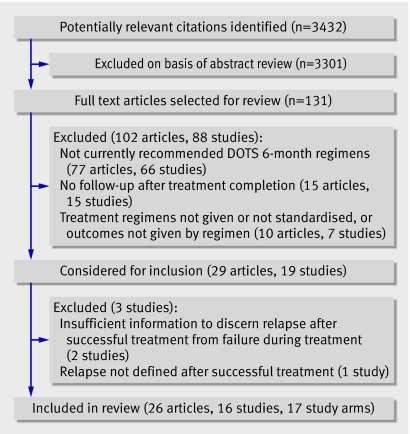
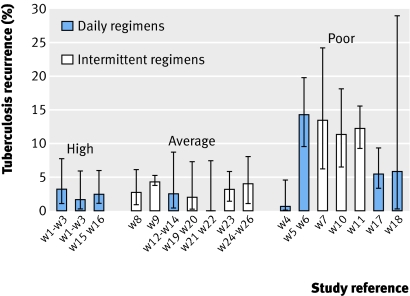
Results: 17 study arms from 16 studies met the inclusion criteria; 10 were controlled clinical trials and six were either studies done under programmatic conditions or observational studies from functioning tuberculosis programmes. Although several clinical trials supported the use of daily treatment regimens, studies reporting tuberculosis recurrence after intermittent regimens were limited. Few studies carried out under routine programmatic conditions reported disease recurrence. Overall there was wide variation in recurrence after successful treatment, ranging from 0% to 14%. Considerable heterogeneity across studies precluded the systematic assessment of factors contributing to tuberculosis recurrence.
Conclusions: Despite DOTS (directly observed treatment, short course) being implemented for more than 10 years and millions of patients treated for tuberculosis, few studies have assessed the ability of standard DOTS regimens to result in lasting cure for patients treated under routine programmatic conditions.
Conflict of interest statement
Competing interests: None declared.
Figures
Comment in
-
Doubts about DOTS.BMJ. 2008 Mar 1;336(7642):457-8. doi: 10.1136/bmj.39464.485208.80. Epub 2008 Feb 4. BMJ. 2008. PMID: 18250103 Free PMC article.
References
-
- WHO. WHO report on the tuberculosis epidemic, 1995. Stop TB at the source Geneva: WHO, 1995. Report No WHO/TB/95.183.
-
- WHO. The stop TB strategy, Building on and enhancing DOTS to meet the TB-related millennium development goals Geneva: WHO, 2006. Report No WHO/HTM/STB/2006.37.
-
- Styblo K. Overview and epidemiological assessment of the current global tuberculosis situation: with an emphasis on tuberculosis control in developing countries. Bull Int Union Tuberc Lung Dis 1988;63:39-44. - PubMed
-
- WHO. Global tuberculosis control, surveillance, planning, financing Geneva: WHO, 2007. Report No WHO/HTM/TB/2007.376.
-
- Dye C, Watt CJ, Bleed DM, Hosseini SM, Raviglione MC. Evolution of tuberculosis control and prospects for reducing tuberculosis incidence, prevalence, and deaths globally. JAMA 2005;293:2767-75. - PubMed
Publication types
MeSH terms
Substances
LinkOut - more resources
Full Text Sources
Medical
Miscellaneous