Mutations in Hydin impair ciliary motility in mice
- PMID: 18250199
- PMCID: PMC2234243
- DOI: 10.1083/jcb.200710162
Mutations in Hydin impair ciliary motility in mice
Abstract
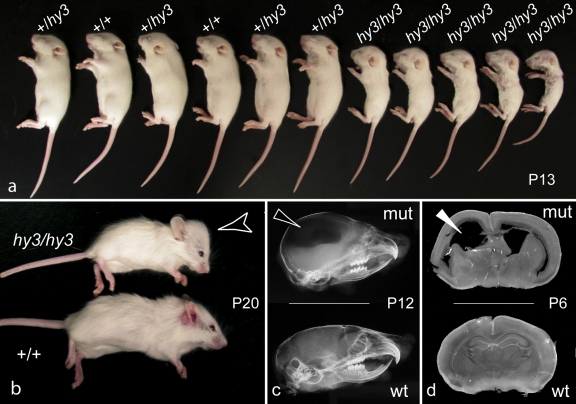
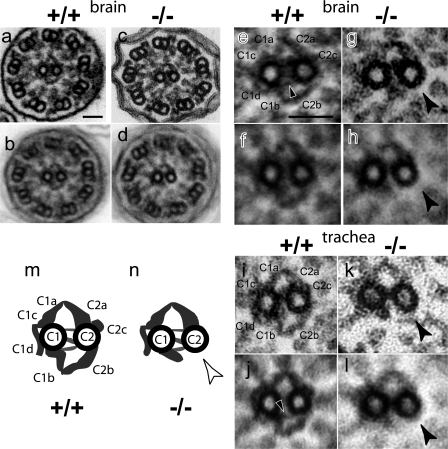
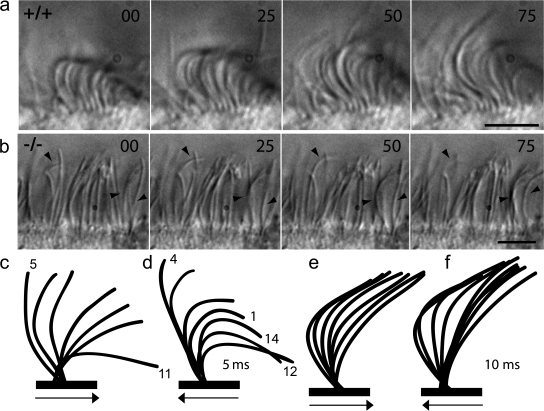
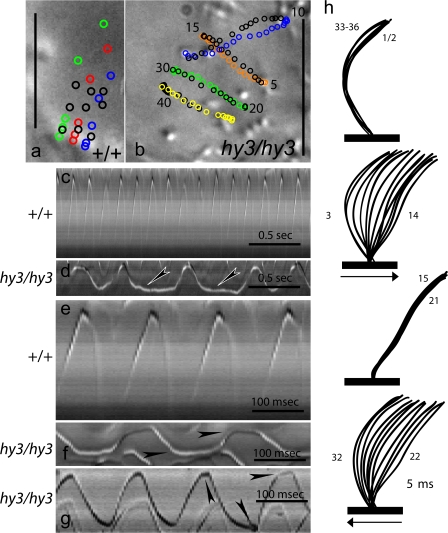
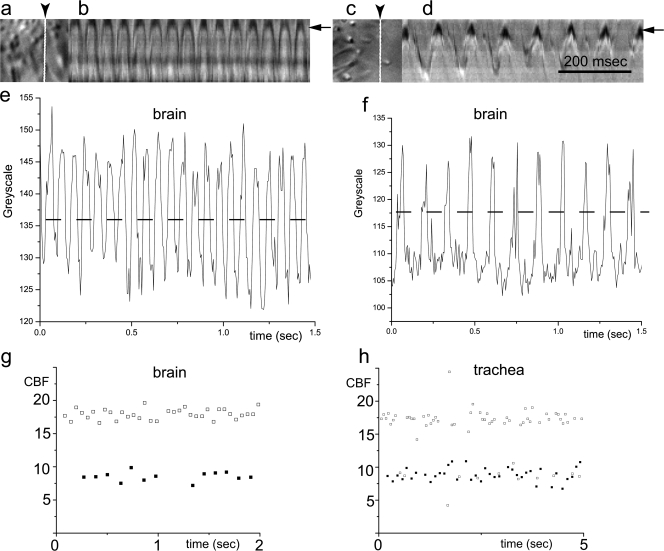
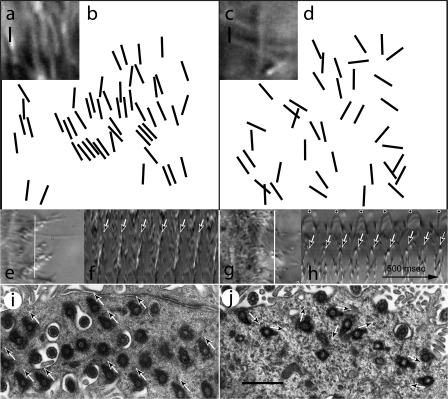
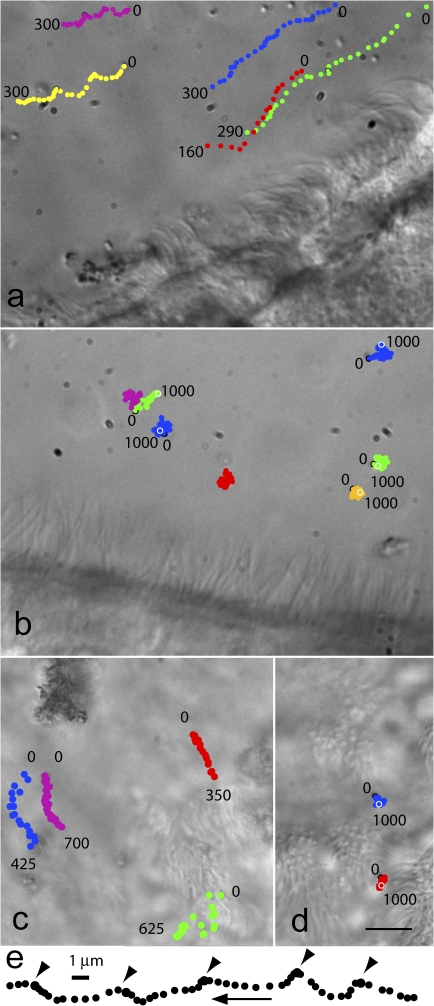
Chlamydomonas reinhardtii hydin is a central pair protein required for flagellar motility, and mice with Hydin defects develop lethal hydrocephalus. To determine if defects in Hydin cause hydrocephalus through a mechanism involving cilia, we compared the morphology, ultrastructure, and activity of cilia in wild-type and hydin mutant mice strains. The length and density of cilia in the brains of mutant animals is normal. The ciliary axoneme is normal with respect to the 9 + 2 microtubules, dynein arms, and radial spokes but one of the two central microtubules lacks a specific projection. The hydin mutant cilia are unable to bend normally, ciliary beat frequency is reduced, and the cilia tend to stall. As a result, these cilia are incapable of generating fluid flow. Similar defects are observed for cilia in trachea. We conclude that hydrocephalus in hydin mutants is caused by a central pair defect impairing ciliary motility and fluid transport in the brain.
Figures
References
-
- Afzelius, B.A. 1980. Genetic disorders of cilia. In International Cell Biology 1980-81, H.G. Schweiger, editor. Springer-Verlag, Berlin. 440-447.
-
- Afzelius, B.A. 1999. Asymmetry of cilia and of mice and men. Int. J. Dev. Biol. 43:283–286. - PubMed
-
- al-Shroof, M., A.M. Karnik, A.A. Karnik, J. Longshore, N.A. Sliman, and F.A. Khan. 2001. Ciliary dyskinesia associated with hydrocephalus and mental retardation in a Jordanian family. Mayo Clin. Proc. 76:1219–1224. - PubMed
-
- Badano, J.L., N. Mitsuma, P.L. Beales, and N. Katsanis. 2006. The ciliopathies: an emerging class of human genetic disorders. Annu. Rev. Genomics Hum. Genet. 7:125–148. - PubMed
-
- Banizs, B., M.M. Pike, C.L. Millican, W.B. Ferguson, P. Komlosi, J. Sheetz, P.D. Bell, E.M. Schwiebert, and B.K. Yoder. 2005. Dysfunctional cilia lead to altered ependyma and choroid plexus function, and result in the formation of hydrocephalus. Development. 132:5329–5339. - PubMed
Publication types
MeSH terms
Substances
Grants and funding
LinkOut - more resources
Full Text Sources
Other Literature Sources
Molecular Biology Databases
Research Materials