


Surviving recurrence: psychological and quality-of-life recovery
- PMID: 18253948
- PMCID: PMC2435301
- DOI: 10.1002/cncr.23272
Surviving recurrence: psychological and quality-of-life recovery
Abstract
Background: To the authors' knowledge, data characterizing patients' psychosocial experiences after a recurrence diagnosis are limited. This report provides the physical, psychological, and quality-of-life trajectories of patients with recurrent breast cancer. In addition, patients with a well-documented trajectory -- patients with their initial diagnosis of breast cancer -- were included as a referent group, providing a metric against which to gauge the impact and course of cancer recurrence.
Methods: Patients with a newly diagnosed, recurrent (n = 69) or initial (n = 113) breast cancer were accrued. The groups did not differ with regard to age, race, education, family income, or partner status (all P values > .18). All patients were assessed shortly after diagnosis (baseline) and 4 months, 8 months, and 12 months later. Mixed-effects models were used to determine health status, stress, mood, and quality-of-life trajectories.
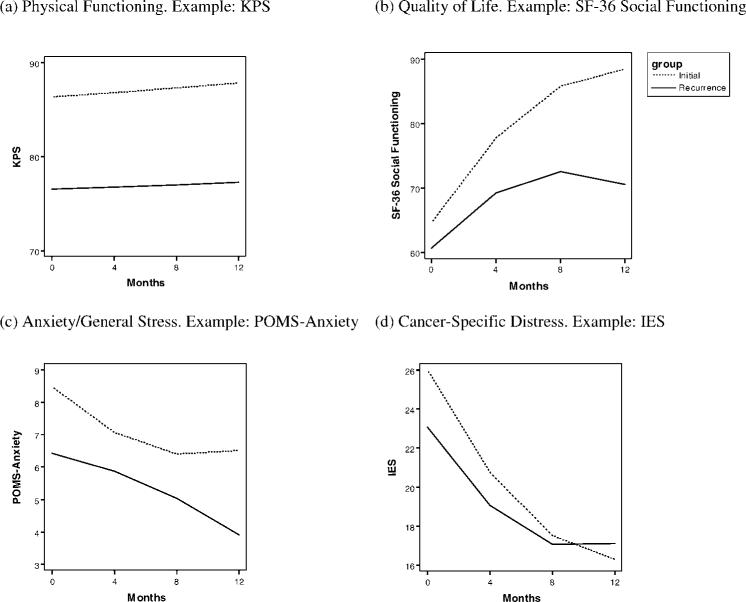
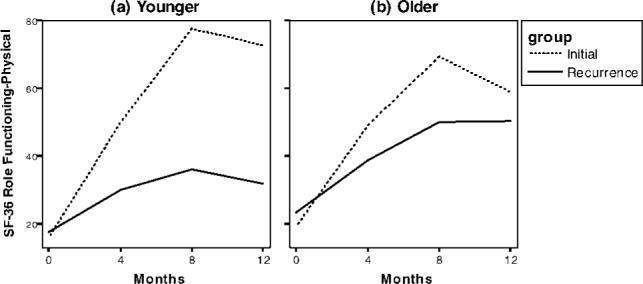
Results: In the year after a recurrence diagnosis, patients' physical health and functioning showed no improvement, whereas quality of life and mood generally improved, and stress declined. Compared with patients who were coping with their first diagnosis, patients with recurrence had significantly lower anxiety and confusion. In contrast, physical functioning was poorer among recurrence patients, quality-of-life improvement was slower, and cancer-related distress was high as that of the initially diagnosed patient. Slower quality-of-life recovery was most apparent among younger patients (aged <54 years).
Conclusions: Despite the physical burden, patients with recurrent breast cancer exhibit considerable resilience, with steady improvements in psychological adjustment and quality of life during the year after diagnosis. Management of patients' physical symptoms is particularly important, because patients cope with recurrent breast cancer as a chronic illness.
Figures
References
-
- Weisman AD. A model for psychosocial phasing in cancer. Gen Hosp Psychiatry. 1979;1:187–195. - PubMed
-
- President's Cancer Panel . Living Beyond Cancer: Finding a New Balance. National Cancer Institute; Bethesda, Md: 2004.
-
- Mahon SM, Cella DF, Donovan MI. Psychosocial adjustment to recurrent cancer. Oncol Nurs Forum. 1990;17:47–54. - PubMed
-
- Mahon SM, Casperson DS. Psychosocial concerns associated with recurrent cancer. Cancer Pract. 1995;3:372–380. - PubMed
-
- Munkres A, Oberst MT, Hughes SH. Appraisal of illness, symptom distress, self-care burden, and mood states in patients receiving chemotherapy for initial and recurrent cancer. Oncol Nurs Forum. 1992;19:1201–1209. - PubMed
Publication types
MeSH terms
Grants and funding
LinkOut - more resources
Full Text Sources
Medical
