


Opioids for neonates receiving mechanical ventilation
- PMID: 18254040
- PMCID: PMC7388902
- DOI: 10.1002/14651858.CD004212.pub3
Opioids for neonates receiving mechanical ventilation
Abstract
Background: Mechanical ventilation is a potentially painful and discomforting intervention widely used in neonatal intensive care units. Newborn babies (neonates) demonstrate increased sensitivity to pain, which may affect clinical and neurodevelopmental outcomes. The use of drugs that reduce pain might be important in improving survival and neurodevelopmental outcomes.
Objectives: To determine the effect of opioid analgesics (pain-killing drugs derived from opium e.g. morphine), compared to placebo, no drug, or other non-opioid analgesics or sedatives, on pain, duration of mechanical ventilation, mortality, growth and neurodevelopmental outcomes in newborn infants on mechanical ventilation.
Search strategy: Electronic searches included: the Cochrane Central Register of Controlled Trials (CENTRAL, The Cochrane Library, Issue 2, 2007); MEDLINE (1966 to June 2007); EMBASE (1974 to June 2007); and CINAHL (1982 to 2007). Previous reviews and lists of relevant articles were cross-referenced.
Selection criteria: Randomised controlled trials or quasi-randomised controlled trials comparing opioids to a control, or to other analgesics or sedatives in newborn infants on mechanical ventilation.
Data collection and analysis: Data were extracted independently by two review authors. Categorical outcomes were analysed using relative risk and risk difference; and continuous outcomes with weighted mean difference or standardised mean difference. A fixed effect model was used for meta-analysis except where heterogeneity existed, in which case a random effects model was used.
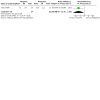
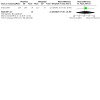
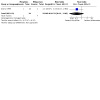
Main results: Thirteen studies on 1505 infants were included. Infants given opioids showed reduced premature infant pain profile (PIPP) scores compared to the control group (weighted mean difference -1.71; 95% confidence interval -3.18 to -0.24). Differences in execution and reporting of trials mean that this meta-analysis should be interpreted with caution. Heterogeneity was significantly high in all analyses of pain, even when lower quality studies were excluded and analysis limited to very preterm newborns. Meta-analyses of mortality, duration of mechanical ventilation, and long and short-term neurodevelopmental outcomes showed no statistically significant differences. Very preterm infants given morphine took significantly longer to reach full enteral feeding than those in control groups (weighted mean difference 2.10 days; 95% confidence interval 0.35 to 3.85). One study compared morphine with a sedative: the treatments showed similar pain scores, but morphine had fewer adverse effects.
Authors' conclusions: There is insufficient evidence to recommend routine use of opioids in mechanically ventilated newborns. Opioids should be used selectively, when indicated by clinical judgment and evaluation of pain indicators. If sedation is required, morphine is safer than midazolam. Further research is needed.
Conflict of interest statement
None
Figures






Update of
-
Opioids for neonates receiving mechanical ventilation.Cochrane Database Syst Rev. 2005 Jan 25;(1):CD004212. doi: 10.1002/14651858.CD004212.pub2. Cochrane Database Syst Rev. 2005. Update in: Cochrane Database Syst Rev. 2008 Jan 23;(1):CD004212. doi: 10.1002/14651858.CD004212.pub3. PMID: 15674933 Updated.
References
References to studies included in this review
Anand 1999 {published data only}
-
- Anand KJ, Barton BA, McIntosh N, Lagercrantz H, Pelausa E, Young TE, et al. Analgesia and sedation in preterm neonates who require ventilatory support: results from the NOPAIN trial. Neonatal Outcome and Prolonged Analgesia in Neonates. Archives of Pediatrics and Adolescent Medicine 1999;153:331-8. - PubMed
Anand 2004 {published data only}
-
- Anand KJ, Hall RW, Desai N, Shepard B, Bergqvist L, Young TE et al. Effects of morphine analgesia in ventilated preterm neonates: primary outcomes from the NEOPAIN randomised trial. The Lancet 2004;363:1673-82. - PubMed
-
- Bhandari VB, Bergqvist LL, Kronsberg SS, Barton BA, Anand KJS. Morphine administration and short-term pulmonary outcomes among ventilated preterm infants. Pediatrics 2005;116:352-9. - PubMed
-
- Boyle EM, Wong CM, Freer Y, Ahmadian M, Maxwell A, McIntosh N, et al. Mean heart rate and heart rate variability in preterm ventilated infants receiving morphine analgesia. Pediatric Research 2003;54:569.
-
- Hall RW, Kronsberg SS, Barton BA, Kaiser JR, Anand KJS. Morphine, hypotension and adverse outcomes among preterm neonates: who's to blame? Secondary results from the NEOPAIN trial. Pediatrics 2005;115(5):1351-9. - PubMed
-
- NEOPAIN Multicenter Group. Effects of morphine therapy on neurological outcomes in ventilated preterm neonates: primary outcomes from the NEOPAIN (NEurologic Ouctomes & Pre-Emptive Analgesia In Neonates) Multicenter trial. Pediatric Research 2002;51:361A.
Dyke 1995 {published data only}
-
- Dyke MP, Evans S, Kohan R. Morphine increases synchronous ventilation in preterm infants. Journal of Paediatrics and Child Health 1995;31:176-9. - PubMed
Guinsburg 1998 {published data only}
-
- Guinsburg R, Kopelman BI, Anand KJS, Branco de Almeida MF, Peres Cde A, Miyoshi MH. Physiological, hormonal, and behavioral responses to a single fentanyl dose in intubated and ventilated preterm neonates. Journal of Pediatrics 1998;132:954-9. - PubMed
Lago 1998 {published data only}
Lago 1999 {published data only}
-
- Lago P, Benini F, Salvadori S, Bettiol T, Agosto C, Zacchello F. Effect of administering low-dose fentanyl infusion on respiratory dynamics in the premature ventilated for respiratory distress syndrome - A randomized double-blind trial. Pediatric Research 1999;45:308A.
Orsini 1996 {published data only}
-
- Orsini AJ, Leef KH, Costarino A, Dettorre MD, Stefano JL. Routine use of fentanyl infusions for pain and stress reduction in infants with respiratory distress syndrome. Journal of Pediatrics 1996;129:140-5. - PubMed
Pokela 1994 {published data only}
-
- Pokela ML. Pain relief can reduce hypoxemia in distressed neonates during routine treatment procedures. Pediatrics 1994;93:379-83. - PubMed
Quinn 1992 {published data only}
-
- Quinn MW, Otoo F, Rushforth JA, Dean HG, Puntis JWL, Wild J, et al. Effect of morphine and pancuronium on the stress response in ventilated preterm infants. Early Human Development 1992;30:241-8. - PubMed
Quinn 1993 {published data only}
-
- Quinn MW, Wild J, Dean HG, Hartley R, Rushforth JA, Puntis JWL, et al. Randomised double-blind controlled trial of effect of morphine on catecholamine concentrations in ventilated pre-term babies. Lancet 1993;342:324-7. - PubMed
Saarenmaa 1996 {published data only}
Simons 2003 {published data only}
-
- Simons SH, Dijk M, Lingen RA, Roofthooft D, Duivenvoorden HJ, Jongeneel N et al. Routine morphine infusion in preterm newborns who received ventilatory support: a randomized controlled trial. JAMA 2003;290:2419-27. - PubMed
Siwiec 1999 {published data only}
-
- Siwiec J, Porzucek J, Gadzinowski J, Bhat R, Vidyasagar D. Effect of short term morphine infusion on premature infant profile (PIPP) and hemodynamics. Pediatric Research 1999;45:69A.
References to studies excluded from this review
Barker 1995 {published data only}
Saarenmaa 1999 {published data only}
-
- Saarenmaa E, Huttunen P, Leppaluoto J, Meretoja O, Fellman V. Advantage of fentanyl over morphine in analgesia for ventilated newborn infants after birth: A randomized trial. Journal of Pediatrics 1999;134:144-50. - PubMed
Additional references
Abu‐Saad 1998
-
- Abu-Saad HH, Bours GJJ, Stevens B, Hamers JP. Assessment of pain in the neonate. Seminars in Perinatology 1998;22:402-16. - PubMed
Anand 1987
-
- Anand KJ, Hickey PR. Pain and its effects in the human neonate and fetus. New England Journal of Medicine 1987;317:1321-9. - PubMed
Anand 1990
-
- Anand KJ. Hormonal-metabolic stress response in neonates undergoing cardiac surgery. Anesthesiology 1990;73:661-70. - PubMed
Anand 1993
-
- Anand KJ. Relationships between stress responses and clinical outcome in newborns, infants, and children. Critical Care Medicine 1993;21:S358-9. - PubMed
Anand 1998
-
- Anand KJ. Clinical importance of pain and stress in preterm neonates. Biology of the Neonate 1998;73:1-9. - PubMed
Anand 2001
-
- Anand KJ. International Evidence-Based Group for Neonatal Pain. Consensus statement for the prevention and management of pain in the newborn. Archives of Pediatric and Adolescent Medicine 2001;155:173-80. - PubMed
Attia 1987
-
- Attia J, Mayer MN, Schnider SM. Correlation of a clinical pain score with catecholamine and endorphin levels in small infants. Intensive Care Medicine 1987;13:459A.
Ballantyne 1999
-
- Ballantyne M, Stevens B, McAllister M, Dionne K, Jack A. Validation of the premature infant pain profile in the clinical setting. The Clinical Journal of Pain 1999;15:297-303. - PubMed
Barker 1996
Bellù 2021
Boyle 2003
-
- Boyle EM, Wong CM, Freer Y, Ahmadian M, Maxwell A, McIntosh N, Anand KJS and the NEOPAIN Investigator Group. Mean heart rate and heart rate variability in preterm ventilated infants receiving morphine analgesia. Pediatric Research 2003;54:569.
Brueck 1962
-
- Brueck K, Parmelee AH Jr, Brueck M. Neutral temperature range and range of thermal comfort in premature infants. Biology of the Neonate 1962;4:32-51. - PubMed
Clarke 2002
-
- Clarke M, Oxman AD, editors. Guide to the format of a Cochrane review. Cochrane Reviewers' Handbook. 4.1.5 [updated April 2002]; Appendix 2a. In: The Cochrane Library. Oxford: Update Software, 2002.
CPS, AAP 2000
-
- American Academy of Pediatrics Committee on Fetus and Newborn Committee on Drugs Section on Anesthesiology Section on Surgery Canadian Paediatric Society Fetus and Newborn Committee. Prevention and management of pain and stress in the neonate. Pediatrics 2000;105:454-61. - PubMed
de Lima 1996
Eiser 2001
Feeny 1998
-
- Feeny D, Furlong W, Barr RD. Multiattribute approach to the assessment of health-related quality of life: Health Utilities Index. Medical and Pediatric Oncology 1998;suppl 1:54-9. - PubMed
Fitzgerald 1989
-
- Fitzgerald M, Millard C, McIntosh N. Cutaneous hypersensitivity following peripheral tissue damage in newborn infants and its reversal with topical anaesthesia. Pain 1989;39:31-6. - PubMed
Franck 1998
-
- Franck LS, Miaskowski C. The use of intravenous opioids to provide analgesia in critically ill, premature neonates: a research critique. Journal of Pain and Symptom Management 1998;15:41-69. - PubMed
Franck 2002
-
- Franck LS. Some pain, some gain: reflections on the past two decades of neonatal pain research and treatment. Neonatal Network 2002;21:37-41. - PubMed
Greenough 1988
Grunau 1987
-
- Grunau RVE, Craig KD. Facial activity as a measure of neonatal pain expression. In: Tyler DC, Krane EJ, editors(s). Advances in pain research therapy. Pediatric Pain. New York: Raven Press, 1990:147-54.
Hartwig 1991
-
- Hartwig S, Roth B, Theisohn M. Clinical experience with continuous intravenous sedation using midazolam and fentanyl in the paediatric intensive care unit. European Journal of Pediatrics 1991;150:784-8. - PubMed
Johnston 1997
-
- Johnston C, Collinge JM, Henderson SJ, Anand KJ. A cross-sectional survey of pain and pharmacological analgesia in Canadian Neonatal Intensive Care Units. The Clinical Journal of Pain 1997;13:308-12. - PubMed
Kahn 1998
-
- Kahn DJ, Richardson DK, Gray JE, Bednarek F, Rubin LP, Shah B, et al. Variation among neonatal intensive care units in narcotic administration. Archives of Pediatric and Adolescent Medicine 1998;152:844-51. - PubMed
Korner 1991
-
- Korner AF, Constantinou J, Dimiceli S, Brown BW Jr, Thom VA. Establishing the reliability and developmental validity of a neurobehavioral assessment for preterm infants: a methodological process. Child Development 1991;62:1200-8. - PubMed
Landgraf 1997
-
- Landgraf JM, Abetz LN. Functional status and well-being of children representing three cultural groups: initial self-report using the CHQ-CF87. Psychology and Health 1997;12:839-54.
Larsson 1999
-
- Larsson BA. Pain management in neonates. Acta Paediatrica 1999;88:1301-10. - PubMed
Lawrence 1993
-
- Lawrence J, Alcock D, McGrath P, Kay J, MacMurray SB, Dulberg C. The development of a tool to assess neonatal pain. Neonatal Network 1993;12:59-66. - PubMed
MacGregor 1998
Marx 1994
-
- Marx CM, Smith PG, Lowrie LH, Hamlett KW, Ambuel B, Yamashita TS, et al. Optimal sedation of mechanically ventilated pediatric critical care patients. Critical Care Medicine 1994;22:163-70. - PubMed
McGrath 1985
-
- McGrath PJ, Johnson G, Goodman JT. CHEOPS: a behavioural scale for rating postoperative pain in children. In: Fields ML, Dibner R, Cerrero F, editors(s). Advances in Pain Therapy. Vol. 9. New York: Raven Press, 1985:395-402.
Menon 1998
-
- Menon G, Ananad KJS, McIntosh N. Practical approach to analgesia and sedation in the neonatal intensive care unit. Seminars in Perinatology 1999;22:417-24. - PubMed
NEOPAIN 2002
-
- NEOPAIN Multicenter Group. Effects of morphine therapy on neurological outcomes in ventilated preterm neonates: primary outcomes from the NEOPAIN (NEurologic Outcomes & Pre-Emptive Analgesia In Neonates) Multicenter trial. Pediatric Research 2002;51:361A.
Porter 1997
-
- Porter FL, Wolf CM, Gold J, Lotsoff D, Miller JP. Pain and pain management in newborn infants: a survey in physicians and nurses. Pediatrics 1997;100:626-32. - PubMed
Purcell‐Jones 1988
-
- Purcell-Jones G, Dormon F, Sumner E. Paediatric anesthesists' perceptions of neonatal and infant pain. Pain 1988;33:181-7. - PubMed
Stevens 1996
-
- Stevens B, Johnstone C, Petryshen P, Taddio A. Premature Infant Pain Profile: development and initial validation. Clinical Journal of Pain 1996;12:13-22. - PubMed
Sury 1990
Taddio 2002
-
- Taddio A. Opioid analgesia for infants in the neonatal intensive care unit. Clinics in Perinatology 2002;29:493-509. - PubMed
Varni 1999
-
- Varni JW, Seid M, Rode CA. The PedsQL: measurement model for the pediatric quality of life inventory. Medical Care 1999;37:126-39. - PubMed
Wilson 2000
-
- Wilson A, Gardner MN, Armstrong MA, Folck BF, Escobar GJ. Neonatal assisted ventilation: predictors, frequency, and duration in a mature managed care organization. Pediatrics 2000;105:822-30. - PubMed
Publication types
MeSH terms
Substances
LinkOut - more resources
Full Text Sources
Medical
