


White matter vulnerability to ischemic injury increases with age because of enhanced excitotoxicity
- PMID: 18256269
- PMCID: PMC6671573
- DOI: 10.1523/JNEUROSCI.5137-07.2008
White matter vulnerability to ischemic injury increases with age because of enhanced excitotoxicity
Abstract
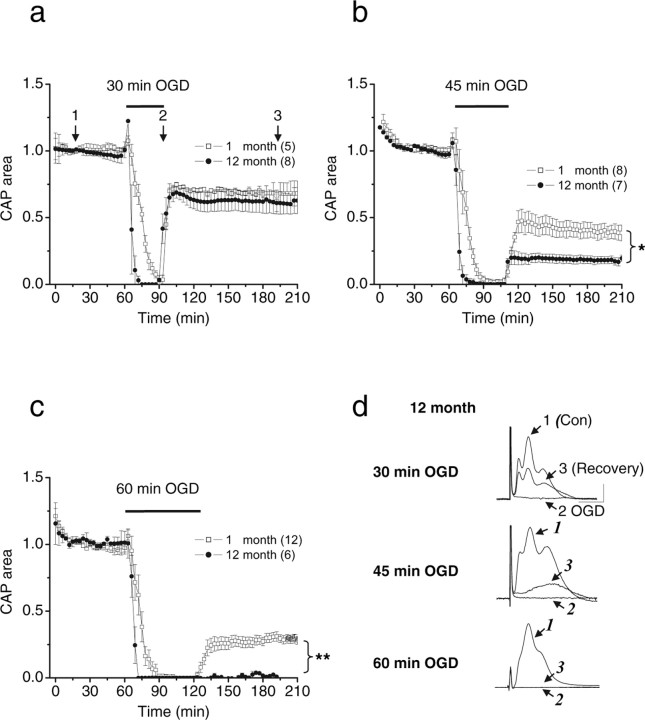
Stroke incidence increases with age and this has been attributed to vascular factors. We show here that CNS white matter (WM) is intrinsically more vulnerable to ischemic injury in older animals and that the mechanisms of WM injury change as a function of age. The mouse optic nerve was used to study WM function. WM function in older animals (12 months) was not protected from ischemic injury by removal of extracellular Ca2+ or by blockade of reverse Na+/Ca2+ exchange, as is the case with young adults. Ischemic WM injury in older mice is predominately mediated by glutamate release and activation of AMPA/kainate-type glutamate receptors. Glutamate release, attributable to reverse glutamate transport, occurs earlier and is more robust in older mice that show greater expression of the glutamate transporter. The observation that WM vulnerability to ischemic injury is age dependent has possible implications for the pathogenesis of other age-related CNS conditions.
Figures


References
-
- Ay H, Koroshetz WJ, Vangel M, Benner T, Melinosky C, Zhu M, Menezes N, Lopez CJ, Sorensen AG. Conversion of ischemic brain tissue into infarction increases with age. Stroke. 2005;36:2632–2636. - PubMed
-
- Baltan S. Mechanisms of ischemic injury in aging white matter. EuroGlia Meeting; September; London, UK. 2007. Paper presented at.
-
- Cavallotti C, Pacella E, Pescosolido N, Tranquilli-Leali FM, Feher J. Age-related changes in the human optic nerve. Can J Ophthalmol. 2002;37:389–394. - PubMed
Publication types
MeSH terms
Substances
Grants and funding
LinkOut - more resources
Full Text Sources
Medical
Miscellaneous
