


Noninvasive optical imaging of staphylococcus aureus bacterial infection in living mice using a Bis-dipicolylamine-Zinc(II) affinity group conjugated to a near-infrared fluorophore
- PMID: 18260609
- PMCID: PMC2852891
- DOI: 10.1021/bc700376v
Noninvasive optical imaging of staphylococcus aureus bacterial infection in living mice using a Bis-dipicolylamine-Zinc(II) affinity group conjugated to a near-infrared fluorophore
Abstract
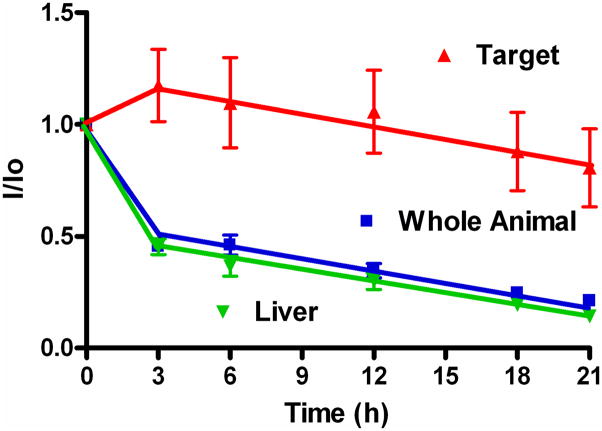
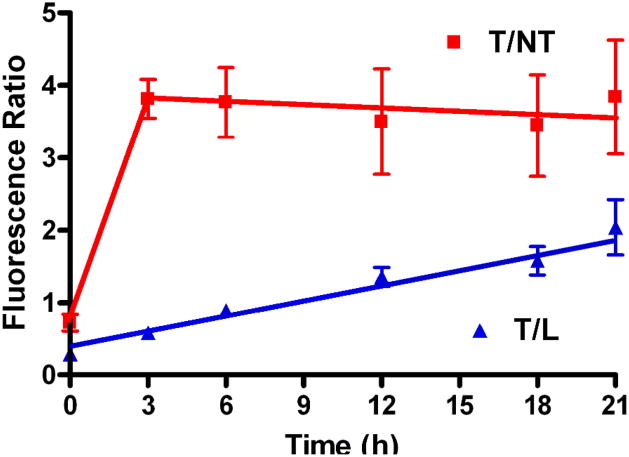
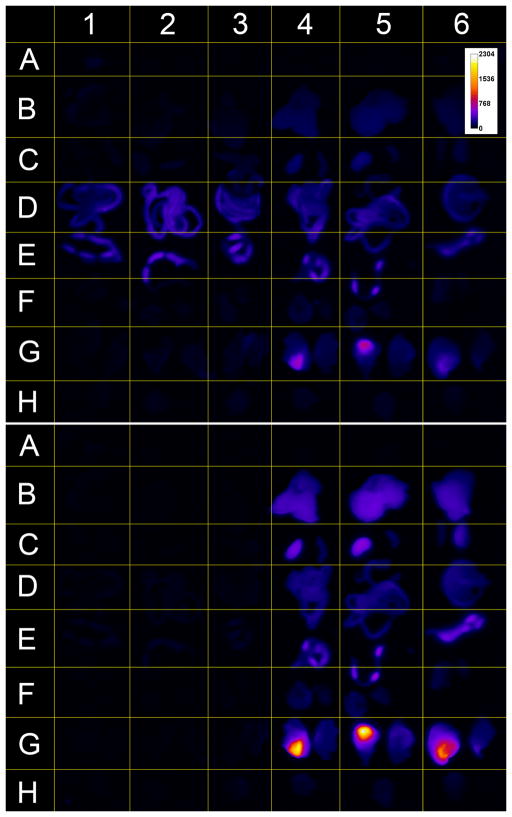
Optical imaging of bacterial infection in living animals is usually conducted with genetic reporters such as light-emitting enzymes or fluorescent proteins. However, there are many circumstances where genetic reporters are not applicable, and there is a need for exogenous synthetic probes that can selectively target bacteria. The focus of this study is a fluorescent imaging probe that is composed of a bacterial affinity group conjugated to a near-infrared dye. The affinity group is a synthetic zinc (II) coordination complex that targets the anionic surfaces of bacterial cells. The probe allows detection of Staphylococcus aureus infection (5 x 10 (7) cells) in a mouse leg infection model using whole animal near-infrared fluorescence imaging. Region of interest analysis showed that the signal ratio for infected leg to uninfected leg reaches 3.9 +/- 0.5 at 21 h postinjection of the probe. Ex vivo imaging of the organs produced a signal ratio of 8 for infected to uninfected leg. Immunohistochemical analysis confirmed that the probe targeted the bacterial cells in the infected tissue. Optimization of the imaging filter set lowered the background signal due to autofluorescence and substantially improved imaging contrast. The study shows that near-infrared molecular probes are amenable to noninvasive optical imaging of localized S. aureus infection.
Figures






References
-
- Hirose K, Marui A, Nomura T, Kaneda K, Kimura Y, Ikeda T, Fujita M, Mitsuyama M, Tabata Y, Komeda M. A novel approach to reduce catheter-related infection using sustained-release basic fibroblast growth factor for tissue regeneration in mice. Heart Vessels. 2007;22:261–267. - PubMed
-
- Embleton ML, Nair SP, Cookson BD, Wilson M. Selective lethal photosensitization of methicillin-resistand Staphylococcus aureus using a tin(IV) chlorin e6 conjugate. J Antimicrob Chemo. 2002;50:857–864. - PubMed
-
- Qu LW, Luo PG, Taylor S, Lin Y, Huang WJ, Anyadike N, Tzeng TRJ, Stutzenberger F, Latour RA, Sun YPJ. Visualizing adhesion-induced agglutination of Escherichia coli with mannosylated nanoparticles. Nanosci Nanotechnol. 2005;5:319–322. - PubMed
Publication types
MeSH terms
Substances
Grants and funding
LinkOut - more resources
Full Text Sources
Other Literature Sources
Medical
Miscellaneous
