. 2008 Feb 28;451(7182):1116-20.
doi: 10.1038/nature06633. Epub 2008 Feb 10.

Secondary mutations as a mechanism of cisplatin resistance in BRCA2-mutated cancers

Affiliations

Secondary mutations as a mechanism of cisplatin resistance in BRCA2-mutated cancers

Wataru Sakai et al. Nature. .

Abstract

Ovarian carcinomas with mutations in the tumour suppressor BRCA2 are particularly sensitive to platinum compounds. However, such carcinomas ultimately develop cisplatin resistance. The mechanism of that resistance is largely unknown. Here we show that acquired resistance to cisplatin can be mediated by secondary intragenic mutations in BRCA2 that restore the wild-type BRCA2 reading frame. First, in a cisplatin-resistant BRCA2-mutated breast-cancer cell line, HCC1428, a secondary genetic change in BRCA2 rescued BRCA2 function. Second, cisplatin selection of a BRCA2-mutated pancreatic cancer cell line, Capan-1 (refs 3, 4), led to five different secondary mutations that restored the wild-type BRCA2 reading frame. All clones with secondary mutations were resistant both to cisplatin and to a poly(ADP-ribose) polymerase (PARP) inhibitor (AG14361). Finally, we evaluated recurrent cancers from patients whose primary BRCA2-mutated ovarian carcinomas were treated with cisplatin. The recurrent tumour that acquired cisplatin resistance had undergone reversion of its BRCA2 mutation. Our results suggest that secondary mutations that restore the wild-type BRCA2 reading frame may be a major clinical mediator of acquired resistance to platinum-based chemotherapy.


Figures
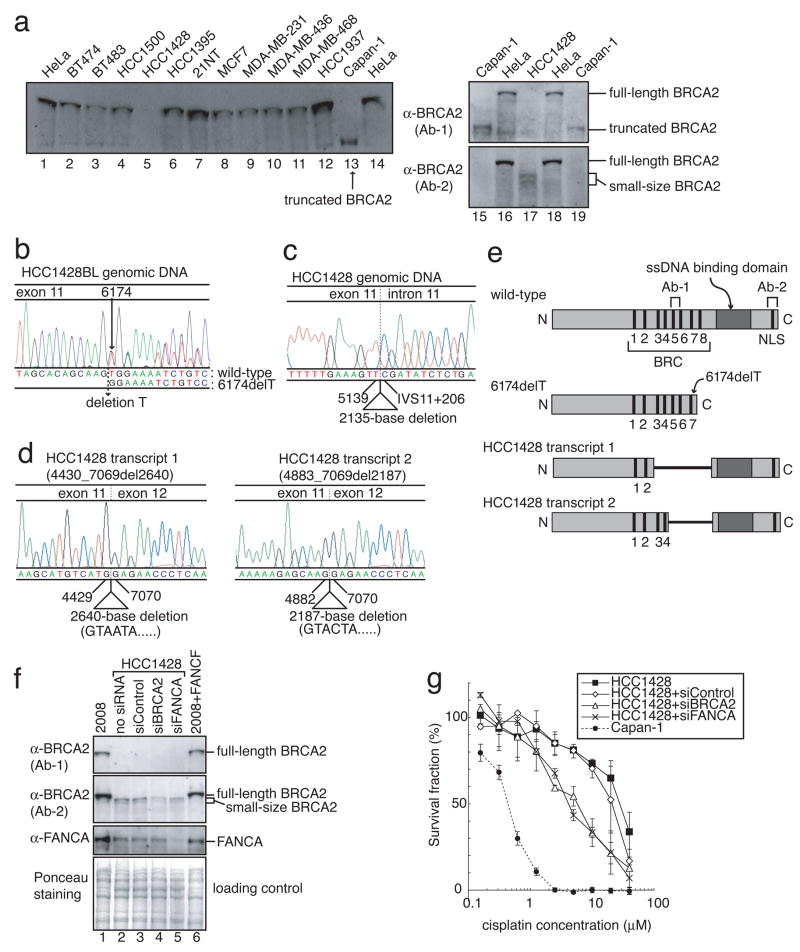
Figure 1
Figure 1. HCC1428 is a cisplatin-resistant breast cancer cell line with a secondary BRCA2 mutation
(Full-length blots are presented in Supplemental Figure 9) a, Cell lysates from HeLa, Capan-1 and indicated breast cancer cell lines were immunoblotted with BRCA2 antibodies. b, Genomic DNA sequence of BRCA2 in HCC1428BL lymphoblast. A heterozygous mutation (6174delT) was identified. c, Genomic DNA sequence of BRCA2 in HCC1428 breast cancer cell line. A homozygous 2135-base deletion from nt5140 (in exon 11) to IVS11+205 (in intron 11) was identified. d, Sequences of the two BRCA2 transcripts in HCC1428 breast cancer cell line. The two RT-PCR products shown in Fig. S1b were purified from the gel, and sequenced separately. HCC1428 transcripts 1 and 2 had a 2640-base deletion (nt4430 to 7069) and a 2187-base deletion (nt4883 to 7069), respectively, suggesting activation of the cryptic splice donor sites in exon11. e, Schematic presentation of BRCA2 proteins. The regions that the BRCA2 antibodies (Ab-1 and Ab-2) recognize are also depicted. HCC1428 transcripts 1 and 2 encode BRCA2 lacking 881 amino acids and 730 amino acids, respectively, both of which have ssDNA binding domains, nuclear localization signals (NLS) and some of the BRC repeats. f, Cell lysates from HCC1428 cells treated with indicated siRNA were immunoblotted with BRCA2 and FANCA antibodies. 2008 and 2008+FANCF were used as controls. g, Cisplatin sensitivity assessed by XTT assay. HCC1428 was resistant to cisplatin, and depletion of BRCA2 or FANCA sensitized HCC1428 to cisplatin (mean ± SEM, n=3).
Figure 2
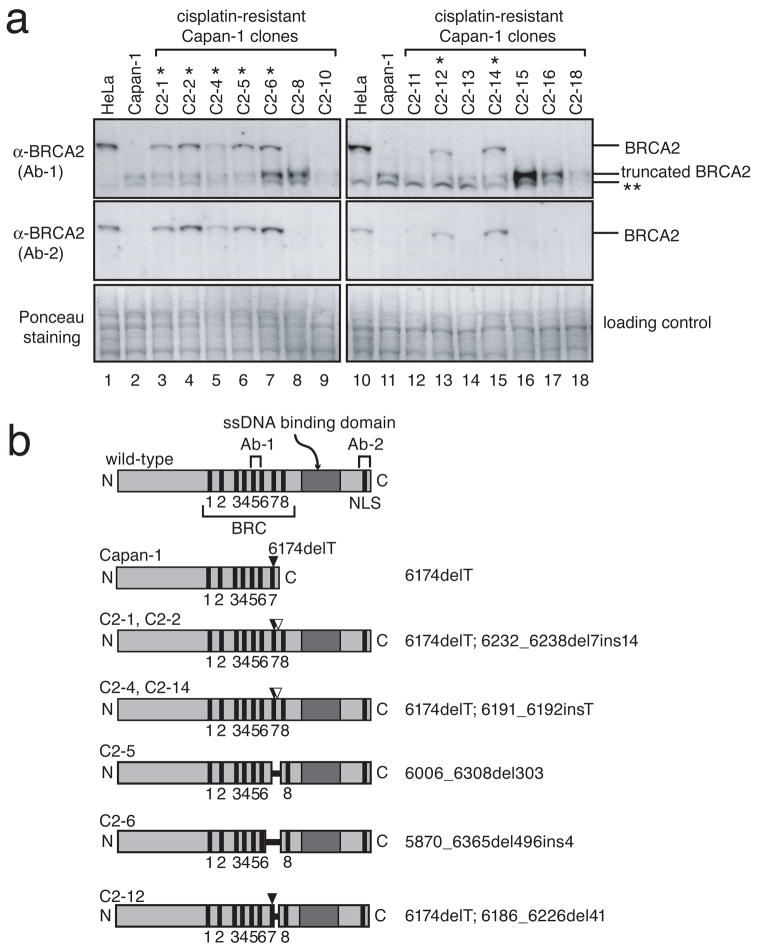
Figure 2. Secondary genetic changes in mutated BRCA2 in cisplatin-resistant clones of a pancreatic cancer cell line, Capan-1
(Full-length blots are presented in Supplemental Figure 9) a, Seven Capan-1 clones indicated with a single asterisk (*) restored apparently full-length BRCA2 protein expression. Cell lysates from indicated cells were immunoblotted with BRCA2 antibodies (Ab-1 and Ab-2). A double asterisk (**) indicates a band presumed to be nonspecific. b, Schematic presentation of BRCA2 proteins encoded by transcripts in Capan-1 clones. In all of the BRCA2-restored Capan-1 clones, additional genetic changes in exon 11 of BRCA2 were detected (Table S1, Figs. S4 and S5). All of these secondary genetic changes (shown as white arrow heads or black horizontal bars) cancel the frameshift caused by the original mutation (6174delT, black arrow heads), and the encoded BRCA2 proteins have intact C-terminal regions containing a single strand DNA (ssDNA) binding domain and nuclear localization signals (NLS).
Figure 3
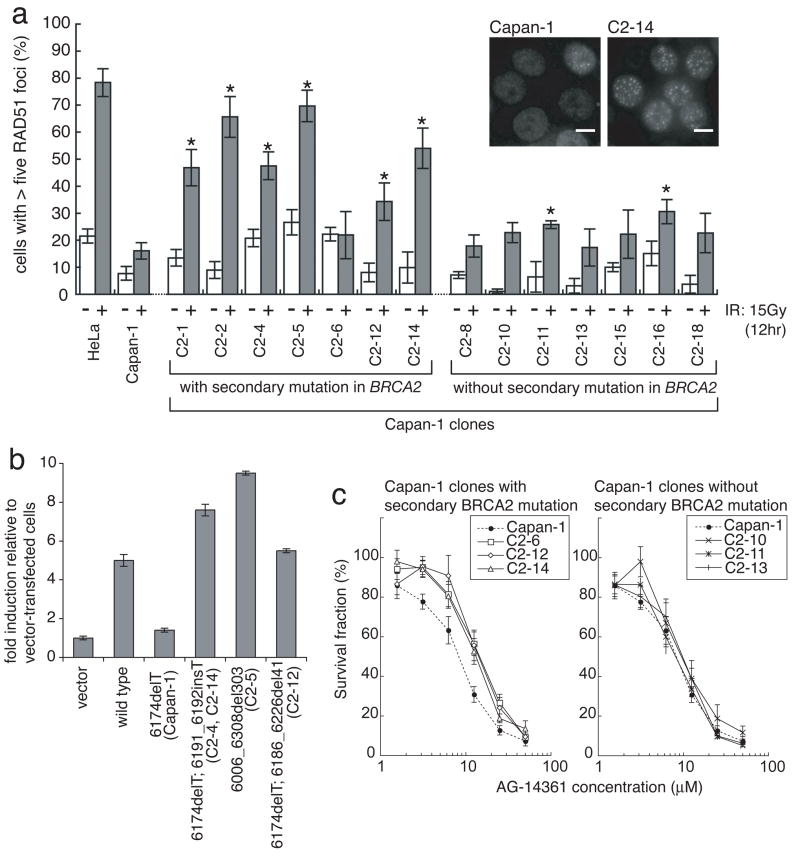
Figure 3. Functional analyses of the restored BRCA2 proteins
a, Ionizing radiation (IR)-induced RAD51 foci formation is restored in most of BRCA2-restored Capan-1 clones. Indicated cells were irradiated (15 Gy) and fixed 12 hours after IR. Cells were immunostained with RAD51 antibody. Representative pictures of immunostained cells after IR are shown, together with quantification of the cells with at least five RAD51 foci before (−, white bars) and 12 hours after IR (+, grey bars) (mean values of at least three independent experiments ± SEM). Asterisks (*) indicate significant difference with irradiated parental Capan-1 cells (p<0.05, unpaired t test). Scale bar = 40 μm. b, Quantitation of HR induced by I-SceI in VC8-DR-GFP cells transiently transfected with wild-type and mutant forms of FLAG-tagged human BRCA2 cDNA. The proportion of GFP-positive cells for each construct relative to vector control is shown (mean ± SEM, n=3). c, BRCA2-restored Capan-1 clones are resistant to a PARP inhibitor. Capan-1, its clones with secondary BRCA2 mutation (C2-6, C2-12 and C2-14) and clones without secondary BRCA2 mutation (C2-10, C2-11 and C2-13) were treated with a PARP inhibitor (AG14361) at the indicated concentrations for 6 days, and survival fraction was measured by XTT assay (mean ± SEM, n=6).
Figure 4
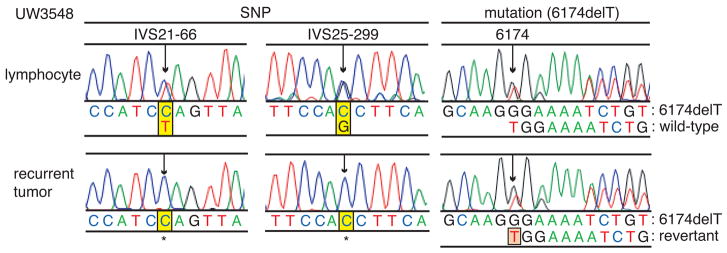
Figure 4. Genetic reversion of BRCA2 in platinum-resistant recurrent BRCA2-mutated ovarian cancer
DNA sequences of BRCA2 in peripheral blood lymphocytes and a microdissected specimen of the recurrent tumor from a patient (UW3548) with BRCA2-mutated ovarian cancer previously treated with cisplatin. In the lymphocytes, heterozygous single nucleotide polymorphisms (SNPs) of the BRCA2 locus (IVS21-66C/T and IVS25-299C/G) were detected, in addition to a heterozygous mutation (6174delT). In the microdissected recurrent tumor specimen, loss of heterozygosity (LOH) of the SNPs was confirmed, but mixed sequences of 6174delT and wild-type BRCA2 were detected.

Comment in

References

    1. Yuan SS, et al. BRCA2 is required for ionizing radiation-induced assembly of Rad51 complex in vivo. Cancer Res. 1999;59:3547–3551. - PubMed
    1. Agarwal R, Kaye SB. Ovarian cancer: strategies for overcoming resistance to chemotherapy. Nat Rev Cancer. 2003;3:502–516. - PubMed
    1. Goggins M, et al. Germline BRCA2 gene mutations in patients with apparently sporadic pancreatic carcinomas. Cancer Res. 1996;56:5360–5364. - PubMed
    1. Abbott DW, Freeman ML, Holt JT. Double-strand break repair deficiency and radiation sensitivity in BRCA2 mutant cancer cells. J Natl Cancer Inst. 1998;90:978–985. - PubMed
    1. Li AJ, Karlan BY. Genetic factors in ovarian carcinoma. Curr Oncol Rep. 2001;3:27–32. - PubMed

Publication types

MeSH terms

Substances