


OS-9 and GRP94 deliver mutant alpha1-antitrypsin to the Hrd1-SEL1L ubiquitin ligase complex for ERAD
- PMID: 18264092
- PMCID: PMC2757077
- DOI: 10.1038/ncb1689
OS-9 and GRP94 deliver mutant alpha1-antitrypsin to the Hrd1-SEL1L ubiquitin ligase complex for ERAD
Abstract
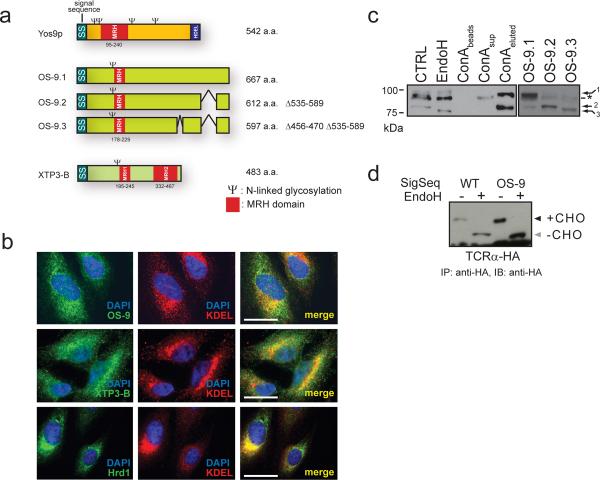
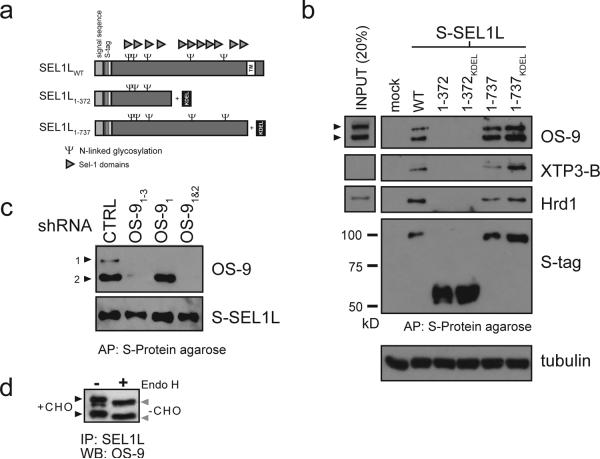
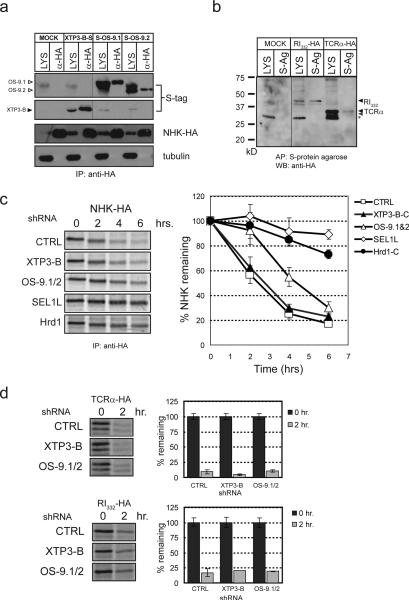
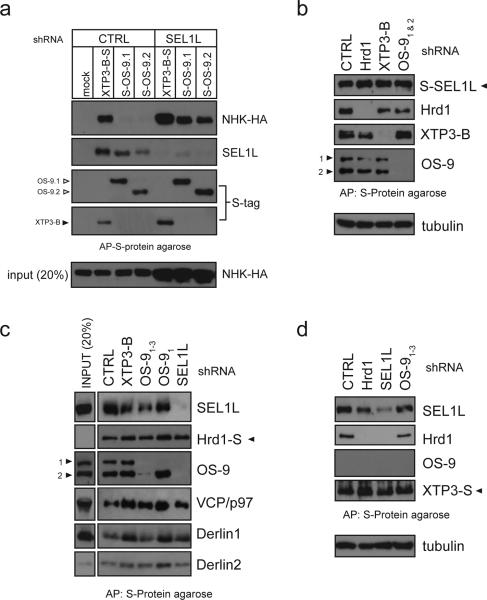
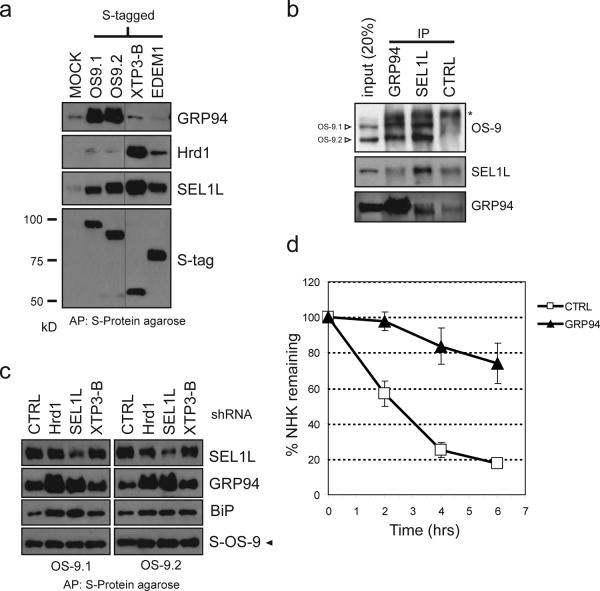
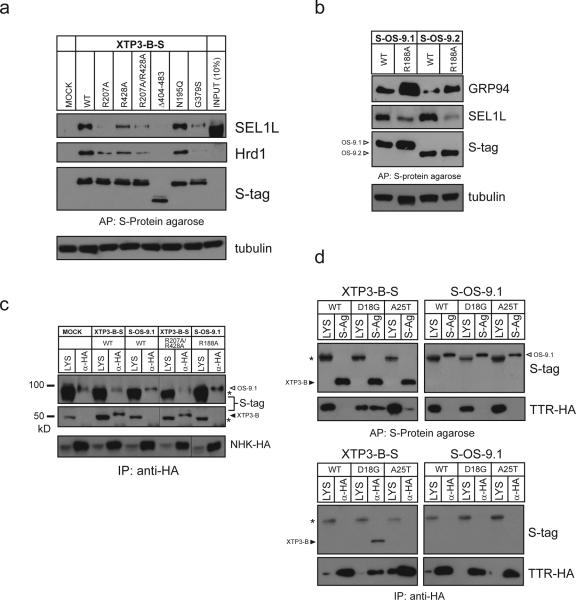
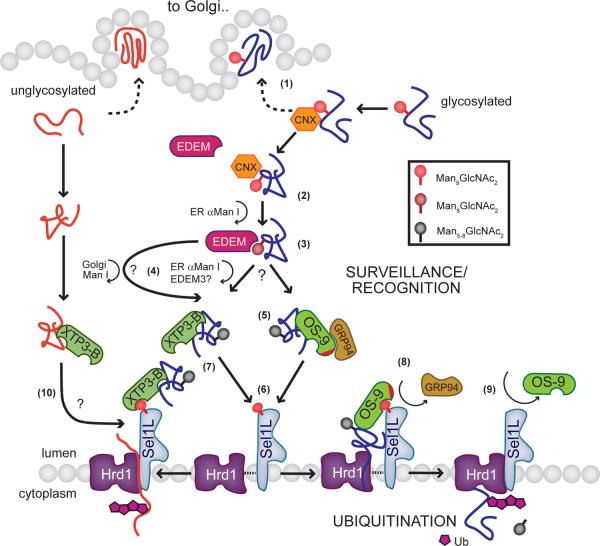
Terminally misfolded or unassembled proteins in the early secretory pathway are degraded by a ubiquitin- and proteasome-dependent process known as ER-associated degradation (ERAD). How substrates of this pathway are recognized within the ER and delivered to the cytoplasmic ubiquitin-conjugating machinery is unknown. We report here that OS-9 and XTP3-B/Erlectin are ER-resident glycoproteins that bind to ERAD substrates and, through the SEL1L adaptor, to the ER-membrane-embedded ubiquitin ligase Hrd1. Both proteins contain conserved mannose 6-phosphate receptor homology (MRH) domains, which are required for interaction with SEL1L, but not with substrate. OS-9 associates with the ER chaperone GRP94 which, together with Hrd1 and SEL1L, is required for the degradation of an ERAD substrate, mutant alpha(1)-antitrypsin. These data suggest that XTP3-B and OS-9 are components of distinct, partially redundant, quality control surveillance pathways that coordinate protein folding with membrane dislocation and ubiquitin conjugation in mammalian cells.
Figures
Comment in
-
Lectins sweet-talk proteins into ERAD.Nat Cell Biol. 2008 Mar;10(3):251-3. doi: 10.1038/ncb0308-251. Nat Cell Biol. 2008. PMID: 18311178 No abstract available.
References
-
- Hammond C, Helenius A. Quality control in the secretory pathway. Current Opinion in Cell Biology. 1995;7:523–529. - PubMed
-
- Lippincott-Schwartz J, Bonifacino JS, Yuan LC, Klausner RD. Degradation from the endoplasmic reticulum: disposing of newly synthesized proteins. Cell. 1988;54:209–220. - PubMed
-
- Meusser B, Hirsch C, Jarosch E, Sommer T. ERAD: the long road to destruction. Nat Cell Biol. 2005;7:766–772. - PubMed
-
- Yu H, Kopito RR. The role of multiubiquitination in dislocation and degradation of the alpha subunit of the T cell antigen receptor. J Biol Chem. 1999;274:36852–36858. - PubMed
Publication types
MeSH terms
Substances
Grants and funding
LinkOut - more resources
Full Text Sources
Other Literature Sources
Molecular Biology Databases
Miscellaneous
