


Enzymes of the shikimic acid pathway encoded in the genome of a basal metazoan, Nematostella vectensis, have microbial origins
- PMID: 18268342
- PMCID: PMC2268171
- DOI: 10.1073/pnas.0707388105
Enzymes of the shikimic acid pathway encoded in the genome of a basal metazoan, Nematostella vectensis, have microbial origins
Abstract
The shikimic acid pathway is responsible for the biosynthesis of many aromatic compounds by a broad range of organisms, including bacteria, fungi, plants, and some protozoans. Animals are considered to lack this pathway, as evinced by their dietary requirement for shikimate-derived aromatic amino acids. We challenge the universality of this traditional view in this report of genes encoding enzymes for the shikimate pathway in an animal, the starlet sea anemone Nematostella vectensis. Molecular evidence establishes horizontal transfer of ancestral genes of the shikimic acid pathway into the N. vectensis genome from both bacterial and eukaryotic (dinoflagellate) donors. Bioinformatic analysis also reveals four genes that are closely related to those of Tenacibaculum sp. MED152, raising speculation for the existence of a previously unsuspected bacterial symbiont. Indeed, the genome of the holobiont (i.e., the entity consisting of the host and its symbionts) comprises a high content of Tenacibaculum-like gene orthologs, including a 16S rRNA sequence that establishes the phylogenetic position of this associate to be within the family Flavobacteriaceae. These results provide a complementary view for the biogenesis of shikimate-related metabolites in marine Cnidaria as a "shared metabolic adaptation" between the partners.
Conflict of interest statement
The authors declare no conflict of interest.
Figures
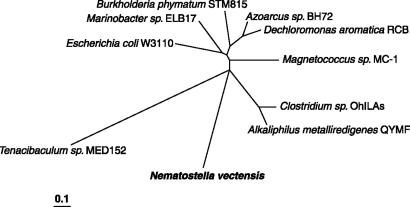
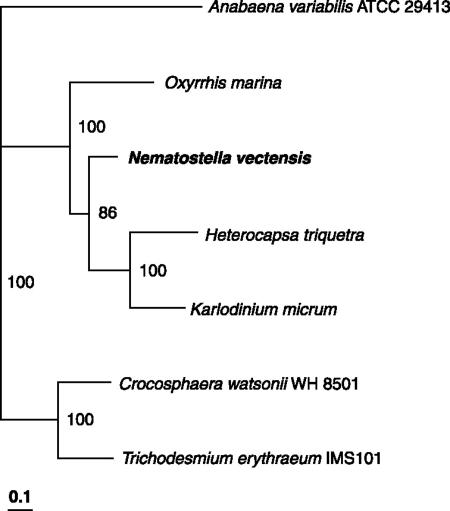
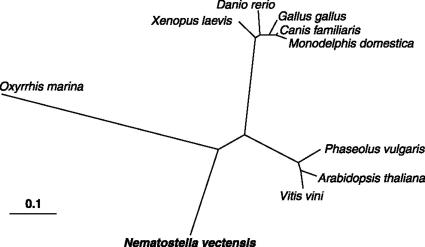
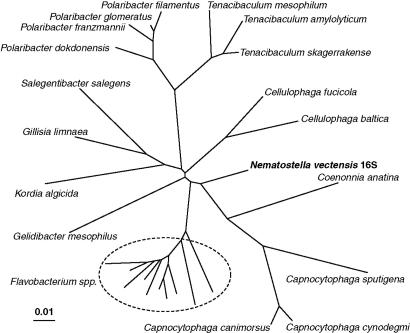
References
-
- Muscatine L. Coral reefs. In: Dubinsky Z, editor. Ecosystems of the World. Vol 35. Amsterdam: Elsevier; 1990. pp. 75–87.
-
- Cook CB, D'Elia CF. Host feeding and nutrient sufficiency for zooxanthellae in the sea anemone Aiptasia pallida. Symbiosis. 1987;4:199–212.
-
- Allemand D, Furla P, Benazet-Tambutté S. Mechanisms of carbon acquisition for endosymbiont photosynthesis in Anthozoa. Can J Bot. 1998;76:925–941.
-
- Furla P, et al. The symbiotic Cnidarian: A physiological chimera between alga and animal. Integr Comp Biol. 2005;45:595–604. - PubMed
-
- Shick JM, Dunlap WC. Mycosporine-like amino acids and related Gadusols: Biosynthesis, acumulation, and UV-protective functions in aquatic organisms. Annu Rev Physiol. 2002;64:223–262. - PubMed
Publication types
MeSH terms
Substances
LinkOut - more resources
Full Text Sources
Other Literature Sources
