


Reproducible, ultra high-throughput formation of multicellular organization from single cell suspension-derived human embryonic stem cell aggregates
- PMID: 18270562
- PMCID: PMC2215775
- DOI: 10.1371/journal.pone.0001565
Reproducible, ultra high-throughput formation of multicellular organization from single cell suspension-derived human embryonic stem cell aggregates
Abstract
Background: Human embryonic stem cells (hESC) should enable novel insights into early human development and provide a renewable source of cells for regenerative medicine. However, because the three-dimensional hESC aggregates [embryoid bodies (hEB)] typically employed to reveal hESC developmental potential are heterogeneous and exhibit disorganized differentiation, progress in hESC technology development has been hindered.
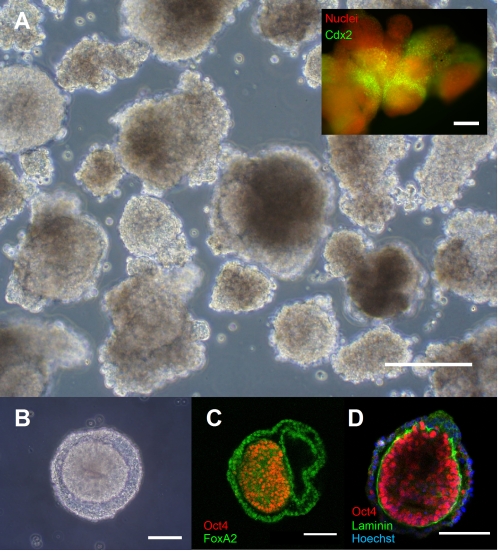
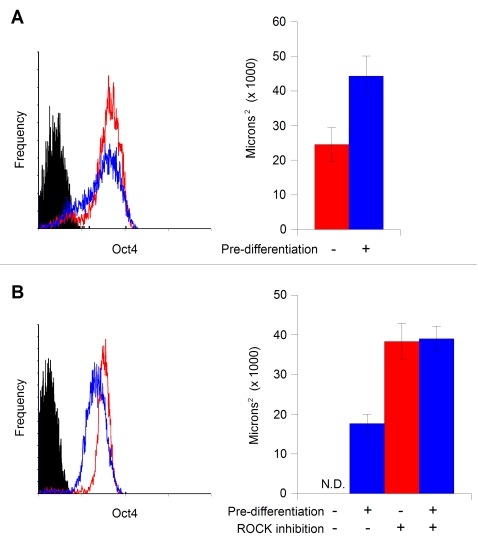
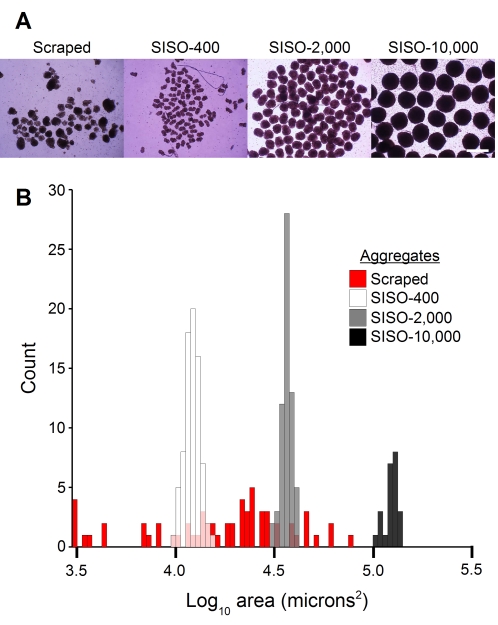
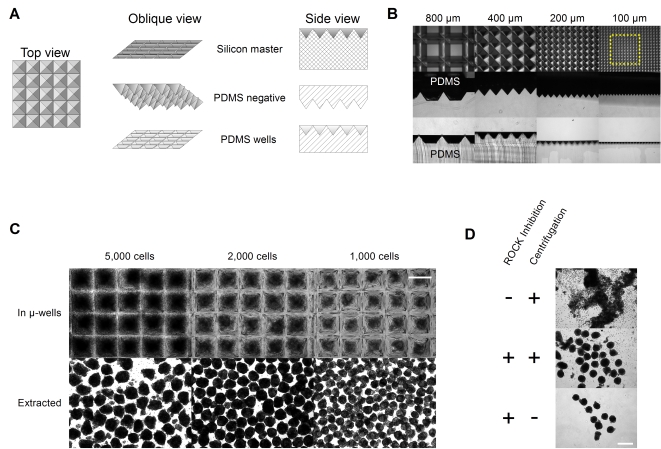
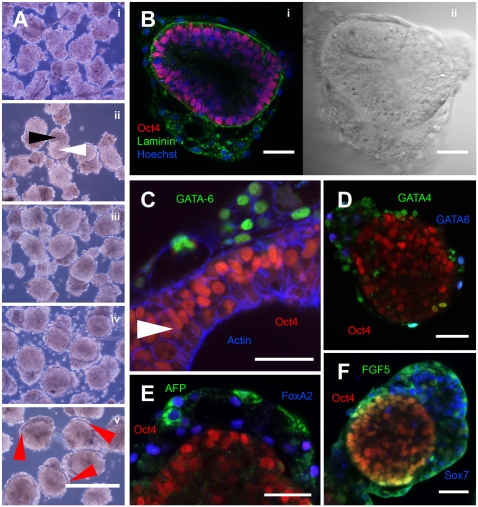
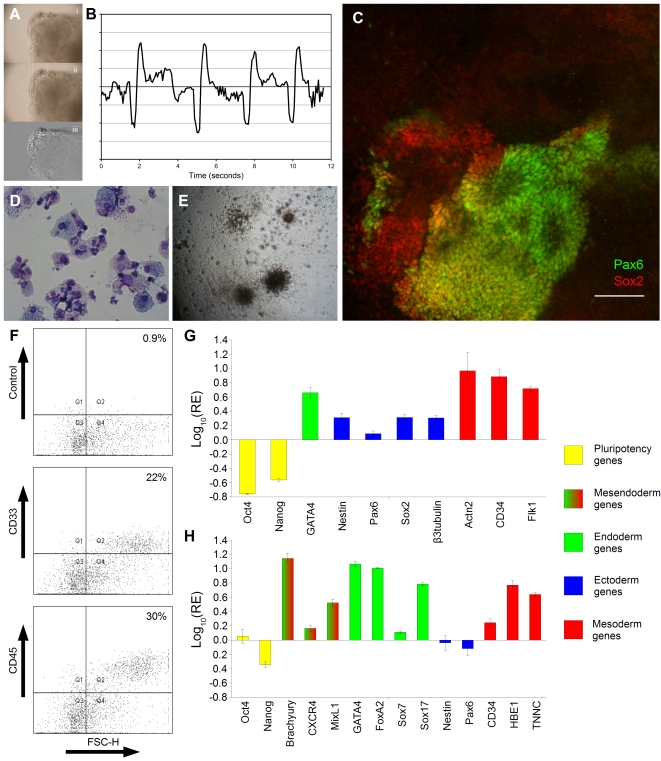
Methodology/principal findings: Using a centrifugal forced-aggregation strategy in combination with a novel centrifugal-extraction approach as a foundation, we demonstrated that hESC input composition and inductive environment could be manipulated to form large numbers of well-defined aggregates exhibiting multi-lineage differentiation and substantially improved self-organization from single-cell suspensions. These aggregates exhibited coordinated bi-domain structures including contiguous regions of extraembryonic endoderm- and epiblast-like tissue. A silicon wafer-based microfabrication technology was used to generate surfaces that permit the production of hundreds to thousands of hEB per cm(2).
Conclusions/significance: The mechanisms of early human embryogenesis are poorly understood. We report an ultra high throughput (UHTP) approach for generating spatially and temporally synchronised hEB. Aggregates generated in this manner exhibited aspects of peri-implantation tissue-level morphogenesis. These results should advance fundamental studies into early human developmental processes, enable high-throughput screening strategies to identify conditions that specify hESC-derived cells and tissues, and accelerate the pre-clinical evaluation of hESC-derived cells.
Conflict of interest statement
Figures
References
-
- Gilbert SF. Early Mammalian Development. In: Gilbert SF. Developmental Biology. Sinauer Associates Inc. 2000 Available: http://www.ncbi.nlm.nih.gov/books/bv.fcgiriddbio.section.2609 Accessed 8 September, 2007.
-
- Wells JM, Melton DA. Early mouse endoderm is patterned by soluble factors from adjacent germ layers. Development. 2000;127:1563–1572. - PubMed
-
- Ingber DE. Mechanical control of tissue morphogenesis during embryological development. Int J Dev Biol. 2006;50:255–266. - PubMed
-
- Thomson JA, Itskovitz-Eldor J, Shapiro SS, Waknitz MA, Swiergiel JJ, et al. Embryonic stem cell lines derived from human blastocysts. Science. 1998;282:1145–1147. - PubMed
-
- Eakin GS, Behringer RR. Diversity of germ layer and axis formation among mammals. Semin Cell Dev Biol. 2004;15:619–629. - PubMed
Publication types
MeSH terms
LinkOut - more resources
Full Text Sources
Other Literature Sources
