Review
. 2008 Feb;12(1):18-24.
doi: 10.1016/j.cbpa.2008.01.021. Epub 2008 Mar 7.

Discovering mechanisms of signaling-mediated cysteine oxidation

Affiliations
Review

Discovering mechanisms of signaling-mediated cysteine oxidation

Leslie B Poole et al. Curr Opin Chem Biol. 2008 Feb.

Abstract

Accumulating evidence reveals hydrogen peroxide as a key player both as a damaging agent and, from emerging evidence over the past decade, as a second messenger in intracellular signaling. This rather mild oxidant acts upon downstream targets within signaling cascades to modulate the activity of a host of enzymes (e.g. phosphatases and kinases) and transcriptional regulators through chemoselective oxidation of cysteine residues. With the recent development of specific detection reagents for hydrogen peroxide and new chemical tools to detect the generation of the initial oxidation product, sulfenic acid, on reactive cysteines within target proteins, the scene is set to gain a better understanding of the mechanisms through which hydrogen peroxide acts as a second messenger in cell signaling.


Figures
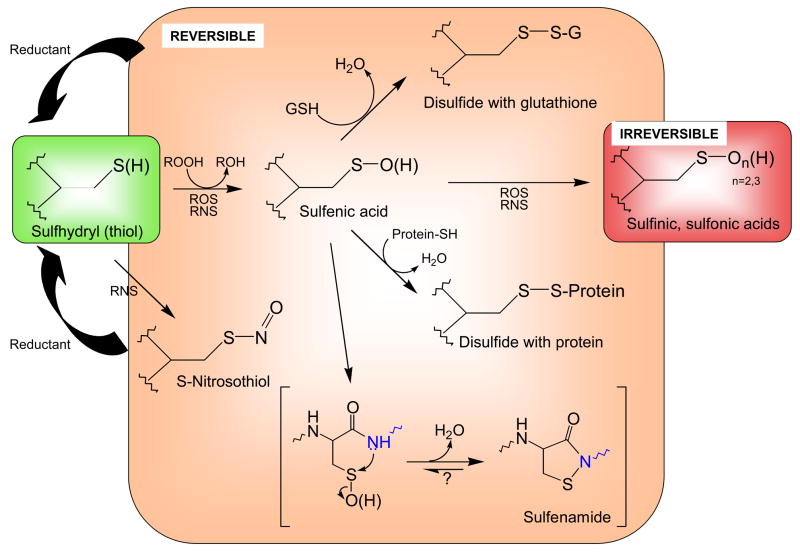
Figure 1
Figure 1. Biological modifications of cysteine thiols
Reactive cysteine thiols (green), typically in their ionized, thiolate form (R-S), are oxidized by such oxidants as hydrogen peroxide, organic hydroperoxides, hypochlorous acid and peroxynitrite to form sulfenic acids, which may be stabilized or go on to form other reversible (disulfides or sulfenamides, orange) or irreversible (sufinic and sulfonic acid, red) species. Both reactive oxygen species (ROS) and reactive nitrogen species (RNS) promote these oxidations. Note that the generation of sulfenamide (bottom) involves attack of a neighboring amino acid’s amide nitrogen (blue) on the sulfenic acid sulfur. Although sulfinic and sulfonic acids are shown here as irreversible modifications, recent discoveries show that some peroxiredoxins in this state can be recovered through action of specialized sulfinic acid reductases (sulfiredoxins).
Figure 2
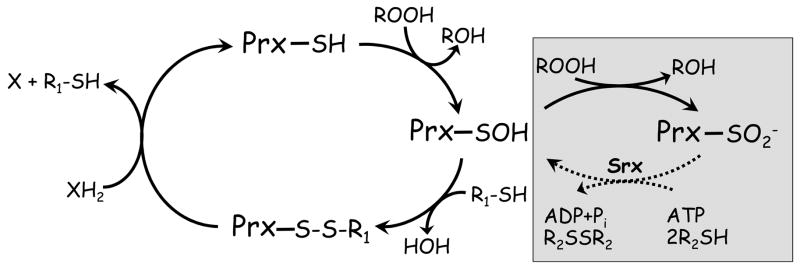
Figure 2. Peroxiredoxin catalytic and regulatory redox cycles
Peroxiredoxins (Prx) have in common the first step of catalysis whereby the active site cysteine thiol (in its thiolate form) attacks the hydroperoxide substrate, releasing the corresponding alcohol and the enzyme in its sulfenic acid (SOH) form. For catalytic recycling, a resolving cysteine (R1-SH) in the same or another subunit typically forms a disulfide bond with the peroxidatic cysteine, and the enzyme is regenerated by small molecule or protein electron donors. The sulfenic acid can also act as a redox-sensitive switch, converting the enzyme to an inactive sulfinic acid form in the presence of excess hydroperoxide substrate (gray box). Enzymes called sulfiredoxins (and perhaps sestrins) can regenerate activity in some Prx through an ATP-dependent reduction (dotted line).
Figure 3
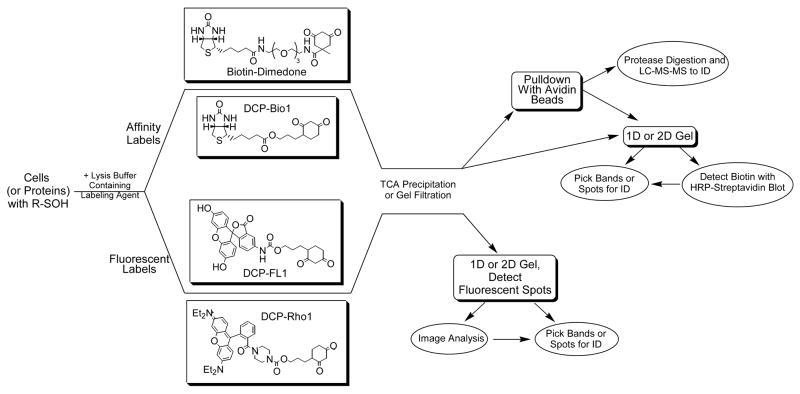
Figure 3. Strategies for detecting and isolating sulfenic acids in proteins
Cells or proteins with cysteine sulfenic acid modifications are incubated with either affinity (biotin-dimedone or DCP-Bio1, or two other affinity probes [39,41]) or fluorescently-tagged reagents (DCP-FL1 or DCP-Rho1, or two other fluorescein- and rhodamine-based probes [39]). The chemically reactive probes based on dimedone include a nucleophilic carbon between the two carbonyls of the cyclohexane ring that exhibits specificity toward sulfenic acids. After incubation, unreacted probes are removed from the protein samples by trichloroacetic acid (TCA) precipitation or gel filtration chromatography. Subsequent analytical procedures can include one-dimensional or two-dimensional gels in both cases, from which bands or spots can be excised, digested and analyzed by mass spectrometry (MS) for identification of the labeled protein. For the biotinylated samples, “pulldown” of the affinity-labeled proteins with avidin-linked beads can be carried out either before or after proteolytic digestion of the proteins in the samples, enriching in either labeled proteins or labeled peptides. Subsequent LC-MS-MS analysis can then be used to identify labeled proteins/peptides.

References

    1. Li Q, Harraz MM, Zhou W, Zhang LN, Ding W, Zhang Y, Eggleston T, Yeaman C, Banfi B, Engelhardt JF. Nox2 and Rac1 regulate H2O2-dependent recruitment of TRAF6 to endosomal interleukin-1 receptor complexes. Mol Cell Biol. 2006;26:140–154. Trafficking of both activated IL-1 receptor complexes and activated Nox complexes to endosomal compartments is demonstrated, along with evidence supporting the generation of superoxide and hydrogen peroxide within the lumen of the endosomes. - PMC - PubMed
    1. Rhee SG. Cell signaling. H2O2, a necessary evil for cell signaling. Science. 2006;312:1882–1883. - PubMed
    1. Ushio-Fukai M. Localizing NADPH oxidase-derived ROS. Sci STKE. 2006;2006:re8. - PubMed
    1. Wood ZA, Poole LB, Karplus PA. Peroxiredoxin evolution and the regulation of hydrogen peroxide signaling. Science. 2003;300:650–653. - PubMed
    1. Veal EA, Day AM, Morgan BA. Hydrogen peroxide sensing and signaling. Mol Cell. 2007;26:1–14. - PubMed

Publication types