


Retrospective clinical study on the notable efficacy and related factors of infliximab therapy in a rheumatoid arthritis management group in Japan: one-year clinical outcomes (RECONFIRM-2)
- PMID: 18283523
- PMCID: PMC2279153
- DOI: 10.1007/s10165-008-0026-3
Retrospective clinical study on the notable efficacy and related factors of infliximab therapy in a rheumatoid arthritis management group in Japan: one-year clinical outcomes (RECONFIRM-2)
Abstract
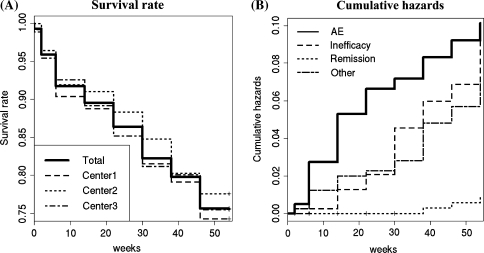
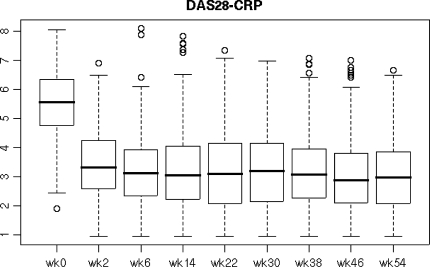
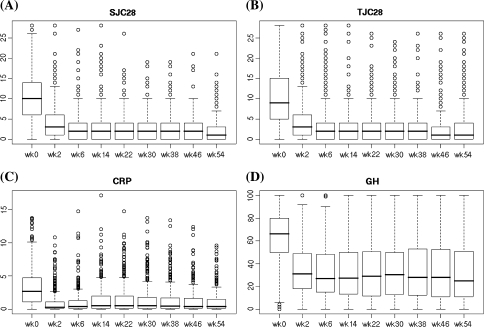
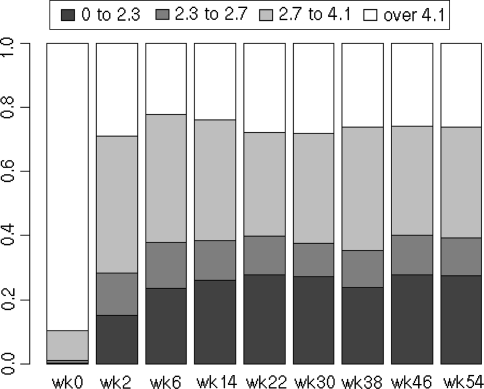
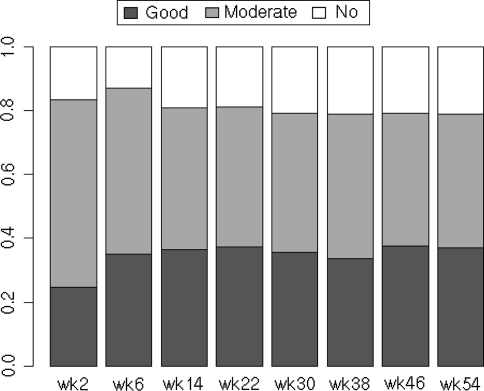
Biologics targeting TNF have brought about a paradigm shift in the treatment of rheumatoid arthritis (RA) and infliximab, anti-TNF-alpha chimeric monoclonal antibody, was marketed in 2003 in Japan. We previously reported on the RECONFIRM study, a retrospective clinical study on the efficacy of infliximab therapy in a RA management group in Japan, where we evaluated the clinical response after 22 weeks of the therapy in 258 patients. The study reported here was aimed at reconfirming the clinical efficacy of the infliximab therapy and demographic factors related to the efficacy over a 54-week study period in 410 RA patients in the same study group. Infliximab was infused according to the domestically approved method, and the clinical response was evaluated following 54 weeks of infliximab therapy using the European League Against Rheumatism (EULAR) response criteria. Disease activity was assessed by DAS28-CRP (Disease Activity Score including a 28-joint count/C-reactive protein). Infliximab was discontinued in 24.4% of the 410 patients at 54 weeks and 9.3% and 8.1% discontinued the therapy due to adverse events and inefficiency, respectively. Average DAS28-CRP decreased from 5.5 at week 0 to 3.1 at week 54 after the therapy. Patients in remission and those showing low-, moderate-, and high-disease activity changed from 0.0, 1.0, 9.0 and 90.0%, respectively, at the start of the study to 27.6, 11.7, 34.4 and 26.3%, respectively, at week 54. Younger age, RF-negativity and low scores of DAS28-CRP showed significant correlations with remission at week 54. EULAR response criteria -- good, moderate, and no response to infliximab -- were 37.0, 41.7 and 21.2%, respectively. In conclusion, we reconfirmed the clinical efficacy of infliximab and demographic factors related to the efficacy over a 54-week study period in 410 Japanese patients with RA using DAS28-CRP and EULAR response criteria.
Figures
References
-
- American College of Rheumatology Subcommittee on Rheumatoid Arthritis. Guidelines for the management of rheumatoid arthritis, 2002 update. Arthritis Rheum 2002;46:328–46. - PubMed
-
- Smolen JS, Aletaha D, Koeller M, Weisman MH, Emery P. New therapies for treatment of rheumatoid arthritis. Lancet 2007;370(9602):1861–74. - PubMed
Publication types
MeSH terms
Substances
LinkOut - more resources
Full Text Sources
Medical
Research Materials
Miscellaneous
