


Asian Indians have enhanced skeletal muscle mitochondrial capacity to produce ATP in association with severe insulin resistance
- PMID: 18285554
- PMCID: PMC7812549
- DOI: 10.2337/db07-1556
Asian Indians have enhanced skeletal muscle mitochondrial capacity to produce ATP in association with severe insulin resistance
Erratum in
- Diabetes. 2009 Mar;58(3):770
Abstract
Objective: Type 2 diabetes has become a global epidemic, and Asian Indians have a higher susceptibility to diabetes than Europeans. We investigated whether Indians had any metabolic differences compared with Northern European Americans that may render them more susceptible to diabetes.
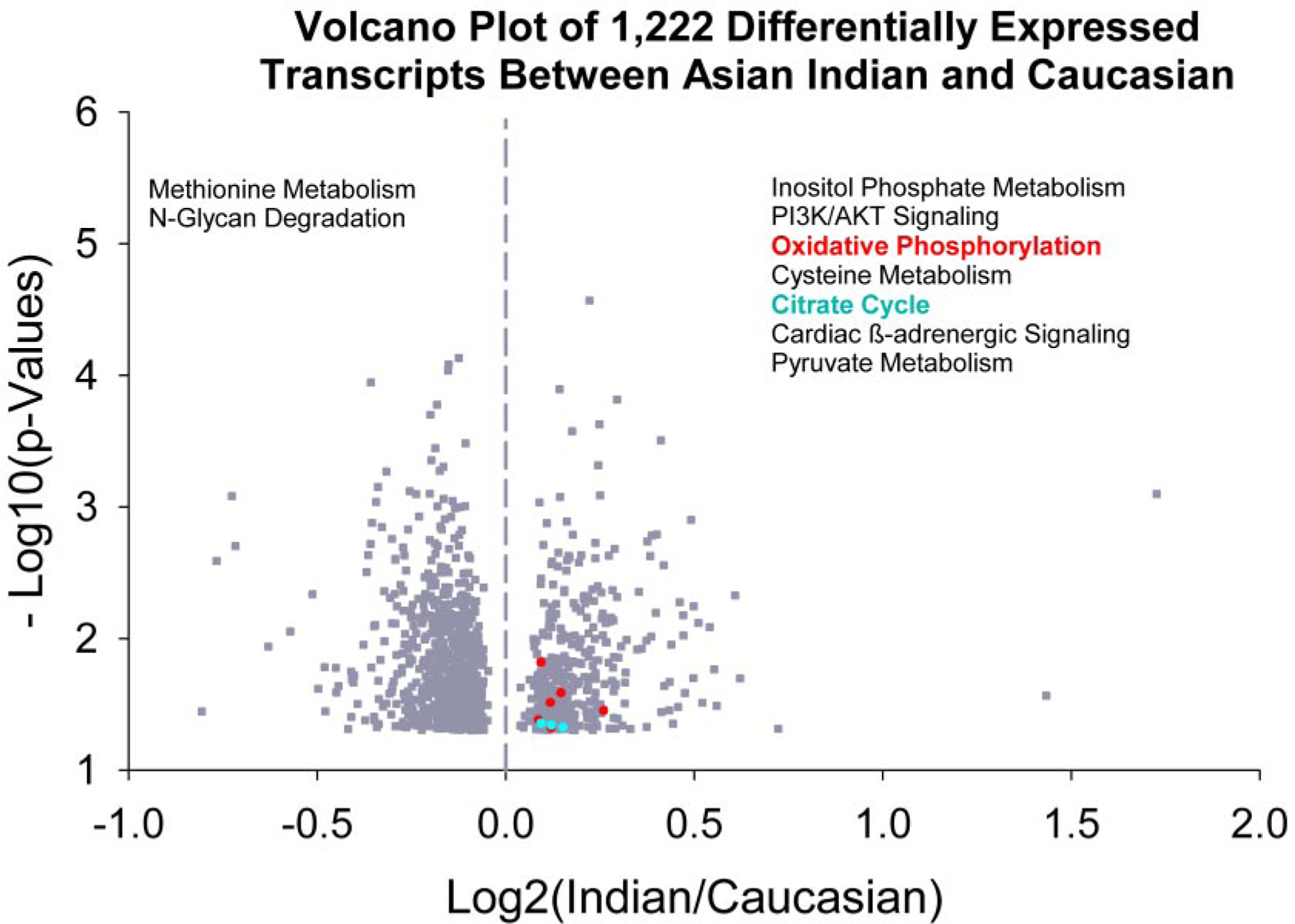
Research design and methods: We studied 13 diabetic Indians, 13 nondiabetic Indians, and 13 nondiabetic Northern European Americans who were matched for age, BMI, and sex. The primary comparisons were insulin sensitivity by hyperinsulinemic-euglycemic clamp and skeletal muscle mitochondrial capacity for oxidative phosphorylation (OXPHOS) by measuring mitochondrial DNA copy number (mtDNA), OXPHOS gene transcripts, citrate synthase activity, and maximal mitochondrial ATP production rate (MAPR). Other factors that may cause insulin resistance were also measured.
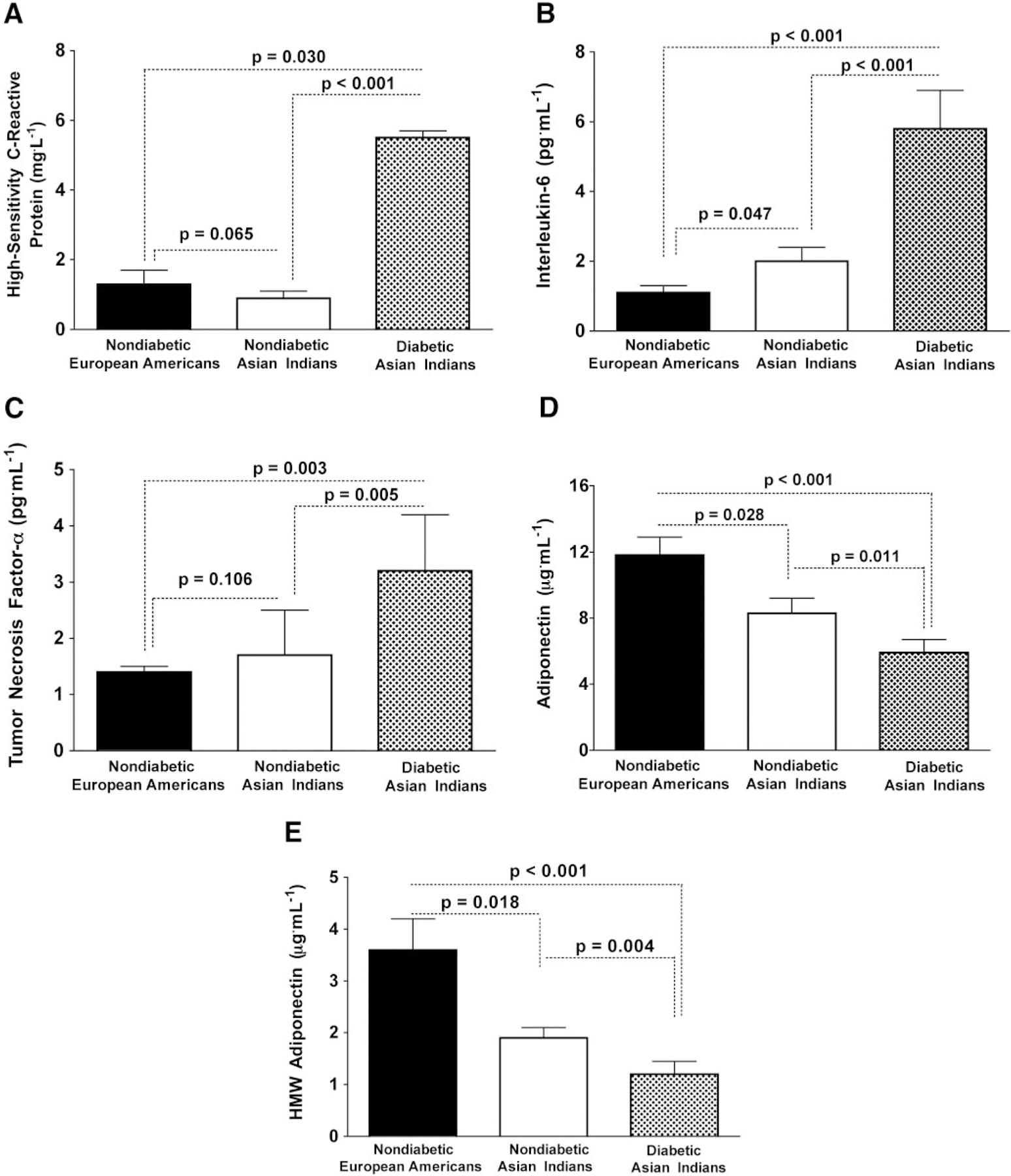
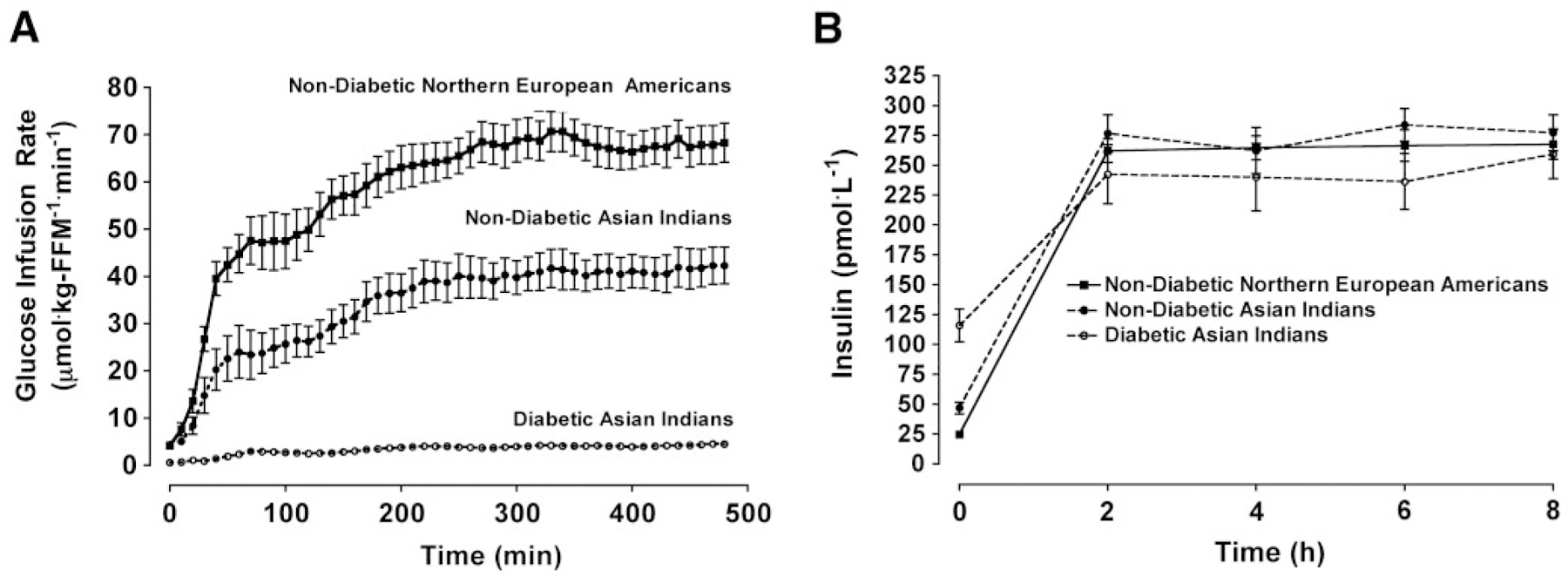
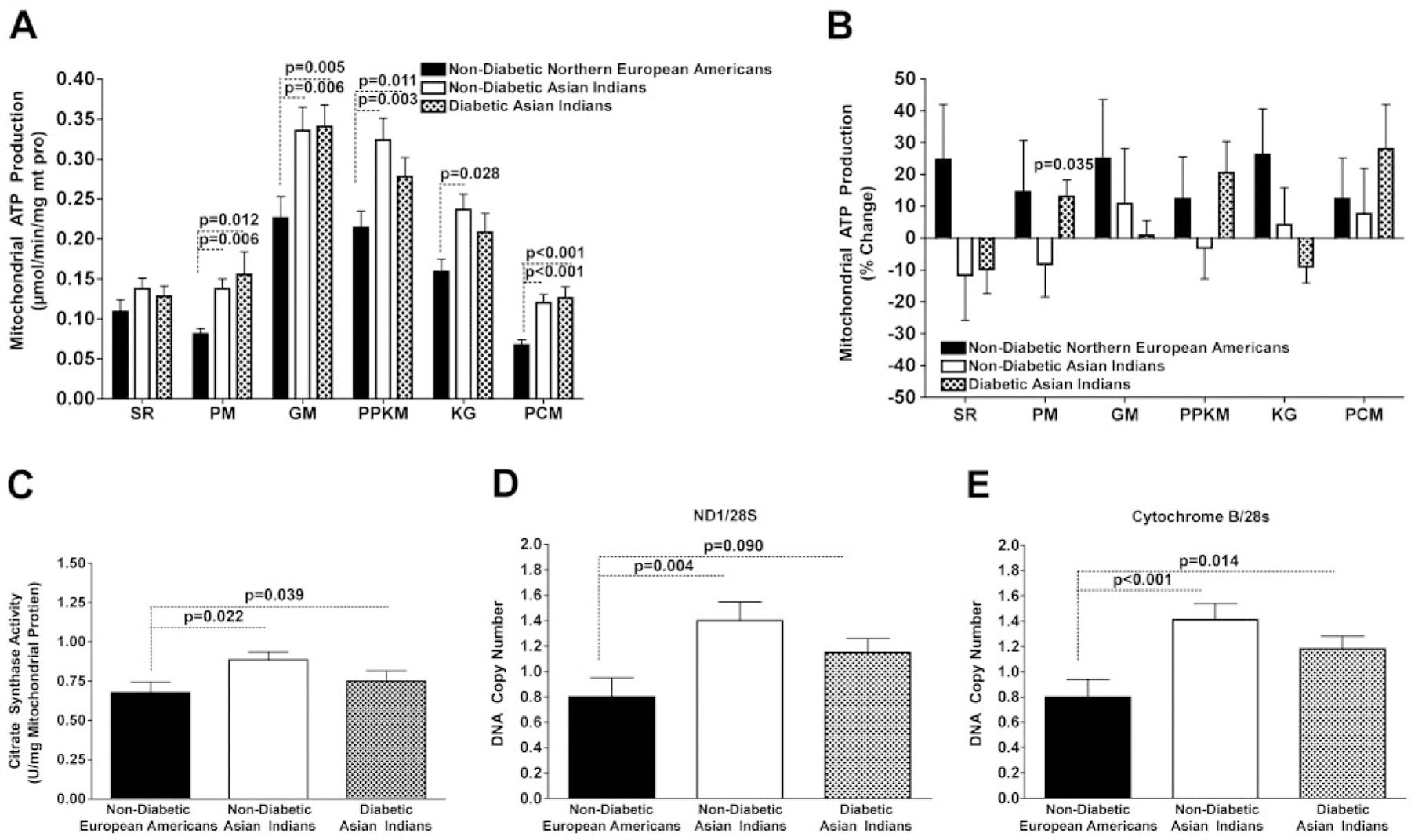
Results: The glucose infusion rates required to maintain identical glucose levels during the similar insulin infusion rates were substantially lower in diabetic Indians than in the nondiabetic participants (P < 0.001), and they were lower in nondiabetic Indians than in nondiabetic Northern European Americans (P < 0.002). mtDNA (P < 0.02), OXPHOS gene transcripts (P < 0.01), citrate synthase, and MAPR (P < 0.03) were higher in Indians irrespective of their diabetic status. Intramuscular triglyceride, C-reactive protein, interleukin-6, and tumor necrosis factor-alpha concentrations were higher, whereas adiponectin concentrations were lower in diabetic Indians.
Conclusions: Despite being more insulin resistant, diabetic Indians had similar muscle OXPHOS capacity as nondiabetic Indians, demonstrating that diabetes per se does not cause mitochondrial dysfunction. Indians irrespective of their diabetic status had higher OXPHOS capacity than Northern European Americans, although Indians were substantially more insulin resistant, indicating a dissociation between mitochondrial dysfunction and insulin resistance.
Figures
References
-
- Zimmet P, Alberti KGMM, Shaw J: Global and societal implications of the diabetes epidemic. Nature 414:782–787, 2001 - PubMed
-
- Novak K: Group calls for big increase in diabetes research. Nat Med 5:364, 1999 - PubMed
-
- Wild S, Roglic G, Green A, Sicree R, King H: Global prevalence of diabetes: estimates for the year 2000 and projections for 2030. Diabetes Care 27:1047–1053, 2004 - PubMed
-
- Ramachandran A, Snehalatha C, Mary S, Mukesh B, Bhaskar AD, Vijay V, Indian Diabetes Prevention Program: The Indian Diabetes Prevention Programme shows that lifestyle modification and metformin prevent type 2 diabetes in Asian Indian subjects with impaired glucose tolerance (IDPP-1). Diabetologia 49:289–297, 2006 - PubMed
-
- Ramachandran A, Snehalatha C, Vijay V: Low risk threshold for acquired diabetogenic factors in Asian Indians. Diabetes Res Clin Pract 65:189–195, 2004 - PubMed
Publication types
MeSH terms
Substances
Grants and funding
LinkOut - more resources
Full Text Sources
Medical
Research Materials
