. 2008 Feb 20;3(2):e1619.
doi: 10.1371/journal.pone.0001619.

The neglected intrinsic resistome of bacterial pathogens

Affiliations

The neglected intrinsic resistome of bacterial pathogens

Alicia Fajardo et al. PLoS One. .

Abstract

Bacteria with intrinsic resistance to antibiotics are a worrisome health problem. It is widely believed that intrinsic antibiotic resistance of bacterial pathogens is mainly the consequence of cellular impermeability and activity of efflux pumps. However, the analysis of transposon-tagged Pseudomonas aeruginosa mutants presented in this article shows that this phenotype emerges from the action of numerous proteins from all functional categories. Mutations in some genes make P. aeruginosa more susceptible to antibiotics and thereby represent new targets. Mutations in other genes make P. aeruginosa more resistant and therefore define novel mechanisms for mutation-driven acquisition of antibiotic resistance, opening a new research field based in the prediction of resistance before it emerges in clinical environments. Antibiotics are not just weapons against bacterial competitors, but also natural signalling molecules. Our results demonstrate that antibiotic resistance genes are not merely protective shields and offer a more comprehensive view of the role of antibiotic resistance genes in the clinic and in nature.


Conflict of interest statement

Competing Interests: The authors have declared that no competing interests exist.

Figures

Figure 1
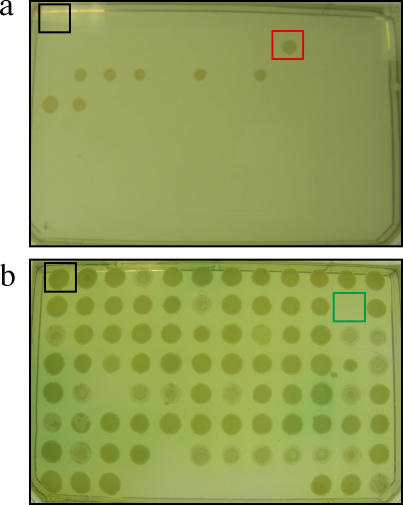
Figure 1. Screening of P. aeruginosa mutants with altered antibiotic susceptibility.
Two libraries of transposon-tagged P. aeruginosa mutants were screened to detect changes in their susceptibility to the antimicrobial agents polymixin B, amikacin, ciprofloxacin, tetracycline, imipenem, and ceftazidime. A mutant was considered resistant (red square in A) if it was able to grow at antibiotic concentrations that inhibited the growth of the wild-type strain (black square in both panels). A mutant was considered hypersusceptible (green square in B) if it was not able to grow at antibiotic concentrations permissive for the wild-type strain.
Figure 2
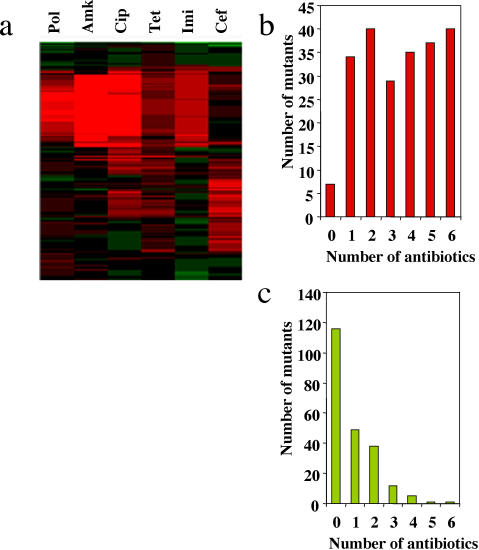
Figure 2. Antibiotic susceptibility of P. aeruginosa mutants.
The susceptibility of the selected mutants was determined by comparison to the wild-type parental strains. (A) The antibiotic susceptibility ratios of each mutant and its isogenic wild-type strain are shown. The ratios of changes were hierarchically clustered using freely available software (http://rana.lbl.gov/EisenSoftware.htm). Green, more susceptible; red, more resistant; Pol, polymixin B; Amk, amikacin; Cip, ciprofloxacin; Tet, tetracycline; Imi, imipenem; Cef, ceftazidime. Note that in most cases, susceptibilities to several antibiotics changed simultaneously. (B) The number of mutants with higher resistance (resistant mutants) to a given number of tested antibiotics. Most of the mutants had increased resistance to several antibiotics belonging to different structural families. (C) The number of mutants with higher susceptibility (hypersusceptible mutants) to a given number of tested antibiotics. Note that a mutant can be more resistant to some antibiotics (see A) and more susceptible to others and therefore can be included in both (B) and (C).

References

    1. Levy SB. Multidrug resistance–a sign of the times. N Engl J Med. 1998;338:1376–1378. - PubMed
    1. Smith DL, Dushoff J, Perencevich EN, Harris AD, Levin SA. Persistent colonization and the spread of antibiotic resistance in nosocomial pathogens: resistance is a regional problem. Proc Natl Acad Sci U S A. 2004;101:3709–3714. - PMC - PubMed
    1. World HO. World Health Organization Report in Infectious Diseases; 2000. Overcoming antibiotic resistance.
    1. Martinez JL, Baquero F, Andersson DI. Predicting antibiotic resistance. Nat Rev Microbiol. 2007;5:958–965. - PubMed
    1. Davies JE. Origins, acquisition and dissemination of antibiotic resistance determinants. Ciba Found Symp. 1997;207:15–27; discussion 27–35. - PubMed

Publication types

MeSH terms

Substances