


Impact of fixed-dose combination drugs on adherence to prescription medications
- PMID: 18288541
- PMCID: PMC2324153
- DOI: 10.1007/s11606-008-0544-x
Impact of fixed-dose combination drugs on adherence to prescription medications
Abstract
Background: The inverse correlation between the complexity of a drug regimen and medication adherence is well established. Fixed-dose combination (FDC) therapies are hypothesized to enhance compliance by decreasing the number of required pills.
Objective: The objective of the study is to compare adherence of a FDC [Glucovance, a FDC of metformin and glyburide] to a 2-pill regimen.
Design: Longitudinal data from a large claims database were used to assess adherence from January 1, 2000, to December 31, 2001. Propensity scoring methods were used to mitigate concerns related to non-random assignment of patients to treatments.
Subjects: The subjects of the study were individuals prescribed metformin or sulfonylurea or both before July 2000, who were prescribed both metformin and sulfonylurea concurrently (either separately or FDC) after August 2000.
Measurements: Adherence was measured by medication possession ratio; the proportion of days on which a patient had medication available.
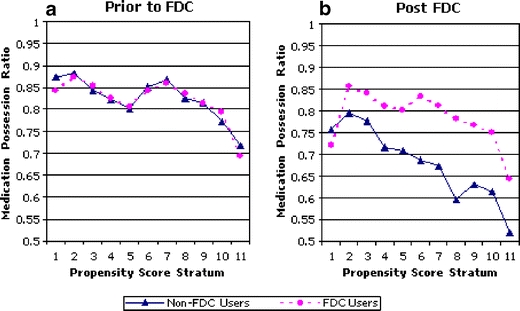
Results: The FDC enhanced adherence rates by approximately 13% when compared to a 2-pill regimen.
Conclusions: Compared to 2-pill therapy, a FDC resulted in important increases in patient adherence. Economic analyses are warranted to determine whether the clinical benefits attributable to the adherence gains are worth the incremental cost of a FDC.
Figures
References
-
- Wertheimer AI, Morrison A. Combination drugs: innovation in pharmacotherapy. P&T. 2002;27(1):44–9.
-
- Leichter SB, Thomas S. Combination medications in diabetes care: an opportunity that merits more attention. Clin Diabetes. 2003;21(4):175–8. - DOI
Publication types
MeSH terms
Substances
LinkOut - more resources
Full Text Sources
Other Literature Sources
Medical
