Mechanism and inhibition of LpxC: an essential zinc-dependent deacetylase of bacterial lipid A synthesis
- PMID: 18289052
- PMCID: PMC3022321
- DOI: 10.2174/138920108783497668
Mechanism and inhibition of LpxC: an essential zinc-dependent deacetylase of bacterial lipid A synthesis
Abstract
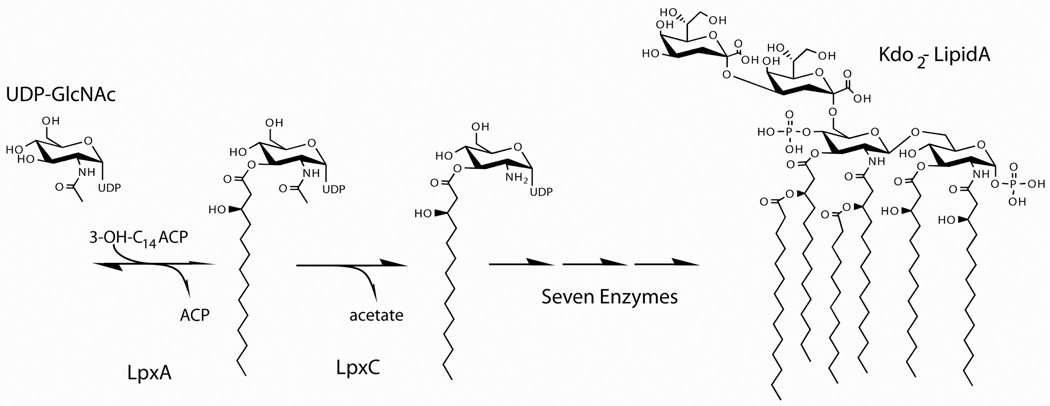
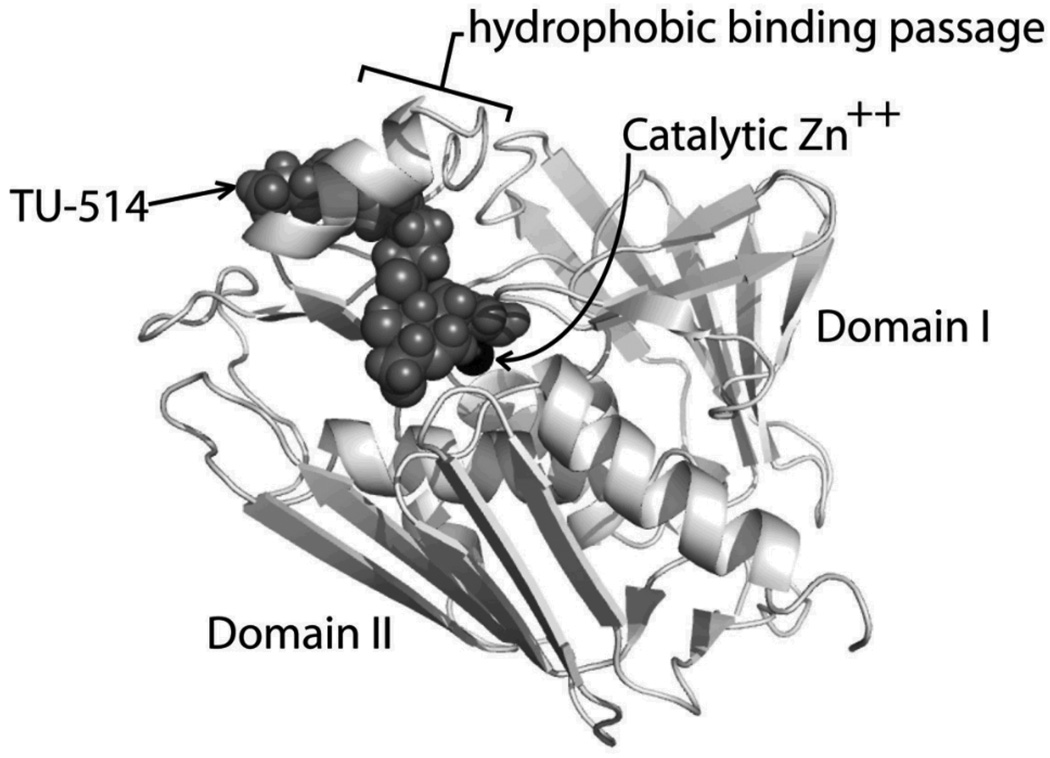
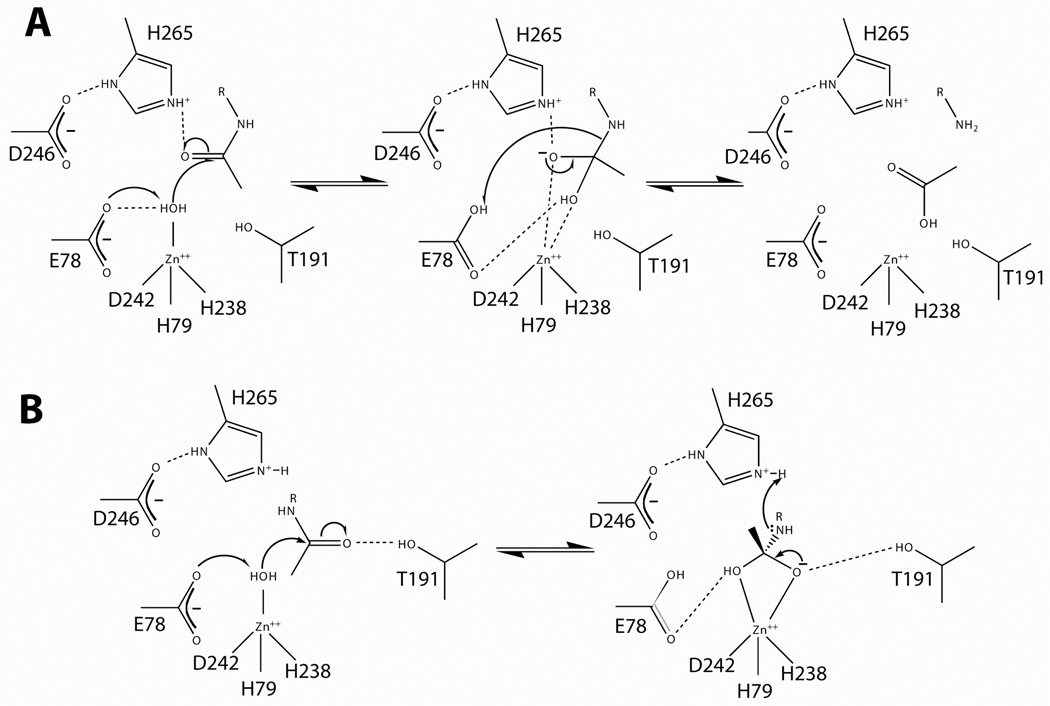
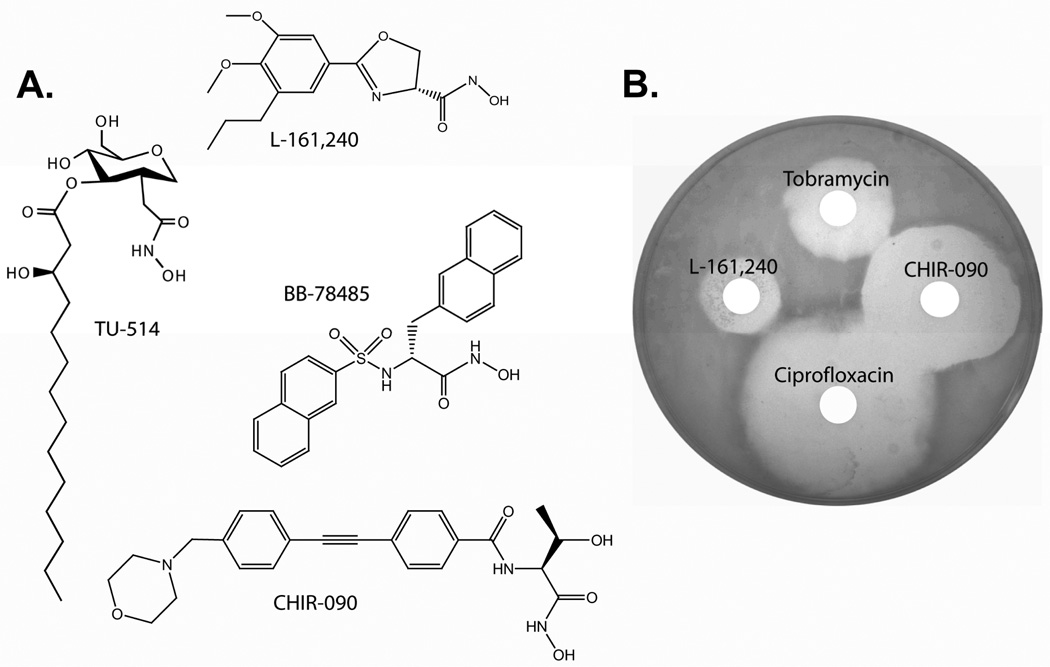
Multi-drug resistant (MDR), pathogenic Gram-negative bacteria pose a serious health threat, and novel antibiotic targets must be identified to combat MDR infections. One promising target is the zinc-dependent metalloamidase UDP-3-O-(R-3-hydroxymyristoyl)-N-acetylglucosamine deacetylase (LpxC), which catalyzes the committed step of lipid A (endotoxin) biosynthesis. LpxC is an essential, single copy gene that is conserved in virtually all Gram-negative bacteria. LpxC structures, revealed by NMR and X-ray crystallography, demonstrate that LpxC adopts a novel 'beta-alpha-alpha-beta sandwich' fold and encapsulates the acyl chain of the substrate with a unique hydrophobic passage. Kinetic analysis revealed that LpxC functions by a general acid-base mechanism, with a glutamate serving as the general base. Many potent LpxC inhibitors have been identified, and most contain a hydroxamate group targeting the catalytic zinc ion. Although early LpxC-inhibitors were either narrow-spectrum antibiotics or broad-spectrum in vitro LpxC inhibitors with limited antibiotic properties, the recently discovered compound CHIR-090 is a powerful antibiotic that controls the growth of Escherichia coli and Pseudomonas aeruginosa, with an efficacy rivaling that of the FDA-approved antibiotic ciprofloxacin. CHIR-090 inhibits a wide range of LpxC enzymes with sub-nanomolar affinity in vitro, and is a two-step, slow, tight-binding inhibitor of Aquifex aeolicus and E. coli LpxC. The success of CHIR-090 suggests that potent LpxC-targeting antibiotics may be developed to control a broad range of Gram-negative bacteria.
Figures
References
-
- Parry CM, Hien TT, Dougan G, White NJ, Farrar JJ. N. Engl. J. Med. 2002;347:1770–1782. - PubMed
-
- Paterson DL. Am. J. Infect. Control. 2006;34:S20–S28. - PubMed
-
- Projan SJ, Youngman PJ. Curr. Opin. Microbiol. 2002;5:463–465. - PubMed
-
- Raetz CRH. Escherichia coli and Salmonella : cellular and molecular biology. Washington, D.C.: ASM Press; 1996. pp. 1035–1063.
Publication types
MeSH terms
Substances
Grants and funding
LinkOut - more resources
Full Text Sources
Other Literature Sources
Molecular Biology Databases