


Analysis of HIV medication adherence in relation to person and treatment characteristics using hierarchical linear modeling
- PMID: 18290734
- PMCID: PMC8444232
- DOI: 10.1089/apc.2007.0122
Analysis of HIV medication adherence in relation to person and treatment characteristics using hierarchical linear modeling
Abstract
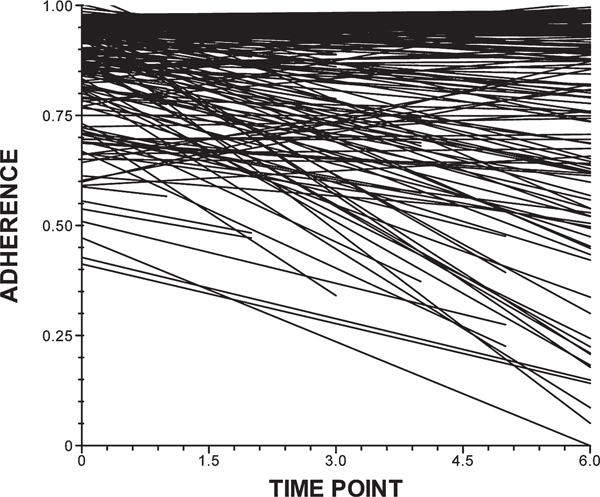
The purpose of this investigation was to consider person characteristics, treatment level variables, and illicit drug use to help explain the HIV antiviral adherence patterns of a community-based, non-drug-treatment-seeking sample of men who have sex with men (MSM). Adherence data were gathered for 300 MSM eight times over the course of 1 year using electronic monitoring. Treatment and person level characteristics were assessed at baseline assessment using computer-administered surveys, and drug usage was established via a diagnostic inventory. These longitudinal data were analyzed via Hierarchical Linear Modeling. The sample was diverse in terms of age and race/ethnicity. Across the span of the year in which the participants were assessed, adherence rates were relatively stable and high (means: 82% to 90%) at each time point and remained relatively stable across the yearlong investigation. Lower adherence rates were evident among those who were drug users, black identified (in terms of race), older, and by pill burden. Individuals on HIV antiretroviral therapy demonstrated consistent although not optimal adherence rates when assessed during the course of a year. The significance of numerous person level factors such as age, race, and drug use suggest that adherence to treatment may in part be impacted by the circumstances that the individual brings to the treatment behavior, and suggests interventions that delve beyond the behavioral to consider and address life social and intrapersonal circumstances that may interfere with adherence behaviors.
Figures
References
-
- Paterson DL, Swindells S, Mohr J, et al. Adherence to protease inhibitor therapy and outcomes in patients with HIV infection. Ann Intern Med 2000;133:21–30. - PubMed
-
- Haubrich RH, Little S, Currier JS, et al. The value of patient-reported adherence to antiretroviral therapy in predicting antivirologic and immunologic response. AIDS 1999;13:1099–1107. - PubMed
-
- Wood E, Hogg RS, Yip B, et al. The impact of adherence on CD4 cell count responses among HIV-infected patients. JAIDS 2004;35:261–268. - PubMed
-
- Bangsberg DR, Acosta EP, Gupta R, et al. Adherenceresistance relationships for protease and non-nucleoside reverse transcriptase inhibitors explained by virological fitness. AIDS 2006;20:223–231. - PubMed
-
- Pillay D. The emergence and epidemiology of resistance in the nucleoside-experienced HIV-infected population. Antiviral Ther 2001;6:15–24. - PubMed
Publication types
MeSH terms
Substances
Grants and funding
LinkOut - more resources
Full Text Sources
Medical
